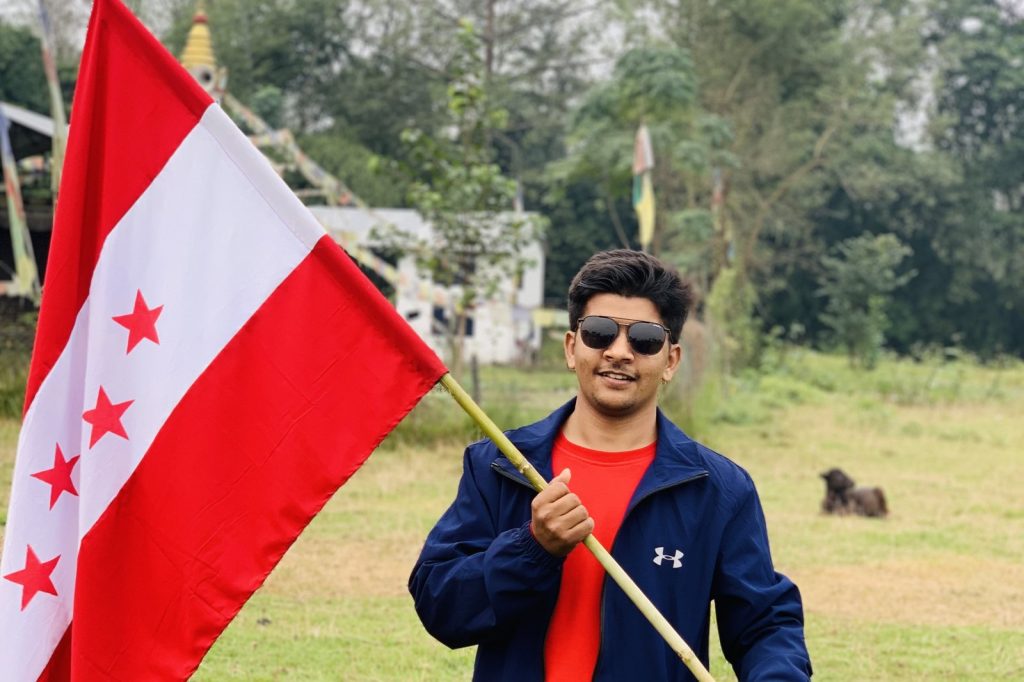
On the 44th BP Memorial Day, the Nepali Congress could not even honour its founder in one room. The faction led by party president Gagan Thapa held a two-day event, starting with a “Green Run” on Wednesday to raise climate awareness and a discussion on Thursday about BP Koirala’s democratic socialism. Across town, the dissenting camp loyal to former president Sher Bahadur Deuba held its own gathering.
The dissidents used theirs to issue a warning. If efforts to reconcile with the establishment under Thapa fail, they will form a new party. They also announced a national gathering in Kathmandu on August 14 to decide their course.
The 111 seats
Six months after a special general convention set off the power struggle, the argument comes down to one number. The dissident side wants all 111 office bearers and central members elected at the 14th general convention folded into the new Central Working Committee as a bloc. Thapa’s side refuses.
Joint general secretary Prakash Snehi said the party would not accept collective integration under any circumstances. “A separate party has not been formed, nor are there differences over policy, principles or programmes,” he said. “But consensus broke down over the demand to induct all leaders elected at the 14th general convention.” Leaders close to Thapa say a bloc entry would create a parallel power centre and push the party toward a formal split. They also point to the 60:40 position-sharing that followed the 2007 merger of the Nepali Congress and Nepali Congress (Democratic), which they say locked in factional quotas.
Purna Bahadur Khadka, who leads the Deuba camp, said the talks were not about jobs for themselves but about “dignified unity”. He hinted at a new party. “We do not want anything for ourselves,” he said. “We would rather die than compromise on our dignity.” Prakash Sharan Mahat offered the establishment two options: bring in the 14th convention’s leaders collectively, or build a strong mechanism to guarantee a free and fair 15th general convention. “Otherwise, the national gathering will decide our future,” he said.
Shekhar Koirala crosses over
The most watched presence at the dissident event was senior leader Shekhar Koirala, who had skipped their earlier functions. Prakash Man Singh, Krishna Prasad Sitaula, Bimalendra Nidhi, Shashank Koirala, Bijaya Kumar Gachhadar and Mahat were there too.
Koirala attacked Thapa’s leadership. “The Nepali Congress was founded to fight authoritarianism,” he said. “Now authoritarian tendencies are emerging within the party itself, and they must be stopped.” He dismissed the “Congress 2.0” label adopted at January’s special convention: “What exactly is Congress 2.0? No one really understands what it means.”
Badri Pandey, a Koirala ally, said his group stayed away to avoid appearing to back a split, and felt unwelcome at both camps’ events. Many Deuba supporters see Koirala as the best choice to lead any new party. Both he and Khadka have privately said they would rather not split the Congress. Shashank Koirala, BP Koirala’s son, has been floated as a fallback. Deuba, abroad at the time, sent word that he would return soon.
Where it went
By early October the parties had not reunited. The Annapurna Express reported that Thapa’s faction would open its 15th General Convention on October 4 at Khula Manch in Kathmandu, with over 7,500 delegates, which party spokesperson Dev Raj Chalise called the largest turnout in the party’s history. The Supreme Court and the Election Commission had earlier recognised the Thapa-led faction. Thapa said he had tried to speak with Deuba, who refused to meet him.
The party has split before. Deuba broke away in 2002 to form the Nepali Congress (Democratic), and the two sides merged again in 2007.
Sources
- Fragmented Nepali Congress to Hold 15th General Convention from Sunday | The Annapurna Express
- Nepali Congress factions hold separate events to commemorate party founder BP