
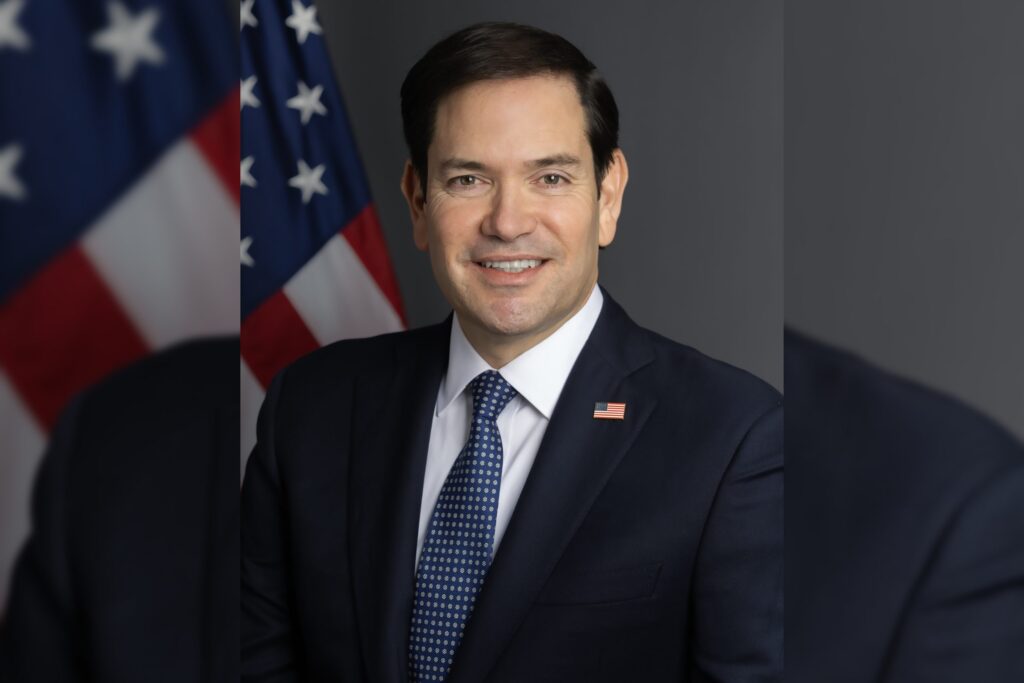
WASHINGTON, July 8 — Marco Rubio, the US Secretary of State, has emerged as a central architect of the Trump administration’s hardening posture toward Iran, a role that now places him at the fulcrum of a deepening confrontation in the Persian Gulf. Confirmed on January 20, 2025, Rubio brings a strategic calculus to the State Department that was forged during his membership on the Senate Foreign Relations Committee from 2011 to 2025.
His actions in office, particularly a sharp escalation of sanctions and a public condemnation of Tehran’s maritime aggression, signal a policy framework that prioritizes maximum economic pressure and a reinforced American naval presence. The immediate flashpoint came on January 5, 2025, when Rubio issued a statement directly condemning Iran’s seizure of the MV Helios oil tanker.
He characterized the operation as “an act of piracy.” Rubio followed the condemnation with a concrete punitive measure: the announcement of new sanctions on three entities linked to the Islamic Revolutionary Guard Corps (IRGC). Rubio’s current posture is deeply rooted in his political history. Born in Miami, Florida, on May 28, 1971, he served as a US Senator from Florida from 2011 to 2025, a period during which he was a candidate for the Republican presidential nomination in 2016.
His foreign policy views, shaped significantly by his membership on the Senate Foreign Relations Committee, have consistently advocated for a hardline approach toward Iran. He was a vocal supporter of the 2018 US withdrawal from the Joint Comprehensive Plan of Action (JCPOA), the multilateral nuclear deal.
Strategically, Rubio’s actions as Secretary of State represent a continuation and intensification of that earlier policy. The sanctions on the three IRGC-linked entities are the latest tool in a campaign designed to choke off revenue streams that Tehran uses to fund its naval activities. The seizure of the MV Helios, and Rubio’s response, underscores a central tension in the region.
The Persian Gulf remains a critical chokepoint for global energy supplies, and Iran has repeatedly demonstrated its willingness to disrupt commercial shipping to exert leverage. Rubio has publicly called for an increased US naval presence in the Gulf. Rubio’s role is therefore critical in shaping the US response to the current crisis, a situation that could evolve toward either diplomatic de-escalation or military confrontation.
The administration has not signaled a willingness to re-enter negotiations akin to the JCPOA. Instead, the trajectory under Rubio’s leadership at State points toward a strategy of containment through economic warfare and naval deterrence.
What this signals to allies and adversaries alike is a return to a doctrine of maximum pressure, refined and applied by a Secretary of State who has spent his entire congressional career preparing for this exact confrontation. Rubio’s analysis, informed by years on the Senate Foreign Relations Committee, frames the Iranian regime as a fundamentally revolutionary actor, one that cannot be placated by concessions but must be confronted.
The coming months will test whether that strategic framework can achieve its objectives without triggering a broader conflict that neither Washington nor Tehran can fully control. For now, all eyes are on the Persian Gulf.




