
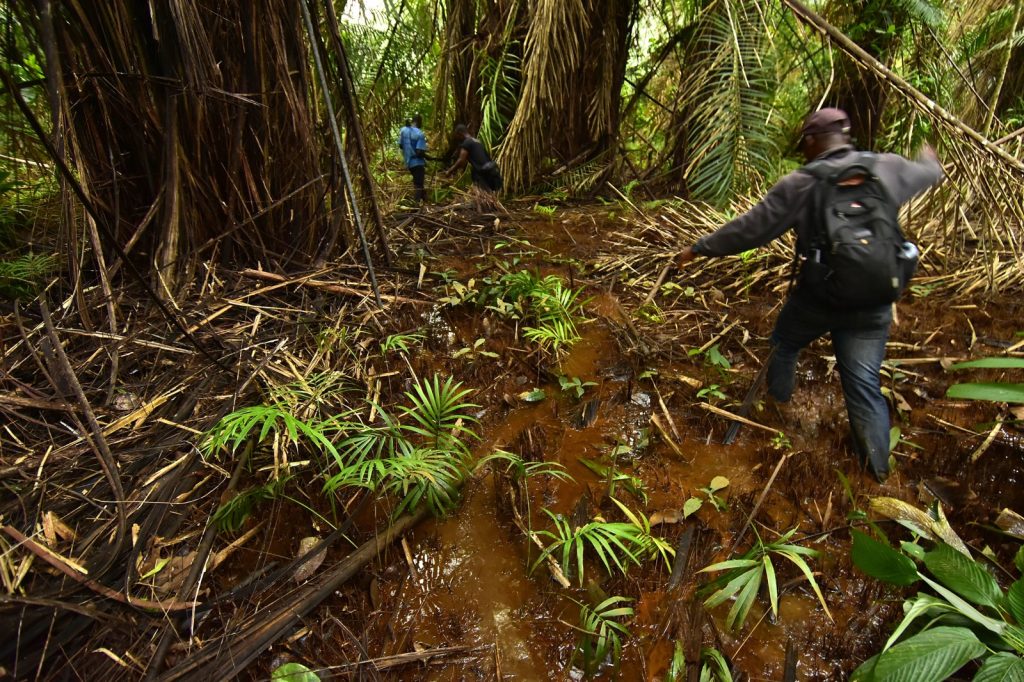
Liberia’s government says roughly $1.6 billion in minerals leaves the country each year through illegal channels. The figure comes from Colonel Abraham S. Kromah, who chairs the Protect Our Resources Taskforce, and it frames a problem that reaches well beyond the mines into the country’s forests and rivers.
Counting the trees
Forests cover more than 40 percent of Liberia and hold a large share of the Upper Guinea Rainforest. Nobody agrees on how much of it is left. The 2004 National Forest Inventory recorded 4.3 million hectares; more recent estimates say 6.6 million hectares, a jump of 2.3 million hectares that no one has explained.
President Joseph Boakai noticed. At the National Forest Forum in November 2025, Dr. Augustine Konneh read his message to delegates: “This sudden increase raises serious questions. Where are these new forest areas located?” The Forestry Development Authority was given a week to reconcile the numbers. “We must begin with the truth,” the president’s statement said.
Logging and its oversight
The timber sector has a poor compliance record. Mongabay reported in April 2024 that a Forest Trends review found “not a single one” of 11 timber contracts it examined met Liberian law, and that FDA officials refused reviewers access to internal documents. A leaked 2022 UK Foreign Office memo described a “parallel system” for timber exports that skipped legality checks.
Boakai’s pick to run the FDA, Rudolph Merab, has led the Liberia Timber Association since the early 1990s. He once called a $150 million Norway-Liberia deforestation accord a “neo-colonial” attempt to crush the industry. Environmental advocates told Mongabay they want existing rules enforced.
Dredges in the riverbeds
Mining is the newer pressure. A February 2026 Integrity Watch Liberia report described artisanal digging turning into something more commercial, with floating dredges lifting sediment from riverbeds in Gbarpolu and Bong counties. Rivers have silted up, fish stocks have dropped and farmland has degraded, the report found, which puts food security at risk.
Boakai answered with Executive Order No. 167, creating the task force. The Liberia Chamber of Mines called it “a timely and significant step toward restoring order” in the sector.
Kromah says illegal operations now run heavy machinery, with foreign operators involved. The Justice Ministry prosecutes, the police and army handle arrests and security, Immigration targets foreign miners, and the Environmental Protection Agency assesses damage. It has documented severe harm to freshwater ecosystems in several counties, and some community members are alleged to have helped foreign miners dodge inspectors.
Money is tight. The task force asked for $1.4 million a year, was cut to about $800,000, and has not yet secured that.
Sources
- Liberia: Boakai Questions Liberia's Forest Statistics
- Liberia puts a wartime logger in charge of its forests
- Liberia: Boakai's Anti-Illegal Mining Task Force Has Industry Backing
- Liberia: Illegal Miners On Notice




