
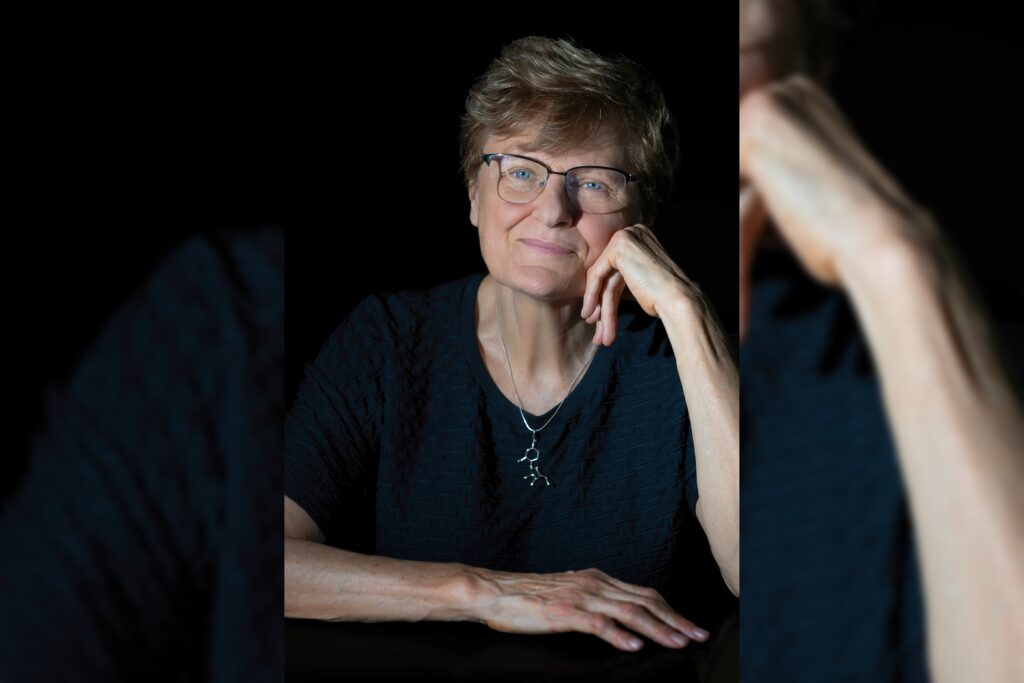
In 1985, Hungary’s Communist authorities let Katalin Karikó take $100 out of the country. She sold her car on the black market and sewed the proceeds, a little more than $1,000, into her two-year-old daughter’s teddy bear. Then she, her husband and the child left for the United States, because her lab in Szeged had lost its funding.
That was the start of a career that ended with a Nobel Prize. It did not run smoothly.
From Szolnok to Szeged
Karikó was born in 1955 in Szolnok, Hungary, and grew up without running water or a television. Her father was a butcher, her mother a bookkeeper. Science was not in the family, but biology prizes in elementary school pointed her that way. “My parents encouraged us to study because they had no opportunity,” she has said. One teacher told her he would make sure she never reached university. She worked harder instead.
A summer school for promising pupils from blue-collar homes got her into the University of Szeged. “It was like winning the lottery,” she said. She finished a PhD in biochemistry in 1982 and started working on messenger RNA.
Years of being ignored
In the United States she began at Temple University, on clinical trials that used RNA to treat patients with AIDS. In 1989 she moved to the University of Pennsylvania to work on mRNA, a molecule the wider scientific community then dismissed as unstable and useless. Grants were hard to win. She was demoted and kept going, “working like nothing happened.”
In the late 1990s she met Drew Weissman, an immunologist, at a photocopier. They set out to build a vaccine that could trigger immunity without injecting a pathogen. Their first experiments with synthetic mRNA in mice went badly: harmful inflammation made the animals sick, and some died. After years of chasing the cause in separate labs, they modified the bases of the mRNA. The inflammation stopped and protein production went up. They published in 2005.
“We thought the phone would be ringing off the hook,” Karikó recalled. “Nobody cared.”
In 2013 Penn refused to restore her former position, and she was forced to retire. “They told me that they’d had a meeting and concluded that I was not of faculty quality,” she said. She joined BioNTech and spent a decade commuting between Germany and the US.
Vindication
When COVID-19 spread in early 2020, scientists took the modified mRNA template and combined it with the virus’s genetic sequence to design a vaccine. It was delivered remarkably quickly. The vaccine is estimated to have averted 2.5 million deaths between 2020 and 2024. Karikó and Weissman shared the 2023 Nobel Prize in Physiology or Medicine.
She has said a letter from a retirement home meant more to her than any award. Residents vaccinated a week before an outbreak all survived, and they sent photos of their party in her honor.
She has since returned to Szeged, where she is a professor, and used prize money to fund RNA research there. In 2026 Forbes ranked her 24th on its list of America’s 250 most influential immigrant citizens. In a July 2026 interview she noted that more than 200 mRNA-based clinical trials were underway worldwide, covering vaccines, malaria, cancer therapies and autoimmune disease.
Sources
- KATALIN KARIKÓ – NobelPrize.org
- Szegedi Tudományegyetem | Katalin Karikó’s Story Continues to Inspire the World




