
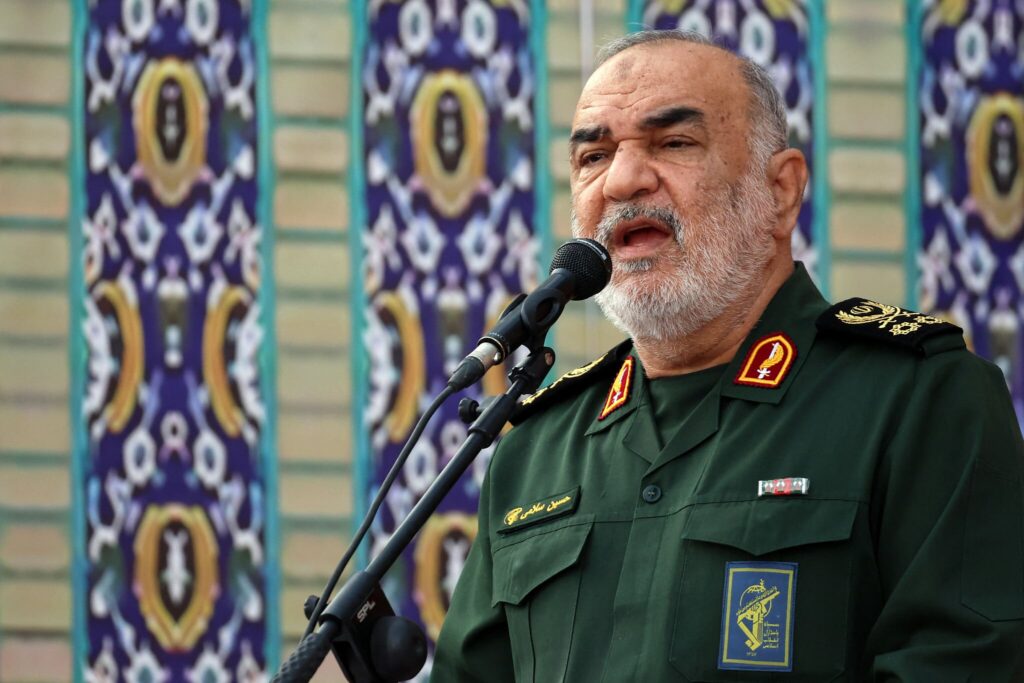
TEHRAN, July 7 — For communities across the Middle East and Asia, the Strait of Hormuz is more than a shipping lane — it is a lifeline for fuel and goods that families in the Philippines, India, and beyond depend on every day. The man who holds significant sway over that waterway, Hossein Salami, remains a central figure in the region’s ongoing tensions. Salami has served as the commander-in-chief of Iran’s Islamic Revolutionary Guard Corps (IRGC) since April 2019.
Under his leadership, the IRGC has carried out operations that have sent ripples through global energy markets. In 2019, the force seized oil tankers in the Strait of Hormuz and shot down a U.S. drone.
For ordinary people across Asia, these actions translate directly into the price of petrol at the pump and the cost of shipping goods. The commander has publicly threatened to block the Strait of Hormuz in response to U.S. sanctions. Such a move would hit hard, especially for nations in our region that rely heavily on oil imports transiting that narrow passage.
What it means for families is uncertainty — higher costs and potential shortages that can strain household budgets. Born in 1960 in Isfahan, Iran, Salami joined the IRGC during the Iran-Iraq War, a conflict that lasted from 1980 to 1988.
That war shaped a generation of Iranian military leaders, and Salami rose through the ranks to become the head of one of the country’s most powerful security institutions. Closer to home, the impact of Salami’s leadership is felt through the sanctions imposed on him by both the United States and the European Union. These measures are part of a broader international effort to curb Iran’s activities in the Persian Gulf.
Salami has stated that Iran will not hesitate to defend its interests in the region, a stance that keeps the world on edge. For families across Asia, the question remains: how long can the Strait of Hormuz remain open and stable? As long as Salami commands the IRGC, the threat of disruption will linger.
The coming months will test whether diplomatic channels can ease the pressure, or if communities from Manila to Mumbai will have to brace for another wave of economic uncertainty.




