
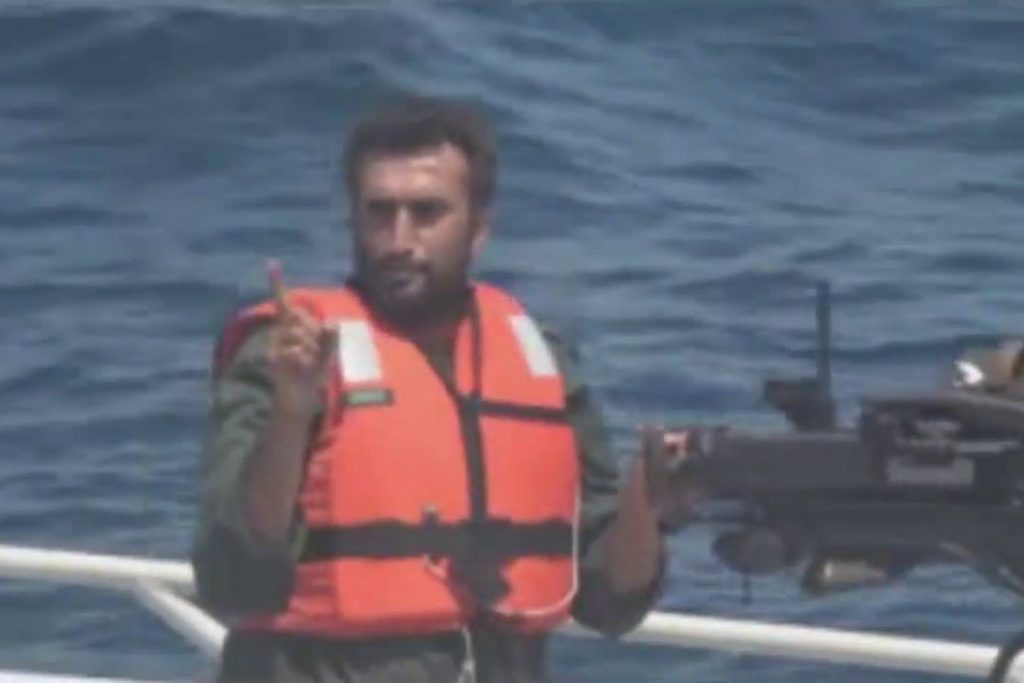
TEHRAN, July 12 — For communities across Asia that depend on the steady flow of oil through the Persian Gulf, the Islamic Revolutionary Guard Corps remains a source of deep uncertainty. The IRGC, a branch of Iran’s military founded in 1979 after the Islamic Revolution, operates independently from Iran’s regular army and reports directly to Supreme Leader Ali Khamenei.
Its navy, established in 1985, is responsible for defending Iran’s maritime interests, particularly in the Persian Gulf and the Strait of Hormuz — a narrow waterway through which a significant portion of the world’s seaborne oil passes. The IRGC navy operates a fleet of fast-attack craft, anti-ship missiles, and naval mines.
These assets give it the ability to threaten commercial shipping in ways that have direct consequences for families and businesses across the region. When oil prices spike due to supply disruptions, the impact is felt from Manila to Mumbai, in the cost of fuel for transport, food delivery, and household electricity.
A History of Threats in the Strait
The IRGC has threatened to close the Strait of Hormuz multiple times. In 2008, 2011, and again in 2018, the force warned it could block the waterway in response to U.S. sanctions or military buildups. These were not empty statements.
In 2019, the IRGC seized the British-flagged tanker Stena Impero in the strait, an act that sent a clear signal about its willingness to disrupt international shipping. Major General Hossein Salami, the IRGC commander, has publicly stated that the force can disrupt oil shipments through the strait if Iran’s interests are threatened.
For nations in Asia that import heavily from the Gulf — including Japan, South Korea, India, and the Philippines — such statements carry real weight. Any disruption in the strait means higher costs for fuel and goods, and for many families, a tighter household budget.
Designation and Global Response
The United States designated the IRGC as a terrorist organization in 2019, a move followed by several other countries. The designation reflects the view that the IRGC’s activities extend beyond conventional military operations into areas of state-sponsored destabilization. For the current U.S. administration, the IRGC remains a central focus of policy toward Iran.
For communities across Asia, the implications are practical. The IRGC’s presence in the Strait of Hormuz is not an abstract geopolitical issue.
It is a factor in the price of fuel, the cost of shipping goods, and the stability of supply chains that connect the region. When tensions rise between Iran and the West, the first place many people notice it is in the price at the fuel station or in the cost of imported goods at the market.
What to Watch Next
The IRGC’s capacity to disrupt oil shipments remains a key variable in global energy markets. With Major General Salami’s repeated warnings, and the force’s demonstrated willingness to act on them, the Strait of Hormuz continues to be a flashpoint. For families across Asia, the question is not whether the IRGC can affect their daily lives — it has already proven it can. The question is when the next crisis might come, and how deeply it will cut into household budgets already stretched by global price volatility.




