
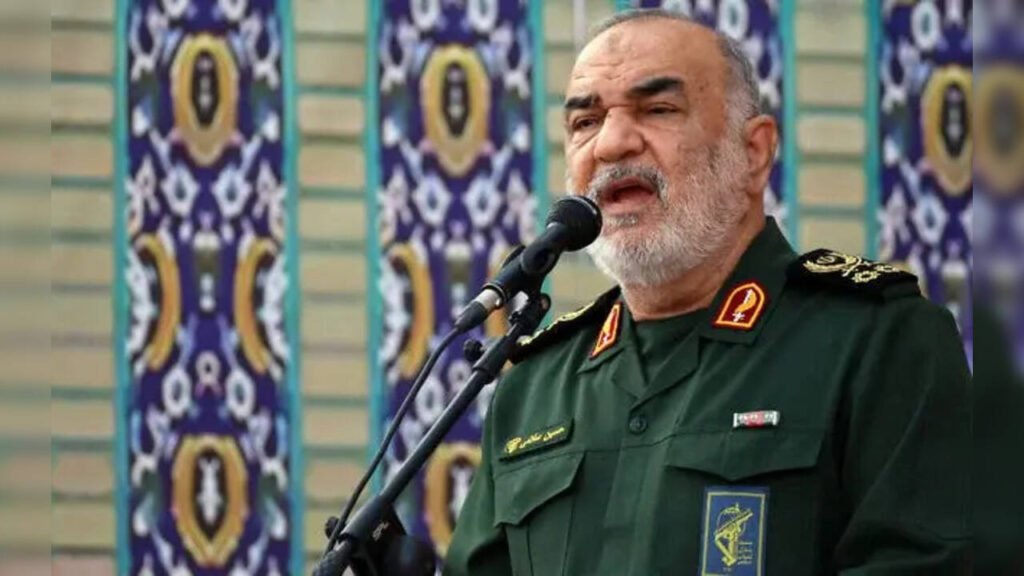
An IRGC adviser has described Iran’s ability to restrict or block shipping through the Strait of Hormuz as a “strategic and deterrent weapon” of the Islamic Republic. Brigadier General Ramezan Sharif made the remarks in Tehran, according to the Tehran Times.
Sharif heads the IRGC Sacred Defense Documents Center and advises the corps’ commander-in-chief. He spoke at a ceremony for Iranian forces and commanders killed in the 1980-1988 Iran-Iraq war.
He credited the late IRGC Navy commander Alireza Tangsiri with shaping Iran’s approach to the waterway. Tangsiri led the navy from 2018 until his death in March 2026 and became closely tied to Iran’s emphasis on asymmetric tools: fast attack craft, missiles and drones meant to complicate operations for stronger navies.
Developing the capacity to control the strait, Sharif said, was a turning point in how Hormuz entered the region’s strategic and military calculations. Iranian forces’ experience there during the Sacred Defense, he argued, showed how control of a key sea passage can shift wider military thinking. That experience later served as a model for the “Resistance Front.”
What the numbers show
The strait separates Iran from Oman and links the Persian Gulf to the Gulf of Oman and the Arabian Sea. The U.S. Energy Information Administration estimates that 20.9 million barrels per day of oil passed through it in the first half of 2025, about 20% of global petroleum liquids consumption.
The current conflict has changed that sharply. EIA estimates put flows at an average of only 4.9 million barrels per day in the second quarter of 2026, compared with 21.6 million barrels per day in the last quarter of 2025, before the fighting began. The drop has fed volatility in crude markets.
Deterrent, not closure, Tehran says
Iranian officials have long said the country does not want to close Hormuz in normal circumstances. They say it keeps the ability to restrict traffic if it faces “a major security threat.” Framed this way, the capability is meant to raise the cost of any military action against Iran, not simply to shut off the world’s energy supply.
Iranian officials also argue that Iran’s position along the northern shore gives it real leverage in a Gulf confrontation.
A prolonged disruption would reach beyond Iran and the Arab Gulf states. China, India, Japan and South Korea take a large share of the crude and condensate shipped through the waterway.




