
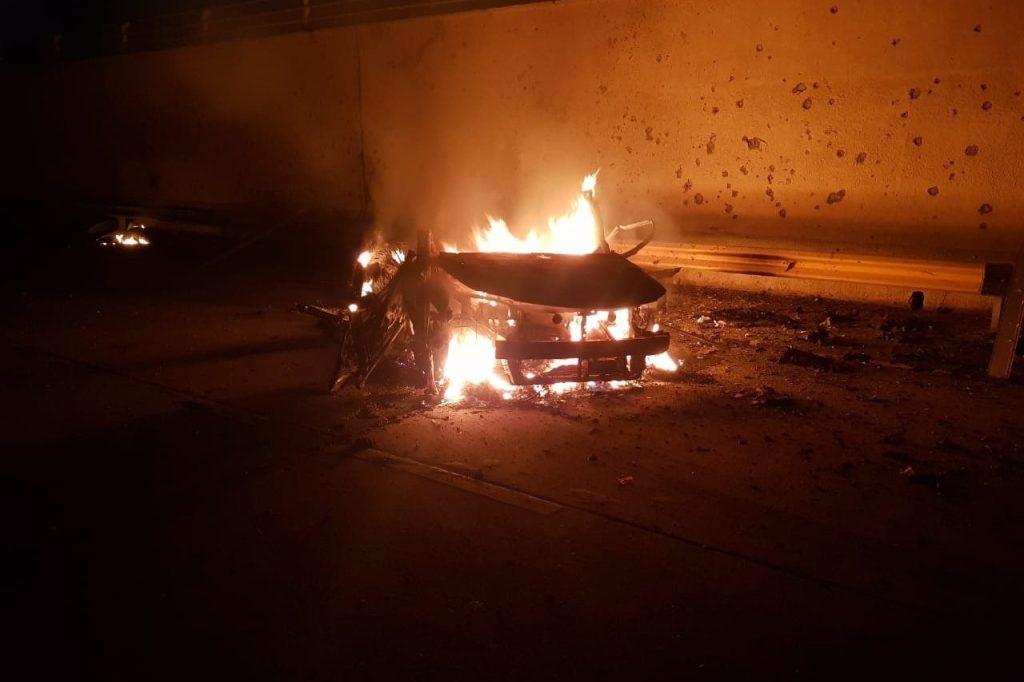
More than six years after a U.S. drone strike killed Iranian Major General Qasem Soleimani near Baghdad International Airport, the operation continues to reverberate through international conflict. Ordered by then-President Donald Trump and carried out on January 3, 2020, the strike eliminated a commander who had overseen Iran’s extraterritorial military strategy for more than two decades. But the removal of Soleimani did not end Iranian retaliation; it triggered an immediate barrage of missiles against American forces and set in motion a chain of revenge plots that U.S. authorities say remain a live operational priority for Tehran.
Strike and Immediate Response
Soleimani, born March 11, 1957, held the rank of major general in Iran’s Islamic Revolutionary Guard Corps and commanded its Quds Force from 1998 until his death. The United States had sanctioned him in 2007 and designated him a terrorist.
Under his leadership, the Quds Force shaped Iran’s strategy across Iraq, Syria, and Lebanon, building networks of allied militias and expanding Tehran’s regional influence. The practical upshot of his killing was immediate and violent. Just five days later, on January 8, 2020, Iran launched a missile attack on U.S. forces stationed in Iraq.
Over 100 U.S. service members were injured in that barrage, making clear the direct cost of the targeted operation.
Duelling Views: National Hero Versus Continuing Threat
In Iran, Soleimani is regarded as a national hero. His funeral drew millions of mourners onto the streets, a display of public grief that underscored his status within the country.
In Washington, the assessment is markedly different. The U.S. government has directly cited Soleimani’s killing as a motivating factor for subsequent Iranian retaliation plots. In 2022, U.S. authorities disrupted a plot by Iran to assassinate former national security adviser John Bolton — an act the U.S. linked directly to Tehran’s desire for revenge over Soleimani’s death.
That thwarted operation demonstrated that Iran’s commitment to retaliating did not fade with time; it remains an active strategic objective for the regime.
Geopolitical Ripple Effects and Ongoing Risk
Soleimani’s rise through the Revolutionary Guard occurred during the tumult of the 1980s Iran-Iraq War, where he first gained attention for battlefield initiative. By the late 1990s he had been named commander of the Quds Force, the branch of the Guard responsible for operations beyond Iran’s borders.
Under his direction the Quds Force expanded its reach across the Middle East, supporting allies in Iraq, Syria, and Lebanon while cultivating a reputation for covert effectiveness. His influence grew alongside Iran’s broader regional strategy, making him a central figure in conflicts that reshaped the political map of the Levant. For ordinary readers, Soleimani’s story illustrates how a single commander’s removal can ripple across geopolitics, altering alliances and fueling cycles of retaliation that persist years later.
The 2022 Bolton plot is a concrete example of that enduring fallout. As the United States continues to assess threats from Iran, the Soleimani killing remains a key reference point for understanding Tehran’s willingness to strike back.
Any future escalation between the two countries will almost certainly be viewed through the lens of that January 2020 drone strike and its aftermath, a reminder that the consequences of targeted strikes can span years and cross multiple theaters of conflict.




