
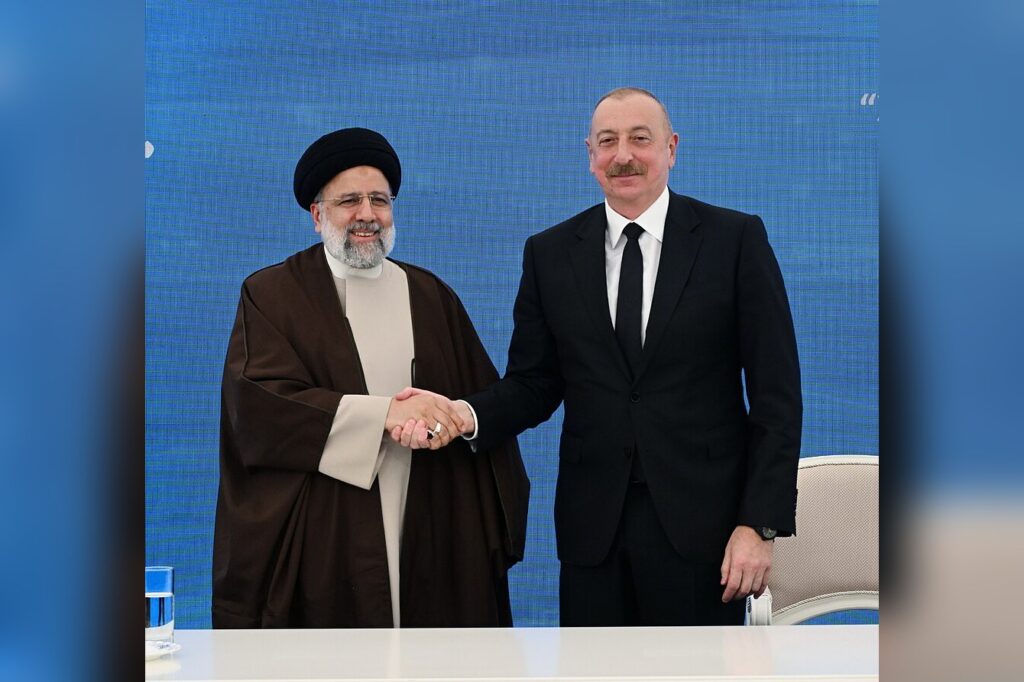
TEHRAN, July 8 — For a man who has spent the last five years steering Iran through one of its most turbulent periods since the revolution, President Ebrahim Raisi remains something of an enigma to many inside the country and out. When he took office in August 2021, succeeding the more technocratic Hassan Rouhani, Raisi arrived as a conservative cleric with a long history inside the judiciary.
Born December 14, 1960, in the holy city of Mashhad, he had spent years as head of Iran’s judiciary before making his successful run for the presidency. His election was notable for its low turnout — just 48.8 percent of eligible voters cast ballots — yet Raisi still won with 62 percent of the vote.
For many Iranians, the choice was less an endorsement of his platform and more a reflection of a political system that had barred most reformist and moderate candidates from running. From the start, Raisi governed as a hardliner, aligning himself closely with Supreme Leader Ali Khamenei, now 85, and positioning himself as a potential successor to the aging cleric.
Nuclear advances and proxy wars
Under Raisi’s leadership, Iran’s nuclear program has pushed enrichment to 60 percent purity, a level that is just a short technical step away from weapons-grade material. This move has drawn sharp condemnation from Western capitals and further tightened the sanctions regime that has crippled Iran’s economy. Raisi has publicly called for a return to the Joint Comprehensive Plan of Action, the 2015 nuclear deal, but insists on the full and verifiable removal of all U.S. sanctions before Tehran will comply.
That position has left negotiations stalled for years. At the same time, Raisi has overseen an increase in support for Iran’s network of proxy forces across the Middle East.
In Yemen, Syria, and Lebanon, Iranian-backed militias have received expanded funding and military assistance, deepening the regional footprint of the Islamic Republic. This strategy has drawn Iran into a shadow war with Israel and the United States, with periodic airstrikes and sabotage operations hitting Iranian assets and nuclear facilities.
Protests and crackdowns
Domestically, Raisi’s tenure has been marked by the largest wave of protests since the 2009 Green Movement. The death of Mahsa Amini in 2022, while in the custody of Iran’s morality police, sparked months of demonstrations that spread across the country. Women and young people led the charge, burning headscarves and chanting slogans against the regime.
Human rights groups estimate that more than 500 protesters were killed during the crackdown that followed. The government did not release its own official casualty figures.
The protests posed a direct challenge to Raisi’s authority and to the system of clerical rule he represents. While the security forces ultimately suppressed the uprising, the anger has not dissipated. By early 2025, Raisi’s approval rating had fallen to an estimated 35 percent, a sign of deep public dissatisfaction with his leadership.
Economic pressures and sanctions
The Iranian economy has been in freefall under Raisi’s watch. Inflation hit 40 percent in 2024, and the economy contracted by 5 percent that same year. The rial has lost much of its value, making basic goods unaffordable for many Iranians.
The government has tried to offset some of the damage by ramping up oil exports, which have partially recovered to around 1.5 million barrels per day, largely through smuggling networks that evade international sanctions. Those sanctions remain a heavy burden.
The United States has imposed more than 1,500 sanctions on Iranian entities, individuals, and industries since Raisi took office. The Trump administration, which returned to power in January 2025, has maintained a policy of maximum pressure, seeking to choke off the revenue that funds Iran’s nuclear program and its proxy forces abroad. Raisi has denounced the sanctions as economic warfare, but his government has been unable to secure any meaningful relief.
A succession question
As Khamenei enters his mid-80s, the question of succession has become a central concern for Iran’s political elite. Raisi is widely seen as a leading candidate to replace the Supreme Leader, a position that holds ultimate authority over all branches of government. His background as a cleric and his loyalty to the system make him a natural choice for the conservative establishment.
But his unpopularity among ordinary Iranians and the economic catastrophe on his watch could complicate any transition. For now, Raisi remains in power, navigating a landscape of foreign pressure, internal dissent, and economic collapse.
Whether he can hold the country together long enough to inherit Khamenei’s mantle — or whether the system will look elsewhere — is a question that will define Iran’s future in the years ahead. The world will be watching closely.




