
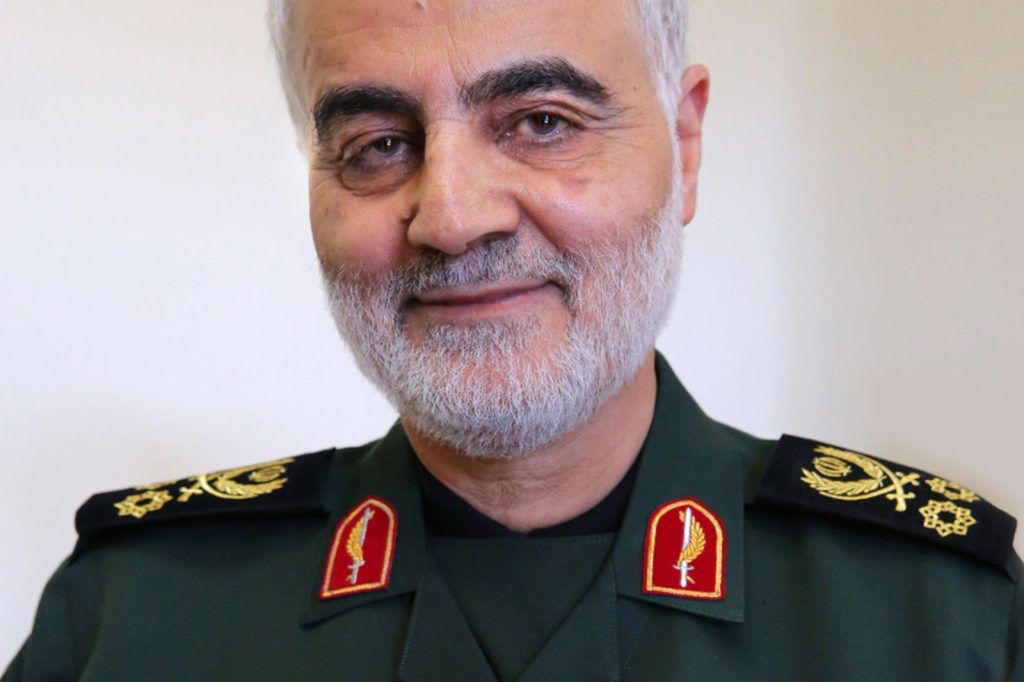
BAGHDAD, January 3 — The targeted killing of Iranian Major General Qasem Soleimani by a United States drone strike near Baghdad International Airport sent shockwaves across the region and the world, escalating a simmering conflict between Washington and Tehran into a direct military confrontation. Soleimani, the head of the Quds Force of the Islamic Revolutionary Guard Corps (IRGC), was a towering figure in Iran’s military and intelligence apparatus, responsible for directing proxy forces and shaping events across the Middle East.
For communities in Iraq, Syria, Yemen, and beyond, his death marked a turning point in a long shadow war that had already cost countless lives. Iran’s response was swift and calculated.
On January 8, 2020, just five days after the strike, Tehran launched ballistic missiles at two Iraqi military bases that housed American troops. The attack caused no U.S. fatalities, but over 100 service members suffered traumatic brain injuries — a toll that would only become fully understood in the months that followed. For the families of those soldiers, and for the broader American public, the attack underscored the very real human cost of a conflict that often played out in distant deserts.
Nuclear Deal Unravels
In the wake of the missile strikes, Iran announced it would no longer abide by the 2015 Joint Comprehensive Plan of Action (JCPOA), the landmark nuclear deal that had limited its uranium enrichment program in exchange for sanctions relief. The United States had withdrawn from the agreement in 2018, a move that had already strained diplomatic relations and emboldened hardliners in Tehran. By April 2021, Iran had increased its uranium enrichment to 60% purity — a level that brought it dangerously close to weapons-grade material.
For nations across Asia, including the Philippines, this development raised the specter of a nuclear-armed Iran and the destabilizing effect it would have on global energy markets and regional security. The breakdown of the JCPOA was not an isolated event.
It was part of a broader pattern of escalation that saw Iran’s proxy forces — in Yemen’s Houthi rebels, Syria’s militias, and Iraq’s paramilitary groups — intensify their operations against U.S. allies and interests. For ordinary people in those countries, the conflict meant disrupted lives, economic hardship, and the constant threat of violence. Closer to home, in Southeast Asia, the ripple effects were felt in the form of volatile oil prices and the risk of terrorist networks exploiting the chaos.
Revenge Plot Uncovered
The vendetta against those perceived as responsible for Soleimani’s death did not end with the missile strikes. In August 2022, the U.S. Justice Department charged a member of the IRGC with plotting to assassinate former National Security Advisor John Bolton. The alleged plot was described as an act of revenge for Soleimani’s killing.
U.S. intelligence assessments have also accused Iran of targeting other former American officials, including former President Donald Trump. These revelations painted a picture of a regime willing to extend its reach far beyond the Middle East, threatening individuals on American soil.
For the families of those targeted, and for the broader community of current and former U.S. officials, the threat was chillingly real. It demonstrated that the conflict with Iran was not confined to battlefields in Iraq or Syria, but had the potential to strike at the heart of American political life. The Justice Department’s charges were a stark reminder that the consequences of Soleimani’s assassination continued to unfold years after the event.
What to Watch Next
As the world looks ahead, the trajectory of U.S.-Iran relations remains uncertain. Iran’s nuclear program continues to advance, and its proxy forces remain active across the region. The United States, under the current administration, has maintained a policy of maximum pressure, while also signaling a willingness to return to diplomacy under certain conditions.
For communities across Asia, the stakes are high: a further escalation could disrupt global energy supplies, fuel regional instability, and create new humanitarian crises. The assassination of Qasem Soleimani was not an end, but a chapter in a long and dangerous story — one that is far from over.




