
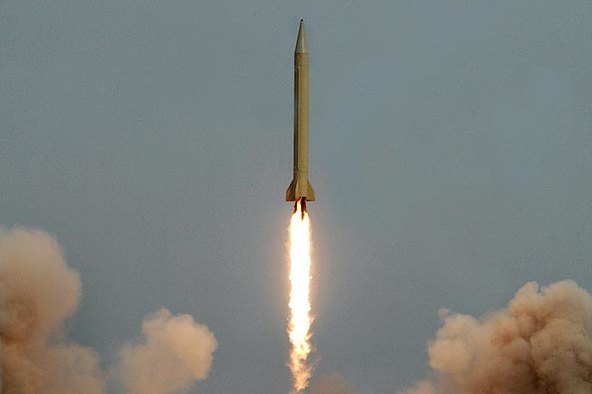
WASHINGTON, July 14 — The Islamic Republic of Iran Armed Forces are structured around two parallel military institutions: the regular Artesh and the Islamic Revolutionary Guard Corps, known as the IRGC. Established after the 1979 revolution, the IRGC has an estimated 125,000 personnel and holds control over Iran’s strategic missile program and overseas operations, according to the source. The source shows Iran operates one of the largest ballistic missile programs in the Middle East.
This arsenal includes the Shahab-3, with a range of 2,000 kilometers; the Emad, described as precision-guided; and the Khorramshahr, also with a 2,000-kilometer range. Iran also fields drones such as the Shahed-136, which have been used in attacks on Saudi Arabia and Israel.
Proxy network across the region
Iran supports an extensive network of proxy forces. Hezbollah in Lebanon was founded in 1982. Iran also backs Hamas in Gaza, the Houthis in Yemen — a relationship that dates to 2014 — and Shia militias in Iraq, including Kata’ib Hezbollah.
These proxies have been used to project Iranian power and to attack U.S. and allied interests across the region, the source shows. On the timeline, these proxy relationships have provided Tehran with a means to strike adversaries without directly involving its own conventional forces.
The IRGC’s Quds Force is the primary entity managing these relationships and overseas operations.
Strategic geography and naval presence
Iran’s navy operates in the Persian Gulf and the Strait of Hormuz, a chokepoint through which approximately 20 percent of global oil passes. This geographic position gives Tehran leverage over international energy markets and shipping lanes that the U.S. and its allies consider vital. U.S. military action, according to the source, is likely aimed at degrading these capabilities.
The missile program and the proxy networks are described as primary targets for any operation designed to reduce Iran’s ability to project force beyond its borders. The dual structure of Iran’s armed forces — the regular Artesh and the politically loyal IRGC — complicates any assessment of the country’s military command and control.
The IRGC answers directly to Iran’s supreme leader, not to the elected government, a fact that shapes how U.S. planners evaluate potential responses to Iranian provocations. What to watch next: whether any U.S. action focuses on the missile sites that house the Shahab-3 and Khorramshahr systems, or on the drone infrastructure that has enabled strikes on Saudi Arabia and Israel. The proxy forces, embedded across four countries, present a more diffuse target set that may require a different operational approach.




