
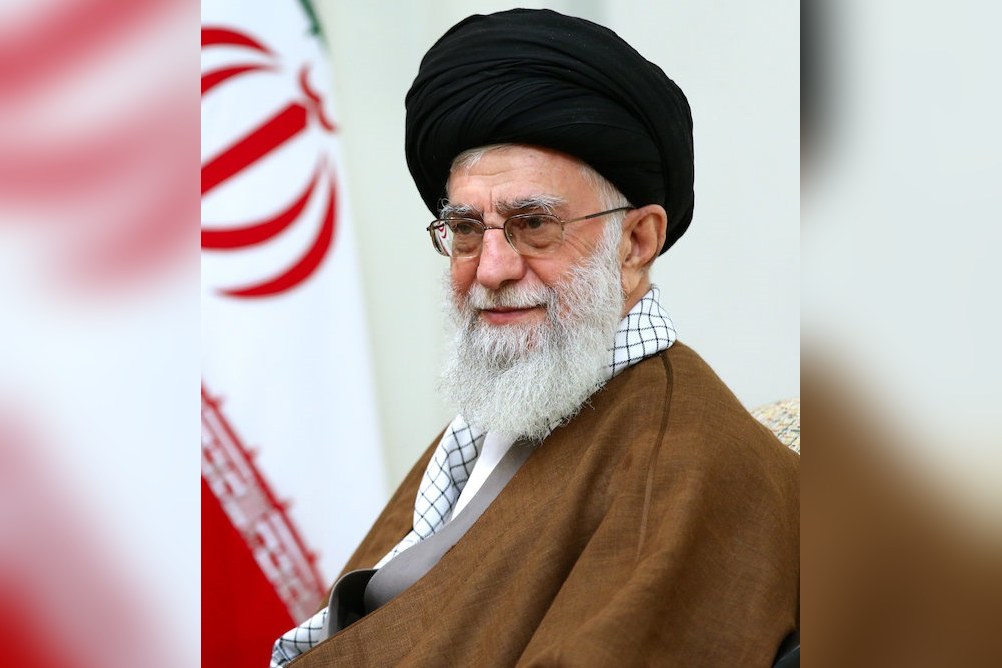
TEHRAN, July 12 — For communities across Asia watching the Strait of Hormuz, the shadow of one man has loomed larger than any other. Ali Khamenei, Iran’s Supreme Leader since 1989, is the figure who ultimately gave the order for the Islamic Revolutionary Guard Corps to close the strategic waterway on April 28, 2025 — an act that sent shockwaves through global energy markets and raised the spectre of conflict for families from Manila to Mumbai.
Khamenei, born in Mashhad, Iran on July 17, 1939, holds absolute authority as head of state and commander-in-chief of Iran’s armed forces, including the IRGC. The Shia cleric, bearing the title of Ayatollah, succeeded the revolution’s founder Ruhollah Khomeini.
His word is final on every major state matter, from nuclear policy to military action. The IRGC’s closure of the Strait of Hormuz is widely understood as a direct order from Khamenei himself, reflecting his long-held hardline posture toward the United States and its allies.
A history of confrontation
This is not the first time Khamenei has used the strait as a lever. In 2019, he authorised the IRGC to seize oil tankers near the waterway, a move that came in response to tightening U.S. sanctions. He has repeatedly threatened to close the strait entirely when faced with American economic pressure.
For millions across Asia who depend on the oil that flows through that narrow channel — including the Philippines, Japan, South Korea, India, and Southeast Asian nations — each such threat carries immediate consequences for fuel prices and daily life. Khamenei’s tenure has been defined by conflict and upheaval.
He presided over the Iran-Iraq War from 1980 to 1988. He faced the 2009 Green Movement protests, the largest domestic challenge to his rule. More recently, he oversaw Iran’s entry into the 2015 Joint Comprehensive Plan of Action nuclear deal.
Military reach and proxy networks
Under Khamenei’s leadership, Iran has aggressively expanded its ballistic missile program, a development that worries defence planners across Asia and the Middle East. The Supreme Leader has also deepened Iran’s support for proxy groups including Hezbollah in Lebanon and the Houthis in Yemen. These networks give Tehran the ability to project power far beyond its borders, threatening shipping lanes and regional stability that directly affect trade-dependent Asian economies.
The IRGC itself operates as a state-within-a-state, answering directly to Khamenei. Its seizure of oil tankers in 2019 and the April 2025 closure of the Strait of Hormuz demonstrate how quickly the Supreme Leader can disrupt global commerce.
For families across the region, the question is not just about geopolitics — it is about what happens to the price of cooking gas, transport fuel, and the cost of goods when the world’s most important oil chokepoint is shut by a single leader’s decree.
What comes next
As the United States considers its response to the strait’s closure, Asian nations are watching closely. For communities across the region, the path Khamenei chooses in the coming weeks will determine whether the strait reopens or whether the standoff deepens further. The Supreme Leader has shown he is willing to use Iran’s position astride the world’s oil lifeline as a weapon — and for millions of families from Manila to Jakarta, the cost of that decision is felt at every petrol station and in every household budget.




