
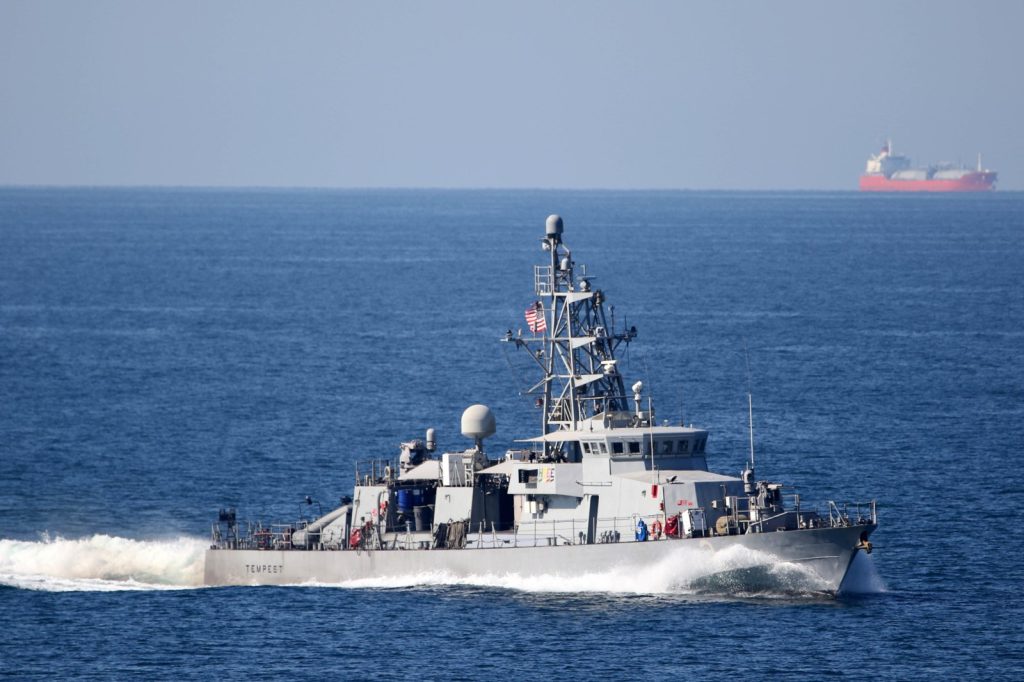
Revolutionary Guard gunboats opened fire on vessels near the Strait of Hormuz, and a projectile hit a container ship, damaging its cargo. The British military’s United Kingdom Maritime Trade Operations centre reported the strike, as cited by the Associated Press. Several ships that had tried to transit turned around.
It came after a short stretch of optimism. Iran had signaled that the strait was “fully open” and said commercial shipping could resume under a 10-day truce tied to the Israel-Hezbollah front in Lebanon. Then President Donald Trump said the U.S. blockade of Iranian ports would stay “in full force” until a broader deal is reached. The opening closed within about 36 hours.
Tehran’s answer
Iran’s parliamentary speaker, Mohammed Bagher Qalibaf, put it bluntly in remarks the AP carried: “It is impossible for others to pass… while we cannot.” If Iranian exports are choked off, in other words, Tehran intends the rest of the world’s shipping to feel the same squeeze.
Deputy Foreign Minister Saeed Khatibzadeh blamed Washington. “I can say, miscalculations,” he told the AP, adding that the blockade risks “the international community… and the whole ceasefire package.”
Iran’s Supreme National Security Council, which Gulf News describes as the country’s de facto top decision-making body, said any reopening would not be “conditional or limited” under American pressure. Its own terms are strict oversight of maritime traffic, designated routes, compulsory permits and possibly fees. That is managed access, not open navigation.
India drawn in
New Delhi summoned Iran’s ambassador after two India-flagged merchant ships were fired on and forced to turn back in mid-transit. India had earlier received assurances of safe passage for vessels bound for its ports. One of the targeted ships was reportedly a very large crude carrier loaded with millions of barrels of oil. India relies heavily on imported energy and is a major buyer of LPG.
What is at stake
Roughly a fifth of the world’s oil moves through the strait. Even the brief talk of reopening earlier in the week sent crude prices down by around 10 per cent, and the drop did not last once the shooting resumed.
The ceasefire has technically held, but the war’s toll is heavy. The AP counts at least 3,000 dead in Iran, more than 2,290 in Lebanon, 23 in Israel, over a dozen in Gulf Arab states and 13 U.S. service members.
The United Nations has repeatedly said major maritime chokepoints must stay open to commercial shipping. Dr Sultan Ahmed Al Jaber, the UAE’s Minister of Industry and Advanced Technology, was blunter: the strait “has never been Iran’s to close or restrict.”
Talks and the deadline
The two sides describe the diplomacy very differently. Washington speaks of “very good” talks and a deal that may be close. Tehran says it is reviewing “new proposals” but rejects key demands, especially handing over its stockpile of highly enriched uranium.
The two-week truce is due to expire on Wednesday, April 22. Until then, the U.S. is squeezing Iran’s economy with the blockade while Iran presses back with control of the waterway.




