
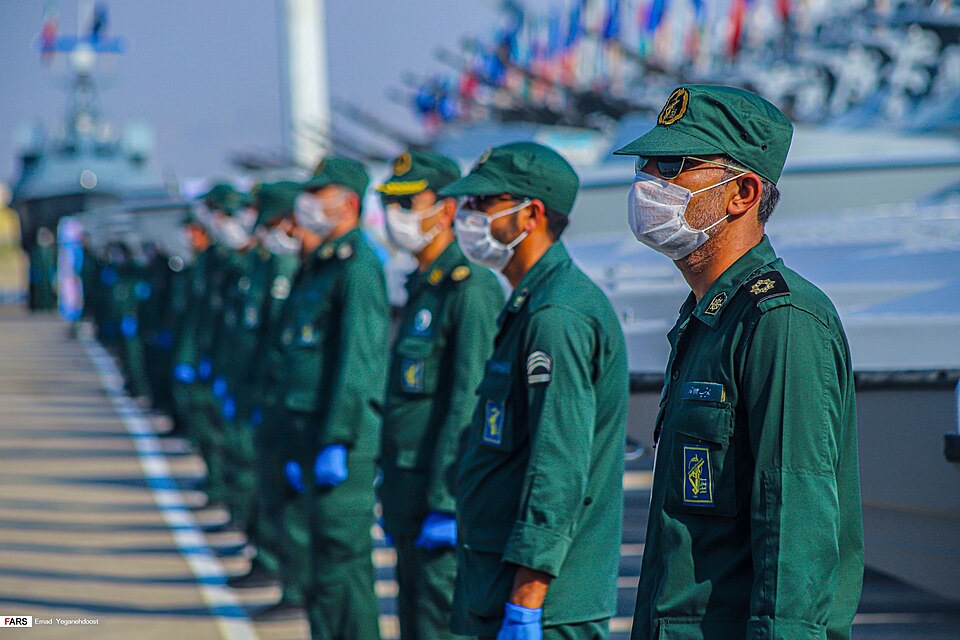
The narrow waters of the Strait of Hormuz, through which roughly one-fifth of the world’s daily petroleum supply moves, have become the focus of an unprecedented official threat from Iran’s naval command. In a declaration issued on April 18, 2025, the Islamic Revolutionary Guard Corps Navy announced a policy of closing the waterway, marking a fundamental departure from decades of conditional or rhetorical threats.
Unlike prior warnings that served as negotiating tactics tied to sanctions or diplomatic disputes, this statement comes directly from Iran’s naval command and represents the most direct challenge to freedom of navigation since the Tanker War of the 1980s. For families across Asia, where many economies are still managing the effects of post-pandemic inflation and supply chain disruptions, the timing of this declaration carries immediate and serious concerns.
The Strait of Hormuz, connecting the Persian Gulf to the Gulf of Oman, is the sole maritime outlet for several Gulf nations and a vital artery for global energy supplies. Any sustained disruption would drive up energy prices, increase shipping insurance premiums, and potentially delay deliveries of essential goods, affecting households and businesses from Manila to Mumbai.
A Vital Waterway With a Volatile History
Iran has threatened to close the Strait repeatedly since the 1980s, but has never fully implemented such a closure. During the Iran-Iraq War from 1980 to 1988, both sides attacked oil tankers and commercial vessels in the Persian Gulf and the Strait in what became known as the Tanker War, from 1984 to 1988.
In response, the United States launched Operation Earnest Will in 1987, reflagging and escorting Kuwaiti oil tankers through the waterway. U.S. Navy ships involved in that operation clashed with Iranian forces. In 2012, as Western sanctions escalated over Iran’s nuclear program, Tehran threatened to close the Strait in response to a European Union oil embargo.
The United States responded by deploying additional naval assets, including the USS John C. Stennis carrier strike group.
Iran did not follow through on that threat. Following the U.S. withdrawal from the Joint Comprehensive Plan of Action and the reimposition of sanctions, Iran was blamed for attacks on two oil tankers near the Strait on June 13, 2019 — the Front Altair and the Kokuka Courageous. On July 19, 2019, Iran seized the British-flagged tanker Stena Impero, holding it for two months.
In 2023, Iran attempted to seize two oil tankers near the Strait but was thwarted by the U.S. Navy. These incidents form a pattern of Iranian naval aggression in the region that has steadily escalated over the past decade.
The New Declaration and Its Regional Implications
The current closure announcement, made by the IRGC Navy on April 18, 2025, is fundamentally different from all previous threats. Past warnings were conditional — tied to specific sanctions or diplomatic disputes — and were never acted upon.
This declaration is an official statement from Iran’s naval command, not a conditional threat from a political figure. It represents a sharp escalation from decades of conditional warnings and is not a rhetorical response to sanctions or a negotiating tactic. For communities across Asia, particularly in countries heavily dependent on imported oil and gas, the prospect of a closure carries immediate and serious consequences.
A closure of the Strait of Hormuz would drive up fuel costs, increase shipping insurance premiums, and potentially delay deliveries of essential goods. The impact would be felt not only at the pump but across the broader cost of living, affecting households that are already managing the effects of post-pandemic inflation and supply chain disruptions.
What Comes Next
The U.S. administration under President Donald Trump has not yet announced a specific naval response to the IRGC’s declaration, but past precedent suggests a significant military posture will follow. Operation Earnest Will in 1987 and the deployment of the USS John C.
Stennis in 2012 both demonstrated Washington’s willingness to commit naval forces to keep the Strait open. The key question now is whether Iran will attempt to enforce its declared closure, and how the U.S. Navy and allied forces will respond. For the millions of people across Asia who depend on stable energy markets, the coming weeks will determine whether this remains a threat or becomes a crisis.
The Strait of Hormuz has never been shut for long despite past threats and regional conflicts, but its role as a vital energy corridor means any prolonged disruption risks shortages and price shocks for economies reliant on Gulf exports.
{“@context”: “https://schema.org”, “@type”: “NewsArticle”, “headline”: “Iran Threatens to Close Strait of Hormuz, Escalating Tensions”, “description”: “TEHRAN, July 12 — The narrow waters of the Strait of Hormuz, through which roughly one-fifth of the world’s daily petroleum supply moves, have become…”, “datePublished”: “2026-07-12T09:30:00+00:00”, “author”: {“@type”: “Person”, “name”: “James Roberto”}, “publisher”: {“@type”: “Organization”, “name”: “InfoPulse Today”, “url”: “https://newsfeed.infopulsetoday.com/”}}




