
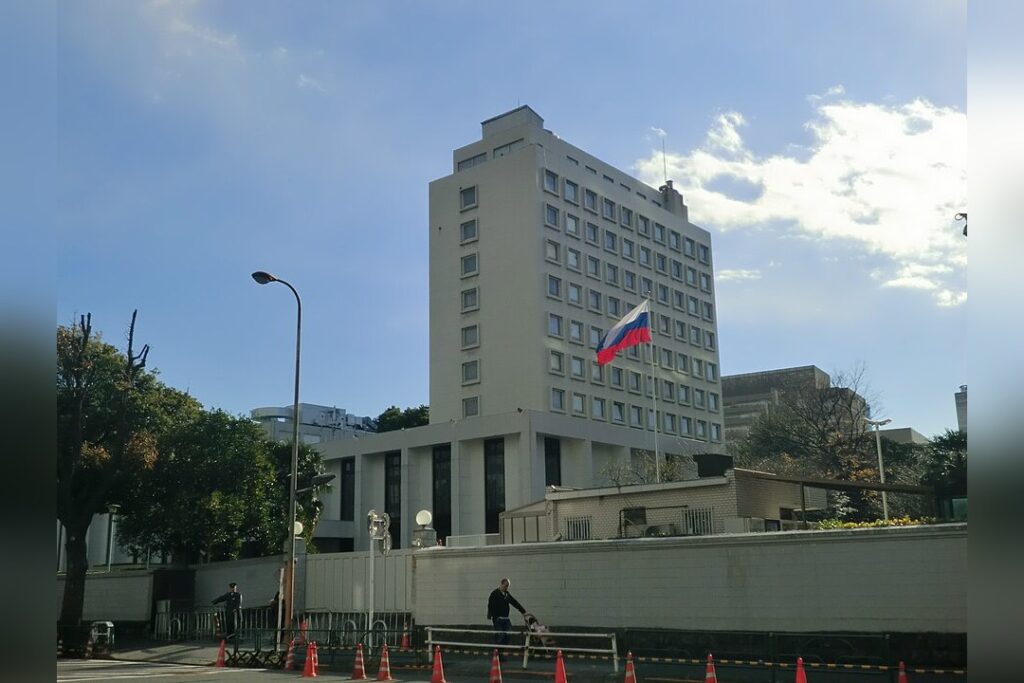
Hungary put Artur Sushkov on a plane out of Budapest on May 4, 2026. He was 36, a third secretary at the Russian Embassy, and his wife left with him. Hungarian authorities had identified him as an undercover officer of the Russian Foreign Intelligence Service. VSquare broke the story, and European Pravda and RBC-Ukraine followed on May 8 and 9.
Counterintelligence officers did not want to wait that long. They proposed sending him home in February 2026, but Viktor Orbán’s government blocked the move for political reasons. An election campaign was under way, and Russia was actively backing Orbán’s reelection effort. Orbán lost the parliamentary election on April 12. Only then did the expulsion go ahead.
What he was after
According to VSquare, Sushkov recruited informants, organized closed-door meetings and collected political information, including on Hungary’s relations with Ukraine. His targets were think tanks and academic bodies close to the Orbán government: the Mathias Corvinus Collegium, the Hungarian Institute of International Affairs and the John Lukacs Institute for Strategy and Politics at Ludovika University of Public Service. Ludovika trains Hungary’s military personnel, police officers and intelligence officers.
A Hungarian source familiar with his activities said he began recruitment efforts with at least three people. RBC-Ukraine added that he tried to obtain data on domestic policy and on the Paks 2 nuclear power plant project. To win agents over, it said, he used expensive gifts and the promise of money for official documents.
The operation against him was carried out by Hungary’s Constitution Protection Office together with the intelligence service of an unnamed NATO country.
Others still in place
The expulsion does not clear out the embassy. Officials from several NATO countries said at least a dozen identified or suspected SVR officers remain there under diplomatic cover. RBC-Ukraine quoted experts who said Orbán’s previous government often softened its response to Russian spies, which made Hungary an attractive base for operations against NATO and Schengen countries.
Audio recordings reported by the same investigation also point to coordination between then Foreign Minister Péter Szijjártó and Russia’s Sergey Lavrov on blocking Ukraine’s accession to the EU. Szijjártó said on April 23, after his conversations with Lavrov were released, that he had never served Russian interests and had acted only in his country’s best interests.
Sources
- Hungary expels Russian spy from Orbán’s inner circle
- Hungary quietly expels Russian spy who infiltrated institutions close to Orbán




