
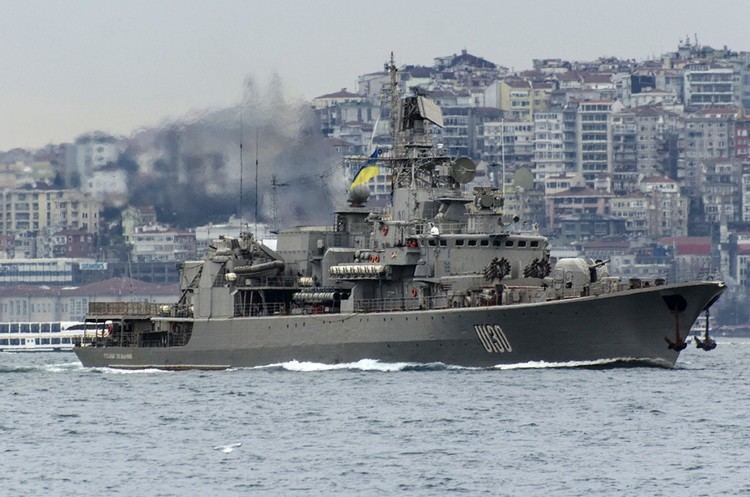
Odesa to Sevastopol takes under twelve hours at fifteen knots. A Sea Baby covers it in less than four, running at nearly fifty knots. That arithmetic, laid out in an Atlantic Council report by Can Kasapoğlu, explains a lot about why Ukrainian uncrewed surface vessels have reshaped the Black Sea.
The sea there is roughly 630 nautical miles wide. Ukraine’s shore-based Neptune missiles reach 162 nautical miles. The drones stretched Kyiv’s sea-denial range well past that.
From garages to a fleet
Ukraine entered the war nearly without a navy. By March 2022, Russia’s opening assault had destroyed most of what remained after the 2014 occupation of Crimea. The first publicly reported Ukrainian USV attack followed in October 2022, eight months into the invasion, when drones slipped deep into Sevastopol Harbor.
Early versions were small explosive-laden boats with cameras, simple enough to be built in garages instead of shipyards. According to the report, the key enabler was resilient two-way satellite connectivity, Starlink among it, which let operators steer and target remotely for the whole mission. Keeping a human in the loop gave more adaptability and faster fielding than full autonomy. Ukraine has since experimented with automation, mainly in the final attack phase, where electronic warfare can cut communications.
Start-ups and volunteer engineers helped drive the MAGURA series. Platforms such as Brave1 linked combat units with developers who could test systems under real fire.
What it has done to the Russian fleet
The report says roughly 30 percent of Russia’s combat assets, centered on the Black Sea Fleet, had been destroyed or badly damaged as of 2026. Its major surface combatants now operate cautiously, if at all. A fleet built to control the sea finds itself confined, dispersed and tucked behind layered harbor defenses.
In April 2026, a USV division of the 412th Nemesis Brigade shot down a Russian Shahed drone using an interceptor launched from an unmanned surface vessel, according to footage the Ukrainian Defence Ministry posted on X. The report calls it the first engagement of its kind.
The same month, President Volodymyr Zelenskyy highlighted three families of naval drones: the Security Service’s Sea Baby, the Defence Intelligence-developed Magura V5 and the Sargan-3000 adopted by the Ukrainian Navy.
Cost and caution
A separate analysis from Unmanned Frontier argues that the price tag is only part of the economics. The defender needs sensors, patrols, barriers, helicopters and electronic warfare, while the attacker needs communications, launch infrastructure and repeated sorties. The bigger effect is cost imposition: a warship changes routes, stays farther from shore or adds escorts because a small contact might be hostile.
The same analysis cites RUSI as saying uncrewed platforms were critical to constraining Russian naval freedom in the Black Sea, though shore-based missiles, intelligence and air attack also played a part.
Elsewhere, the U.S. Navy is building permanent unmanned surface vessel squadrons and has created a Robotics Warfare Specialist rating.
Sources
- From cloud to kill zone: How Ukraine rewired naval warfare for the age of algorithmic warfare
- The Unmanned Sea: How Naval Drones Are Changing Maritime Warfare




