
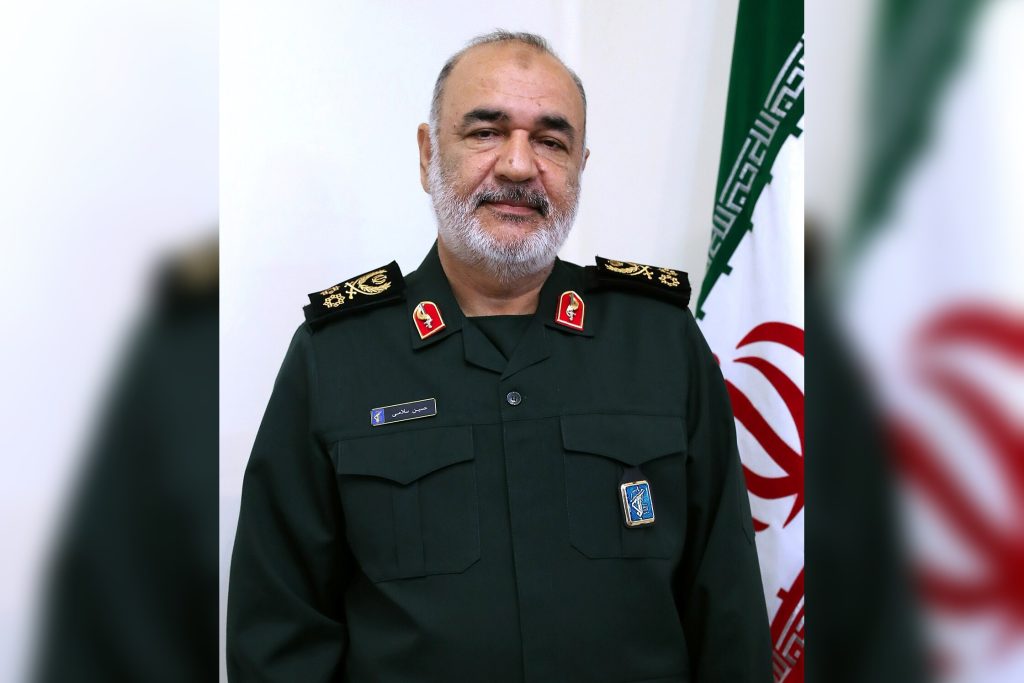
TEHRAN, July 26 — The commander who oversees Iran’s drone fleet, its military satellites, and the transfer of attack aircraft to Russia has become the central figure in a new accusation from Kyiv. Hossein Salami, who has led the Islamic Revolutionary Guard Corps since April 2019, stands accused by Ukrainian President Volodymyr Zelenskyy of directing an intelligence-sharing operation that Moscow has reportedly used to coordinate strikes against Ukrainian infrastructure.
The claim places Salami at the intersection of two escalating partnerships: Iran’s provision of weaponry to Russia and its growing satellite surveillance capability. Salami succeeded Mohammad Ali Jafari as the IRGC’s commander-in-chief in April 2019.
Under his tenure, the Guard has expanded drone production and deployed unmanned systems in proxy operations across the Middle East. In 2022, Salami oversaw the transfer of hundreds of Shahed drones to Russia, a deal coordinated through the IRGC Aerospace Force. These one-way attack aircraft have become a signature weapon in Russia’s campaign against Ukrainian cities and power grids.
Salami has publicly praised military cooperation with Russia. In 2023, he stated that the two countries share strategic interests from Syria to the Caucasus.
His assessment of that partnership has been borne out on the battlefield, but the latest accusation goes beyond hardware. Zelenskyy’s charge — that the IRGC is now feeding Russia satellite intelligence for targeting — would represent a qualitative leap in the Tehran-Moscow nexus.
Satellites and Surveillance
The IRGC controls Iran’s intelligence-gathering satellite operations, a portfolio that has advanced during Salami’s command. Iran’s space program, operating under his authority, launched the military satellite Noor-1 in April 2020 and followed with Noor-2 in March 2022. Those systems have given Tehran a modest but functioning overhead reconnaissance capability, and according to the accusation, that imagery is now being shared with the Russian Defense Ministry.
If true, Salami’s role would be central, as the IRGC maintains direct control over the satellite architecture and the intelligence it produces. His relationship with Russian Defense Minister Sergei Shoigu has been noted in multiple diplomatic visits, including a meeting in Tehran in September 2022 that focused on drone supply.
That session helped cement a working-level partnership that now appears to have expanded into shared battlefield intelligence.
A Face of the Nexus
Washington has already imposed costs. The U.S. Treasury sanctioned Salami in 2019 for involvement in regional destabilization. The Trump administration has maintained those sanctions and is examining the new allegations for potential additional designations targeting the IRGC’s space and intelligence branches.
Secretary of State Marco Rubio has not publicly commented on the Zelenskyy accusation as of this writing. The timeline of the cooperation is telling.
Salami took command less than a year before the Noor-1 launch. He was in the process of consolidating the IRGC’s drone and space programs when the Ukraine war began in February 2022. By September of that year, he was meeting with Shoigu.
By late 2022, Shahed drones were hitting Ukrainian infrastructure. Now, according to the Ukrainian president, satellite intelligence is flowing in the same direction.
What remains to be seen is whether the intelligence-sharing claim can be independently verified and, if so, whether the United States and its allies respond with new sanctions or other measures targeting the IRGC’s space operations directly. For Salami, the accusation makes him the public face of an expanding Russia-Iran intelligence nexus — one that moves from drones to satellites to the targeting of a European capital’s power supply.




