
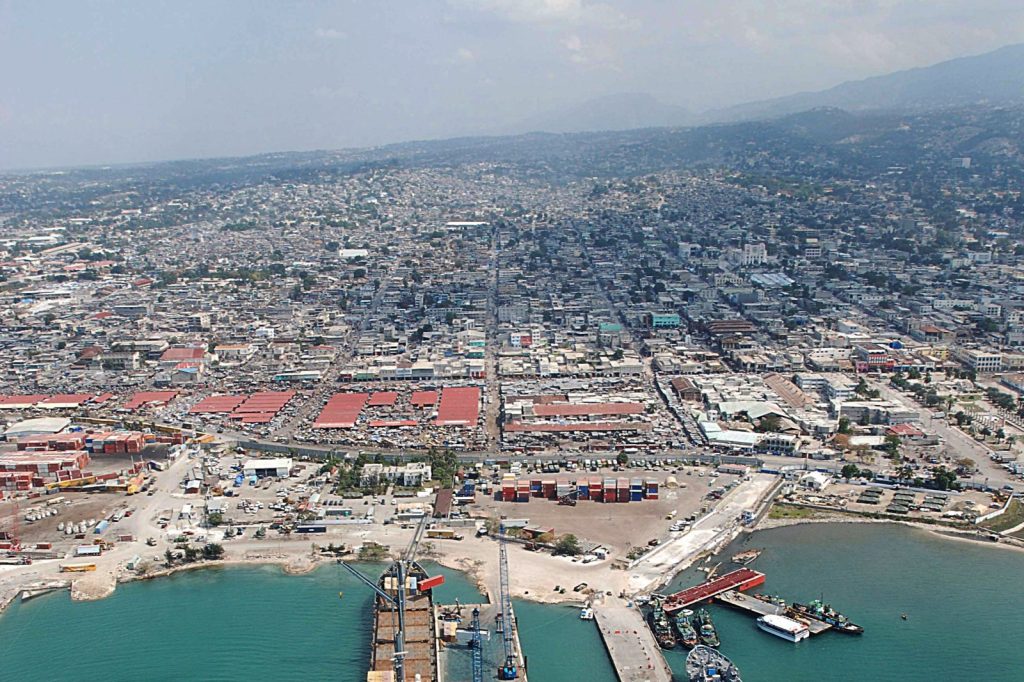
Port‑au‑Prince is now largely under the control of armed groups, with estimates suggesting that anti‑government factions hold up to 90 % of the city. The rapid disintegration of state authority, which has been eroding since 2020, has forced many residents to take up weapons themselves, forming self‑defence units known locally as “bwa kale.” The Haitian government’s grip on the capital has steadily weakened, allowing two major coalitions to expand their influence.
The Revolutionary Forces of the G9 Family and Allies (FRG9 or simply G9) and the rival G‑Pèp group dominate much of the fighting, targeting each other as well as the embattled state security forces. Civilians find themselves caught in the crossfire, prompting the emergence of the bwa kale movement as a third, less predictable element that no longer waits for official protection.
International observers have expressed mounting concern over the deteriorating security situation. On 2 October 2023, the United Nations Security Council adopted Resolution 2699, authorising a multinational security support mission to be led by Kenya. While the resolution underscores the Council’s view that the crisis warrants foreign intervention, the exact mandate, size and operational details of the Kenyan‑led force have not been disclosed.
Kenya’s own security challenges raise questions about how its troops will operate in a city where the majority of territory is contested. The bwa kale phenomenon did not arise spontaneously.
Years of governmental failure to secure neighborhoods, coupled with an inability of police forces to maintain order on the streets, allowed gangs to expand their hold block by block. Faced with this vacuum, some residents concluded that taking up arms, despite the risks, was preferable to passive helplessness. Unlike the more structured G9 and G‑Pèp organisations, the vigilante groups are loosely organised and spontaneous, making them difficult to predict or control. Today Port‑au‑Prince resembles a patchwork of armed enclaves.
The official government retains limited footholds, the G9 and G‑Pèp coalitions control larger swaths, and the bwa kale movement occupies scattered pockets. No single faction currently possesses the capacity to end the conflict outright, and fighting continues neighbourhood by neighbourhood.
The UN’s resolution signals that external powers recognise the absence of a quick solution. While a multinational deployment may bring a measure of stability, it will not resolve the deep‑seated issues that have fueled gang expansion, governmental weakness and the rise of civilian militias. The G9 and G‑Pèp groups are unlikely to lay down arms voluntarily, and the bwa kale networks are not expected to dissolve simply because foreign troops arrive.
Likewise, the Haitian government is not poised to instantly reclaim the 90 % of its capital now under non‑state control. Resolution 2699 therefore represents a tentative step toward addressing the crisis, but the path ahead remains fraught with uncertainty.
The interplay among the entrenched gangs, the emergent vigilante groups and the beleaguered state will continue to shape Haiti’s security landscape for the foreseeable future.




