
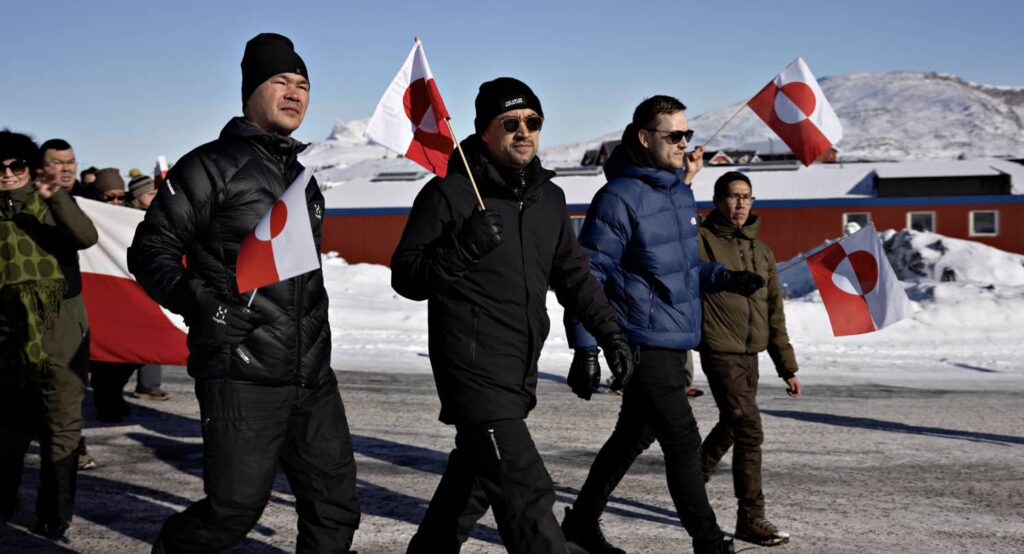
NUUK, July 8 — Greenland’s self-rule framework, now more than a decade in operation, continues to define the territory’s relationship with Denmark as a distinct political entity under international law. The arrangement, which took effect on June 21, 2009, followed a 2008 referendum in which Greenlanders approved expanded autonomy from Copenhagen. According to the historical record, Greenland was a Danish colony until 1953, when it was formally integrated as part of the Kingdom of Denmark.
In 1979, Denmark granted home rule, establishing a local parliament, known as Inatsisartut, and a government, called Naalakkersuisut. The 2009 self-government act deepened that arrangement, recognizing Greenlanders as a distinct people under international law.
That recognition carries concrete legal weight. Under the current self-rule framework, Greenland has assumed control over natural resources, the police force, and the judicial system. Denmark, however, retains authority over foreign affairs, defense, and monetary policy — areas that remain central to the kingdom’s unified sovereignty.
Officials have confirmed that Greenland’s economy is heavily dependent on fishing, which accounts for over 90% of exports. The territory also receives an annual block grant from Denmark of about 3.9 billion Danish kroner, which is about $570 million.
That subsidy remains a significant factor in the territory’s fiscal stability. The population stands at approximately 57,000, with the capital Nuuk serving as the largest urban center. Greenland is not a member of the European Union, but maintains an association through Denmark and operates a fisheries agreement with the bloc.
The self-rule arrangement has drawn renewed international attention in recent years, particularly as Arctic geopolitics intensify. Greenland’s control over its natural resources — a key provision of the 2009 act — places the territory at the center of discussions about mineral extraction, energy development, and shipping routes in a warming Arctic. Denmark’s retained control over foreign affairs and defense means that any major international agreements involving Greenland must pass through Copenhagen.
That dynamic has at times created friction, particularly when external powers — including the United States and China — have shown interest in Greenlandic infrastructure or resource projects. The 2009 self-government act explicitly grants Greenland the right to declare full independence, though that would require a referendum and subsequent negotiations with Denmark.
No such referendum has been scheduled, and officials in both Nuuk and Copenhagen have generally emphasized the current arrangement’s stability. As of mid-2026, the self-rule framework remains the operative political reality for Greenland. The territory continues to balance its growing autonomy with the economic and security guarantees provided by the Kingdom of Denmark.
Observers are watching whether further resource development or shifting Arctic security dynamics will prompt renewed debate in Nuuk about the pace and direction of self-determination.




