
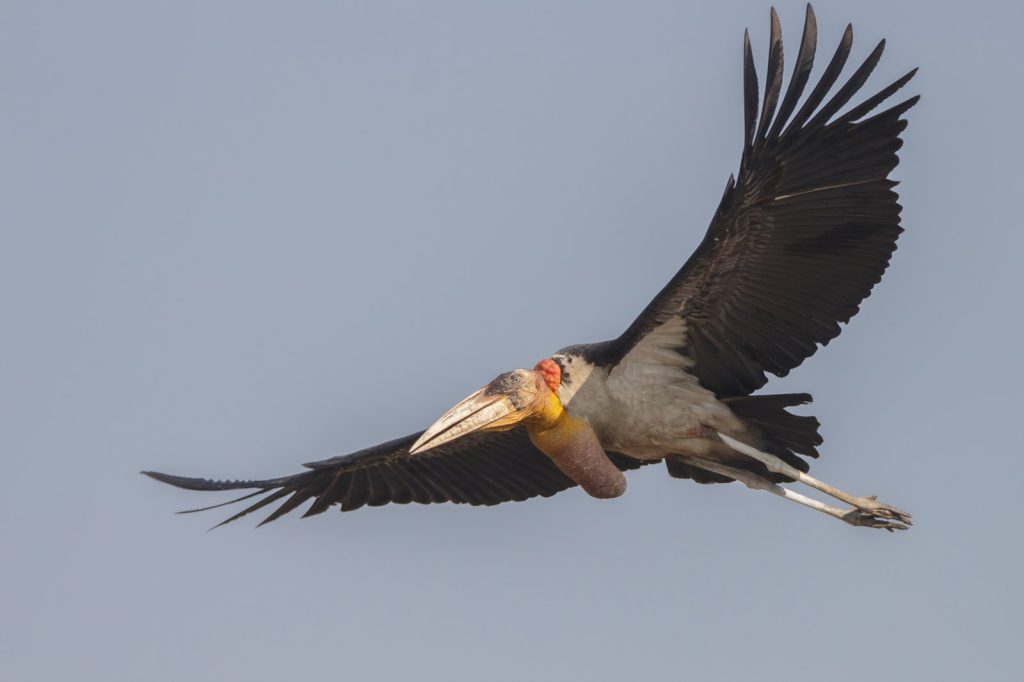
Two nine-month-old Greater Adjutant storks, a male and a female, now fly free in Siem Pang Wildlife Sanctuary, each wearing a GPS tracker. Conservationists in Cambodia say it is the first time captive-bred chicks of the species have been released into the wild in the country.
The sanctuary, in Stung Treng Province, is a protected area overseen by the Rising Phoenix conservation group. Jack Willis, who leads research at the Angkor Center for Conservation of Biodiversity (ACCB), said the site was chosen on purpose. “This place is perfect because there are still wild Greater Adjutants in the area,” he said. “We’re hoping by releasing them here that they could perhaps join a colony, but also this area is very well protected by Rising Phoenix and the Ministry of Environment.”
A fragile recovery
The Greater Adjutant, a large bird with black wings and a long neck, was once listed as endangered on the International Union for Conservation of Nature’s Red List. Decades of conservation work reversed the decline, and it is now classed as “Near Threatened”. Poaching and habitat loss still weigh on the species.
ACCB data put the number of mature birds left in the wild at an estimated 1,500 worldwide. Between 200 and 250 of them live in Cambodia, and most of the rest are in northeast India. Willis does not think that count is safe. “It could take one, one big event and we could lose an awful lot in Cambodia,” he said in an interview, adding that captive breeding was needed to head off extinction.
Breeding is slow going. The ACCB holds three rescued pairs at its centre in Siem Reap province, yet only one pair has raised chicks. Storks taken from wildlife traffickers never learned parenting skills in the wild, which makes rearing young harder for them.
What counts as success
Nobody expects the two released birds to slip into the wild population right away. Wild adjutants normally head to breeding sites in the Prek Toal sanctuary in late October, but they usually learn that route from adults in a colony, and these chicks had no such teachers. The team acclimatised them to their new surroundings with care, though Willis set a modest bar: surviving the first three to four months in the wild would count as a success.
The trackers should show how they fare. Willis said the project could help “develop the protocol for the conservation of Greater Adjutants and potentially similar species of storks like Lesser Adjutants.”




