
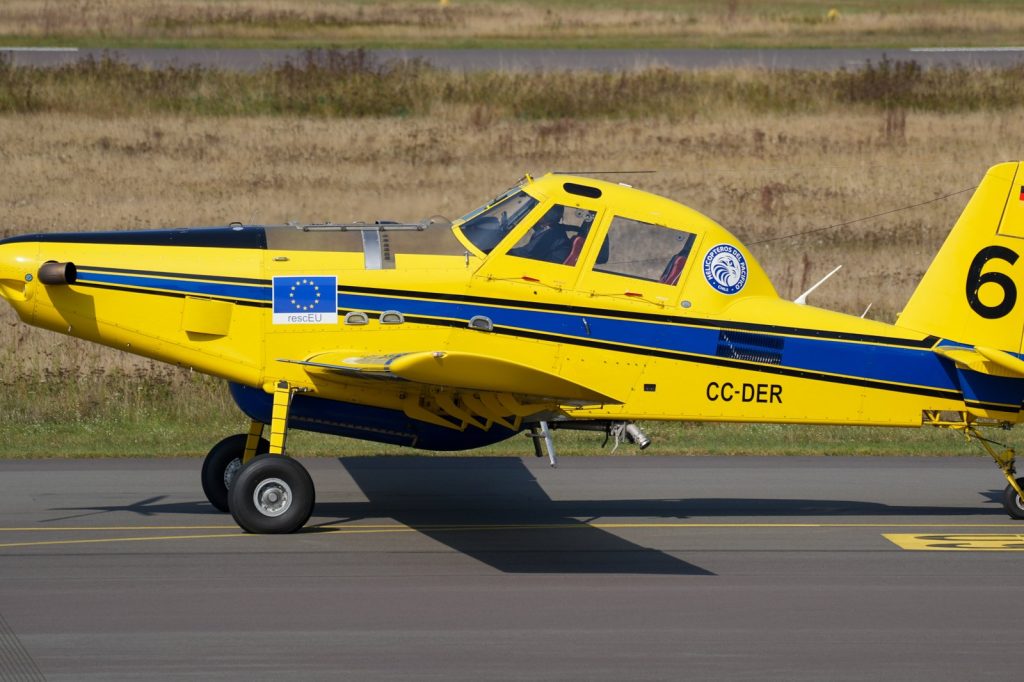
BRUSSELS, July 28 — Seven years after the European Union launched RescEU as a common backup for national firefighting fleets, the mechanism remains a work in progress — useful when it works, underwhelming when tested at scale. The idea was sound on paper. Established in 2019, RescEU was meant to pool civil protection assets — firefighting aircraft, medical equipment, transport capacity — so that a country overwhelmed by disaster could tap a pre-positioned reserve rather than beg neighbours for help in the thick of a crisis.
The catch? The reserve has never been large enough to cover simultaneous conflagrations, and the procurement pipeline has been sluggish from the start.
What the numbers show
By 2023 the aerial fleet counted 12 firefighting planes and 8 helicopters, stationed across member states. During that year’s wildfire season, RescEU deployed aircraft to Greece, Italy, and Portugal — three southern members that face seasonal fire peaks around the same weeks. On closer reading, that means the fleet was stretched thin the moment two countries needed assets at the same time, which is precisely the scenario the mechanism was meant to handle.
The EU also activated the broader European Union Civil Protection Mechanism, through which 28 countries offered assistance. That aid took the form of firefighting personnel, ground vehicles, and satellite imagery from the Copernicus Programme — useful intelligence, but not a substitute for air power when flames are advancing on inhabited areas.
Follow the money
The EU committed €600 million to disaster preparedness across the 2021-2027 budget period. That sounds like a serious sum until you break down the mechanics here: building, maintaining, and rotating a fleet of amphibious planes and heavy helicopters is expensive, and the money has to cover not just aircraft but training, coordination hubs, and upgrades to national civil-protection systems. Critics have pointed out that the fleet size is insufficient to cover all fires simultaneously, and that aircraft procurement has been slow.
Those are not new complaints. They reflect a deeper tension in the RescEU model: the system is designed as a supplement to national capabilities, but several member states have run down their own fleets over the past two decades, betting that Brussels would eventually fill the gap.
So far, the gap has remained.
What comes next
The EU has proposed a dedicated permanent firefighting fleet to be in place by 2030. That is the headline. The question, as always with multi-year EU procurement projects, is whether the timeline will hold and whether the eventual fleet will be sized to the risk.
The 2023 deployments to Greece, Italy, and Portugal demonstrated that RescEU can move fast when the political will is there. They also demonstrated that 12 planes and 8 helicopters do not go very far when three countries are burning at once.
The next few budget cycles will show whether the 2030 target is a genuine commitment or another incremental step dressed up as a breakthrough. For now, RescEU remains what it was in 2019: a useful but undersized tool that works brilliantly for the first fire and struggles with the second.
{“@context”: “https://schema.org”, “@type”: “NewsArticle”, “headline”: “EU’s RescEU Fleet and Civil Protection: A Growing Role in Fighting”, “description”: “BRUSSELS, July 28 — Seven years after the European Union launched RescEU as a common backup for national firefighting fleets, the mechanism remains a work…”, “datePublished”: “2026-07-28T09:30:00+00:00”, “author”: {“@type”: “Person”, “name”: “Beatrice Ferrari”}, “publisher”: {“@type”: “Organization”, “name”: “InfoPulse Today”, “url”: “https://newsfeed.infopulsetoday.com/”}}




