
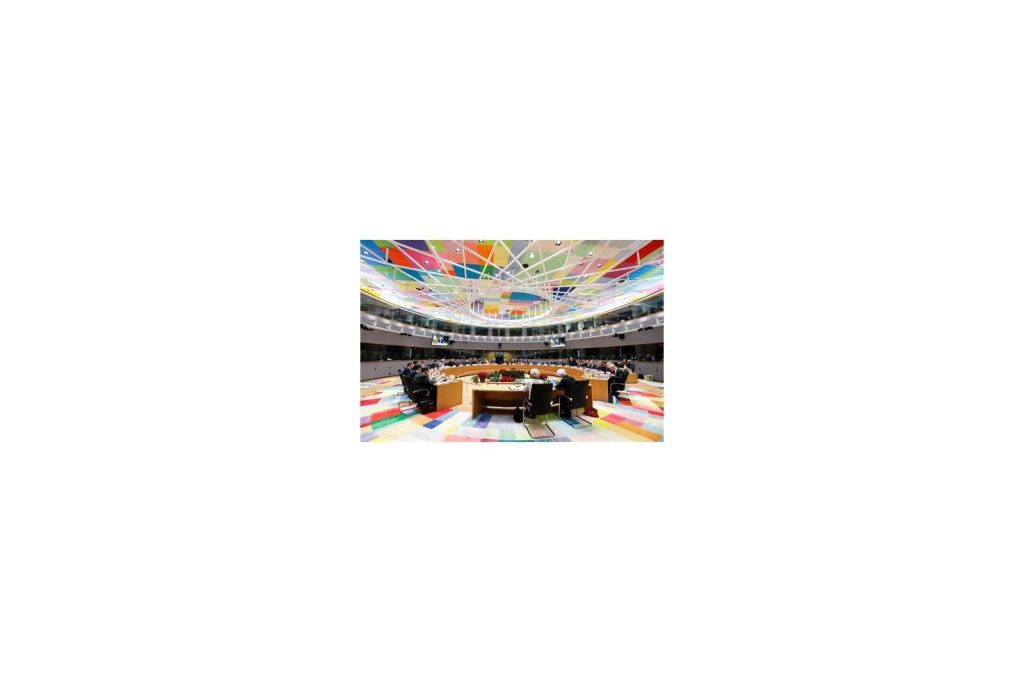
BRUSSELS, July 28, 2026 — In the corridors of the Council of the European Union, diplomats are deep in the quiet but exacting work of assembling what would be one of the bloc’s largest ever sanctions packages, a plan to blacklist some 1,600 firms and entities. Against this backdrop, the technical machinery of EU foreign policy—often invisible to the public—comes into sharp focus, revealing how the Union turns political will into legal force.
The adoption of an EU sanctions package follows a structured three-step process, a mechanism refined through years of crises. It begins not in the Council chamber itself, but in the offices of the European Commission and the European External Action Service.
There, legal acts are drafted, listing the individuals and entities to be sanctioned along with detailed justifications. For the current 1,600-firm plan, the Commission relies on intelligence supplied by member states, the United States, Ukraine, and open sources. Each targeted entity must meet the legal criteria set out in Council Regulation 269/2014—a verification phase that is painstaking and deliberate.
A Structured Process
Once the proposal is ready, the baton passes to the Council’s RELEX working group on foreign relations. Here, diplomats from all 27 member states sit around the table to debate the listings and potential exemptions. This stage can take weeks or even months, especially when a member state raises objections.
Hungary has frequently used this phase to delay proceedings or demand changes, insisting, for example, that the 11th package adopted in June 2023 not target Rosatom, Russia’s nuclear energy company. The wider picture is one of negotiation: any member can request additions or removals, and consensus is the goal.
When agreement is reached at the working level—a moment that can be hard-won—the proposal moves upward to the Foreign Affairs Council. Composed of the 27 foreign ministers, the FAC must adopt the sanctions by unanimity. The vote is usually a formality after prior agreement, but the requirement for absolute consensus gives every member state leverage.
For the current 1,600-firm plan, EU officials have not set a firm timeline, but similar packages have taken between two and six months from announcement to adoption. The 14th package, proposed in May 2024, was adopted the following June—a relatively brisk pace that nonetheless required careful diplomatic choreography.
What Is at Stake
After formal adoption, the legal act is published in the Official Journal of the European Union and enters into force the following day. Enforcement then becomes the responsibility of each member state, with penalties for violations varying by national law. What is at stake in these negotiations extends beyond the immediate targets; the process itself tests the Union’s cohesion.
In the corridors of the Council, the ability to maintain unanimity on sanctions is seen as a measure of the bloc’s resolve, especially when external pressure mounts. The 1,600-firm package, still under debate, will reveal whether that resolve holds.
Looking ahead, diplomats are watching for any signs that a member state—Hungary being the most frequent source of friction—might again use its veto threat to reshape the package. The timing of adoption remains uncertain, but the machinery is in motion. For now, the focus is on the quiet, often protracted work of ensuring that each name on the list meets the legal standard, and that the political consensus holds.
The wider picture, against this backdrop, is one of a Union testing the limits of its own machinery.




