
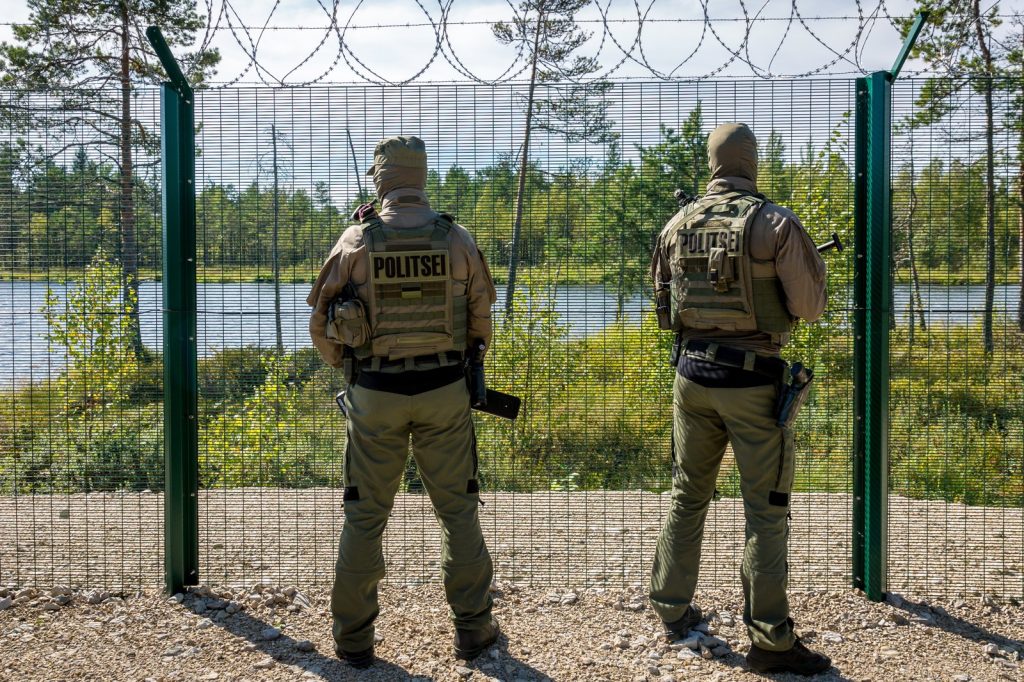
TALLINN, July 6 — Estonia’s border with Russia runs 294 kilometers, a line drawn through forests and marshland that has been a source of friction since the Soviet collapse. Officials in Tallinn have long viewed Moscow’s refusal to ratify the 1920 Tartu Peace Treaty as a sign of unresolved territorial claims. Estonia regained independence from the Soviet Union in 1991 and joined NATO in 2004.
The country’s Russian-speaking minority makes up about 25 percent of the 1.3 million population, a demographic reality that has at times complicated internal politics and external relations. The record shows that tensions escalated sharply in 2007, when Estonia relocated the Bronze Soldier statue in Tallinn.
That move, officials confirmed, triggered a wave of cyberattacks against Estonian government networks. The episode became a defining moment for the country’s approach to digital defense. Estonia has since hosted the NATO Cooperative Cyber Defence Centre of Excellence, established in 2008.
The center has become a hub for alliance work on digital warfare, drawing on the lessons of the 2007 attacks. The 2022 Russian invasion of Ukraine deepened Estonia’s security concerns.
According to officials, the war demonstrated the vulnerability of NATO’s eastern flank and reinforced Tallinn’s push for a permanent allied presence on its soil. Estonia’s defense spending stood at 2.8 percent of GDP in 2023, according to the source material, placing it above NATO’s 2 percent target. That level of investment reflects a consistent political consensus in Tallinn that Russia poses a direct threat.
The strategic context now includes a question that has become more urgent in recent months. The U.S. withdrawal raises questions about Estonia’s ability to deter potential Russian aggression without a permanent U.S. force, officials have acknowledged. The phrase “without a permanent U.S. force” appears in the source material as a point of concern.
Estonia has consistently supported NATO’s presence on its territory. The alliance’s enhanced forward presence battlegroup, led by the United Kingdom, has been stationed in the country since 2017.
But the prospect of a reduced American footprint changes the calculus. What happens next depends on whether Washington maintains its commitments to the Baltic states. For now, Tallinn continues to push for a clear signal that the U.S. will not leave the region exposed.




