
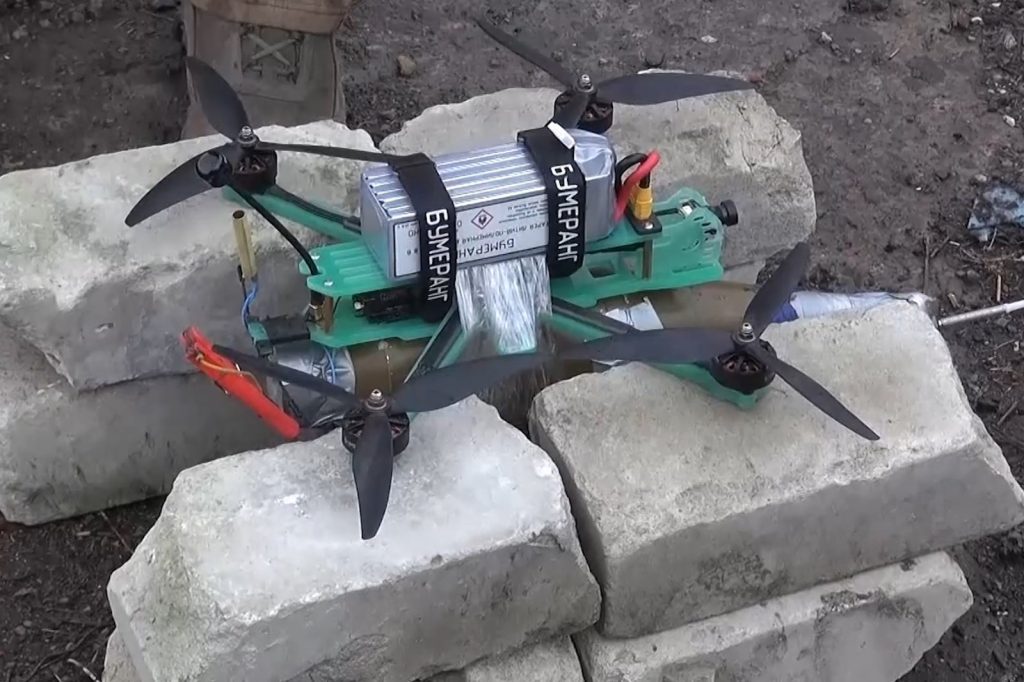
On the night of October 16, Russia’s Defense Ministry said its forces had brought down 644 Ukrainian drones over 26 regions and Crimea. Moscow Mayor Sergei Sobyanin put the number heading for the capital at 94. Nearly 160 flights at the city’s four main airports were delayed or cancelled, according to The Moscow Times.
One night, one city, and an air traffic system thrown out of rhythm by aircraft that cost a fraction of what the missiles chasing them do. That is the arithmetic the Russo-Ukrainian War has taught every general staff in Europe.
The Russian side of the ledger
Moscow’s own workhorse is the Iranian-designed Shahed. The CSIS Missile Defense Project says the Shahed-136 is estimated to fly 1,000-2,000 km, though the US Defense Intelligence Agency suggests it may reach 2,500 km. It carries a warhead of 20-50 kg. Analysts put the price at “$20,000 to $50,000”, low enough because the airframe relies on commercially available parts.
Russia has used the Shahed-131 and the larger -136 extensively since 2022, aimed mostly at Ukrainian air defenses and energy infrastructure. By 2023, Russia and Iran had begun setting up production lines in the Alabuga Special Economic Zone, and the Russian designations are Geran-1 and Geran-2. Some variants now carry steel casing to punch through hardened targets.
The front line as a kill zone
Close to the fighting, drones have changed how armies move at all. The Telegraph, in a report carried by Hromadske on October 5, described how Ukraine fought to push back the belt of Russian drone coverage that had kept armor out of the battle. Its method was patient. Ukrainian forces hit drone and battery supply routes about 10 miles behind the line, artillery supplies 20 to 25 miles back, and reconnaissance drone infrastructure more than 60 miles back. In May alone there were over 200 strikes on Russian logistics vehicles.
Eight months of preparation preceded the push. Infantry and paratroopers went in first, at times walking 12 miles across open ground through gaps in Russian positions. Tanks followed only once the ground was secured, and gave fire support rather than leading the assault.
Sam Cranny-Evans, an armor specialist at RUSI, said the places that once hurt Ukrainian units can now be crossed “a bit more safely”. The price was not zero: Ukraine lost at least one US-made Abrams, though Western tanks fitted with extra protection reportedly withstood smaller drone strikes. A Ukrainian officer told the paper the army now has the upper hand in surveillance: “We can afford to adjust artillery fire using their messenger app.”
What it means for Europe
For European defense ministries the lesson is blunt. A weapon that costs tens of thousands of dollars can close a city’s airports, and a war can turn on whoever hides and hunts better in the thin band of airspace above the trenches. Putin, for his part, brushed off the October raids as causing “nothing particularly significant”. The departure boards at Moscow’s airports told a different story.
Sources
- Shahed-131 and -136 | Missile Threat | CSIS Missile Defense Project
- Russia Repels 644 Ukrainian Drones as Trump Calls Attacks on Russian Refineries 'Disgrace'
- Ukraine pushes back Russia's drone 'kill zone' to bring tanks back into battle (Telegraph, via Hromadske)




