
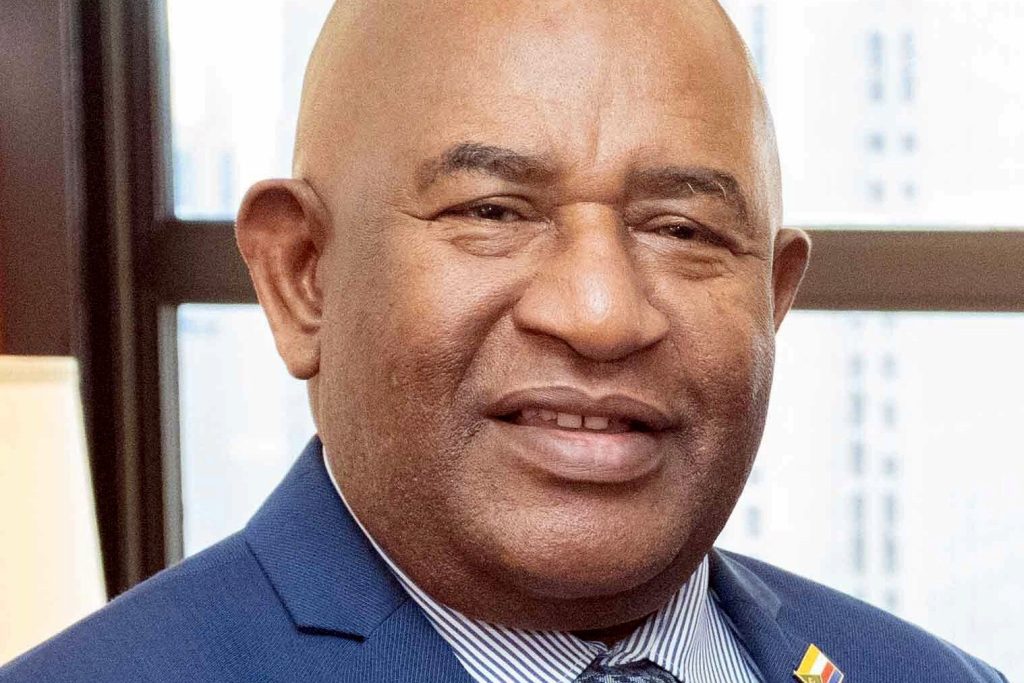
On 26 May, Azali Assoumani was sworn in for a fourth five‑year term as president of the Comoros, a small archipelago of fewer than one million people located in the Mozambique Channel of the Indian Ocean. The inauguration marks another chapter in a long‑running geopolitical contest that pits Western powers against China for influence over the island nation.
The United States has long positioned itself as a supporter of democratic governance and human‑rights initiatives in the Comoros, a stance that predates the current administration in Washington. American assistance includes funding for civil‑society groups, election monitoring and calls for anti‑corruption measures. Yet the United States also maintains a security presence in the region and monitors the growing Chinese footprint across Africa.
France, the former colonial ruler until 1975, continues to wield considerable commercial and cultural influence. French remains an official language, and French firms dominate the telecommunications and banking sectors.
French military installations are scattered throughout the region, although Paris’ capacity to provide large‑scale financial aid has diminished compared to earlier decades. China, meanwhile, offers the Comoros zero‑interest loans and infrastructure financing without attaching governance conditions. Over recent years Beijing has funded the construction of roads, government buildings and a new port, and Chinese companies have secured a number of contracts on the islands.
The appeal of such financing is strong for a nation whose economy relies heavily on remittances, vanilla and cloves and whose fiscal resources are limited. Assoumani’s government now faces the task of navigating these competing relationships without alienating any major donor.
The Comoros cannot afford to turn away either the United States and France, which provide democracy‑promotion programs, or China, which supplies much‑needed capital for development projects. The strategic significance of the archipelago amplifies the stakes. Situated along a busy shipping lane, the Mozambique Channel sees daily traffic from oil tankers and container vessels.
Instability in the area could have broader repercussions, potentially inviting external intervention to address piracy, smuggling or political upheaval. Western observers view the Comoros as a test case for how African states might respond to increasing Chinese economic engagement.
If Assoumani leans too heavily toward Beijing, Washington has signaled that aid could be reduced. Conversely, a strong pivot toward the West might diminish the leverage China enjoys through its loan portfolio. During his previous terms, Assoumani’s administration faced accusations of electoral manipulation and repression, drawing criticism from the international community.
The current term is likely to be scrutinized under the same lens, especially as the United States continues to tie assistance to democratic reforms. Despite the pressures, Assoumani is an experienced politician who has historically balanced foreign partnerships to suit the nation’s immediate needs.
He has welcomed Chinese investment while also engaging with American and French diplomatic overtures. Each successive term, however, narrows the margin for error as the Comoros remains financially constrained and dependent on external support. As the new presidential term unfolds, the island’s leadership must decide which external strings will tighten most firmly around its development agenda. The outcome will shape not only the Comoros’ economic trajectory but also the broader contest for influence in a region critical to global maritime trade.




