
MANAMA, July 15 – The Strait of Hormuz, a narrow maritime passage that connects the Persian Gulf to the open ocean, remains a defining flashpoint in the broader contest between the United States and Iran. This waterway, bordered on the north by Iran and on the south by the Musandam Peninsula of Oman and a portion of the United Arab Emirates, carries a substantial share of the world’s seaborne oil and liquefied natural gas each year.
It is the only sea route from the Persian Gulf outward, and for several Gulf countries it is the sole channel for their energy exports. Saudi Arabia and Iraq depend on the strait for their oil shipments, while Qatar relies on it for exports of liquefied natural gas from the North Field, the world’s largest gas field, which it shares with Iran. Any disruption to traffic through this chokepoint could lead to severe supply shortages for markets in Europe and Asia.
Military Presence and Coalition Patrols
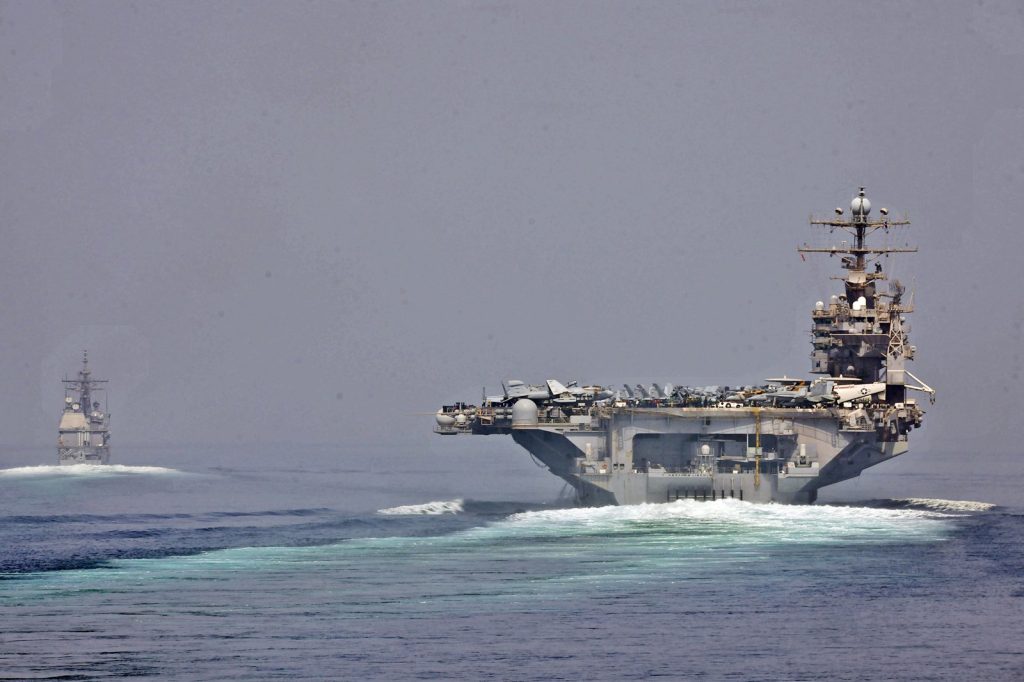
The United States maintains a robust naval force in the region through the U.S. Fifth Fleet, which is headquartered at Naval Support Activity Bahrain. The fleet comprises aircraft carriers, destroyers, and patrol craft, projecting American military power at the strait’s western entrance.
On the Iranian side, two distinct naval forces operate in the area: the Islamic Revolutionary Guard Corps Navy and the regular Iranian Navy. In response to heightened tensions, the United States established the International Maritime Security Construct in 2019. This multinational coalition patrols the strait and includes the United Kingdom, Australia, Bahrain, Saudi Arabia, and the United Arab Emirates.
The IMSC’s presence is intended to protect commercial shipping and maintain freedom of navigation through these critical waters.
Regional Mediation and Energy Dynamics
Oman has historically acted as a mediator in disputes involving the strait, leveraging its geographic position on the southern shore to facilitate dialogue between opposing parties. Qatar’s energy interests further complicate the regional picture.
Because the North Field straddles the maritime border with Iran, Qatar has a direct stake in the stability of the strait. Its liquefied natural gas shipments must transit the waterway to reach global buyers, making it vulnerable to any closure or harassment. The convergence of military posturing, energy security, and diplomatic engagement creates an environment where the potential for miscalculation is high.
Oman’s mediation efforts and Qatar’s economic dependence will continue to influence how states navigate the strait’s waters.
Historical Context and Risks of Closure
Ancient mariners described the opening to the Persian Gulf in a first-century navigational guide, though they did not name the strait specifically. For centuries, it remained a vital passage without prolonged closure during Middle East conflicts.
Before the 2026 Iran War, the strait had not been shut for any extended period. Iran periodically threatened to close the waterway, and at times prepared to mine it. The closure of the strait became a major focus during the 2026 Iran War and led to what is now referred to as the 2026 Strait of Hormuz crisis.
That crisis underscored how quickly a localized confrontation could escalate into a broader disruption of global energy flows. With the U.S. Fifth Fleet and the IMSC patrolling the waterway, and Iran’s naval forces operating just to the north, the risk of an accidental or deliberate confrontation remains a persistent concern.
The interplay of strategic interests, military readiness, and regional diplomacy ensures that the Strait of Hormuz will remain a central theater in U.S.-Iran relations for the foreseeable future.
{“@context”: “https://schema.org”, “@type”: “NewsArticle”, “headline”: “Strait of Hormuz remains critical flashpoint in US-Iran tensions”, “description”: “MANAMA, July 15 – The Strait of Hormuz, a narrow maritime passage that connects the Persian Gulf to the open ocean, remains a defining flashpoint…”, “datePublished”: “2026-07-15T09:30:00+00:00”, “author”: {“@type”: “Person”, “name”: “Merry Gel Sigui”}, “publisher”: {“@type”: “Organization”, “name”: “InfoPulse Today”, “url”: “https://newsfeed.infopulsetoday.com/”}}




