
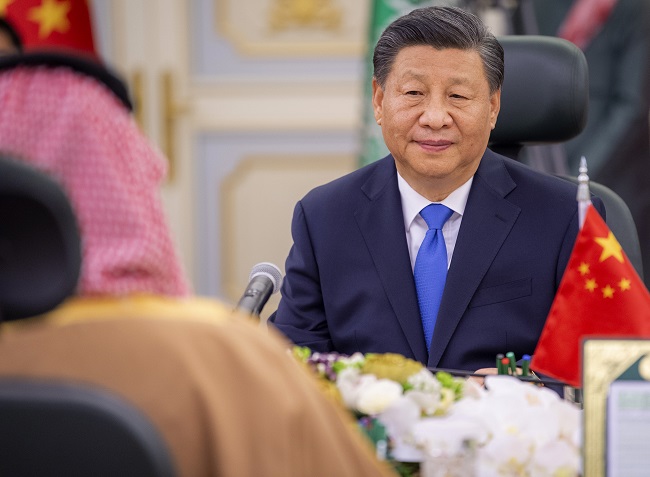
On August 10, 2023, China participated in peace talks hosted by Saudi Arabia, a move that carries substantial consequences for the Middle East and international power structures. The gathering included representatives from multiple nations and focused on advancing regional peace and stability.
Beijing’s involvement is widely interpreted as a calculated effort to bolster its footprint in the Middle East while simultaneously checking Russia’s expanding influence in the area. Saudi Arabia’s Foreign Ministry described the talks as an initiative to foster dialogue and cooperation among those present. China’s reasons for joining are layered.
Economically, the Middle East is vital to the Belt and Road Initiative, and participation allows Beijing to underscore its dedication to regional calm while protecting its commercial interests. Chinese Foreign Minister Wang Yi stated that “China is committed to playing a constructive role in promoting peace and stability in the Middle East.” Strategically, the talks offer a platform to contest Russia’s growing sway, as Moscow has deepened its Middle Eastern engagements in recent years.
The implications for Russia are notable. Russia’s Foreign Ministry issued a statement saying, “Russia is committed to promoting peace and stability in the Middle East, and we welcome the participation of all countries in this effort.” Yet, China’s rising profile is expected to curb Russian dominance. Alexander Lukashevich, Russia’s Ambassador to the United Kingdom, observed that “China’s participation in the peace talks is a significant development, and it will likely have implications for the balance of power in the region.” Chinese President Xi Jinping has been central to advancing this foreign policy direction.
He has actively championed the Belt and Road Initiative, which seeks economic integration across Eurasia. The Chinese Foreign Ministry noted that “Xi Jinping has been a strong advocate for China’s participation in the peace talks, and he sees this as an opportunity to promote China’s economic and strategic interests.” His leadership has been crucial in shaping China’s international relationships.
Regionally, the talks convened representatives from countries including Saudi Arabia, Iran, and Turkey. The Saudi Foreign Ministry characterized the event as “a significant success” that “promoted a new era of cooperation and dialogue among the participating countries.” Saudi Foreign Minister Adel al-Jubeir echoed this, calling the talks “a significant development” that fostered a fresh phase of collaboration. China’s attendance marks a clear shift in the regional balance, positioning Beijing as a major actor in the Middle East. The talks underscore the intricate dynamics at play, with multiple nations competing for leverage.
As the region evolves, China’s role is expected to grow, and its participation in this forum will likely be viewed as a key milestone. Other countries, particularly Russia, are expected to monitor and respond to Beijing’s expanding presence.




