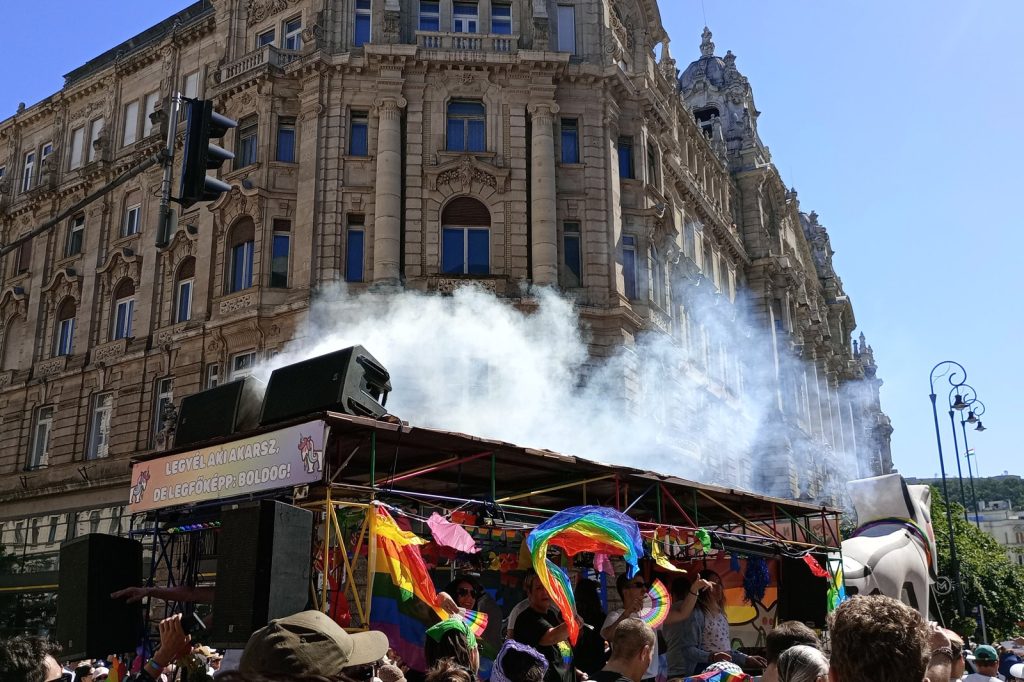
“The biggest change is actually the political change in the country,” said Mate Tarnaji, a 51-year-old chemist, as he joined the Pride parade in Budapest. More than 10,000 people marched on Saturday, the first parade since the right-wing leader Viktor Orban lost the April elections. Record heat did not keep them away. They carried large rainbow flags and European Union flags through the streets of the capital.
Last year was very different. Orban tried to ban that parade as part of his broader policy against LGBTQ+ rights, and it turned into a massive anti-government protest drawing tens of thousands. After Orban lost power to the centrist Tisza party, led by Peter Magyar, the ban was lifted and this year’s parade was approved, Reuters reports.
“We feel more personal freedom,” Tarnaji said, “and the atmosphere in the country is much more relaxed than last year.” He expects Magyar’s government to provide equal rights for the LGBTQ+ community.
Fanny Fajt, an 18-year-old student, described a much more optimistic mood after the political change. She hopes rights could expand in future to include adoption and marriage. “It would be wonderful if, finally, after all these years, we had equal rights,” she said.
Boglarka Boruz, a 23-year-old translator, said the biggest change since Orban’s rule is that LGBTQ+ people now feel safer and more accepted in everyday life. “Politicians have the power to help society understand that it’s perfectly okay to be gay,” she said.
Orban’s laws
Orban presented himself as a defender of Christian values against Western liberalism. During his rule his government abolished the possibility of changing gender on personal documents, banned adoption by same-sex couples and restricted school materials considered to promote homosexuality or gender reassignment.
Magyar, who identifies as a conservative, called for patience when Hungarian media asked whether he planned to change the laws that have restricted LGBTQ+ rights.