
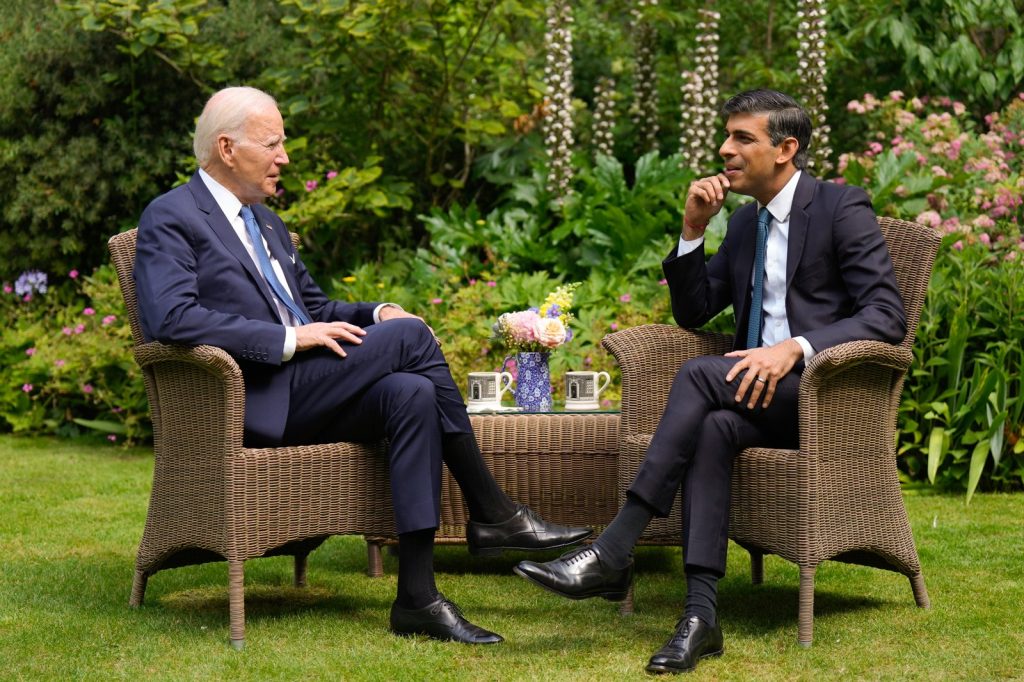
The Oval Office has seen a lot of history. Wooden desks, heavy curtains, the seal of the president on the carpet. This week, it hosted another chapter in the transatlantic story.
Prime Minister Rishi Sunak sat down with President Joe Biden. The meeting lasted two days.
The stated agenda was familiar: Ukraine, trade, security. But the real business was reaffirmation. The machinery of the alliance needs regular oiling.
This visit was the grease. The timing carries weight.
Wars grind on in Europe and the Middle East. The global order, such as it is, faces pressure from multiple directions. In this context, the US-UK relationship is not sentimental.
It is functional. Biden called it a cornerstone of American foreign policy. That language is deliberate.
It signals to adversaries — and allies — that the bond between Washington and London is not fraying. It is holding.
There was a human moment. Biden called Sunak “Mr. President.” He corrected himself quickly. The room laughed.
Reporters noted it. This kind of slip humanizes the process.
It shows two people working through the formality. But it also reveals the stakes. These are two men who carry immense responsibility.
A small mistake in a name is forgivable. A mistake in policy is not. The meeting carried echoes of the past.
The Oval Office has hosted British prime ministers for decades. Churchill sat there with Roosevelt.
That was a war of a different scale, but the principle remains: the US and the UK talk when the world is dangerous. The setting was not accidental. It was a visual reminder of continuity.
The architecture of the room reinforces the message. What comes from this?
Concrete outcomes are often slow in the alliance. The public statements were broad. Support for Ukraine was reiterated.
Economic cooperation was discussed. Security protocols were reviewed. The real work happens in the corridors, in the briefings, in the quiet conversations that do not make the news.
The visit itself is the deliverable. It shows the relationship is active.
Sunak is a relatively new prime minister. He leads a party that has cycled through leaders rapidly. Stability in London is not guaranteed.
Biden is older, experienced, but facing his own domestic pressures. Both men need this partnership to function.
It gives them credibility on the world stage. It provides a framework for action. Without it, coordination on Ukraine, on sanctions, on intelligence sharing becomes harder.
The special relationship is a phrase that gets thrown around. It can feel hollow. But the machinery behind it is real.
The meetings, the phone calls, the joint statements — these are the gears. This week, the gears turned in the Oval Office.
The lighthearted moment with the title slip was a brief pause in a serious machine. The machine kept running. That is the point.
The alliance endures not because of sentiment, but because both sides need it to.




