
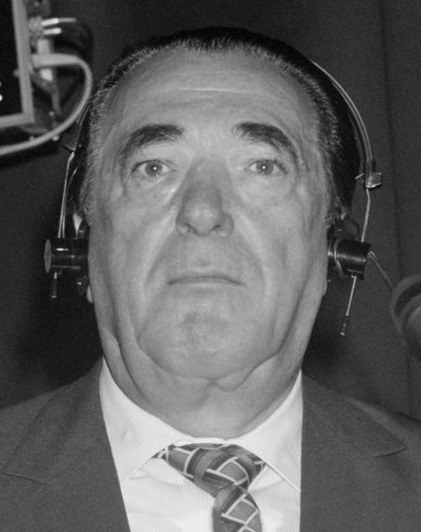
Early Life
Robert Maxwell was born Ján Ludvík Hyman Binyamin Hoch in the town of Slatinské Doly, then part of Czechoslovakia, in 1923. His family was Jewish and modest in means. The rise of Nazism disrupted his childhood; following the German occupation of the region, he fled and eventually made his way to France, and after its fall, to Britain. He later stated that he survived the war’s chaos through sheer determination, eventually joining the British Army, where he served with distinction, earning a battlefield commission and the Military Cross for bravery during the fighting in Europe.
After the war, Maxwell learned that most of his extended family had perished in the Holocaust, including his parents and several siblings. This loss profoundly shaped his worldview. He anglicized his name to Robert Maxwell and began rebuilding his life in Britain. His formal education was limited, but his fluency in multiple languages — Czech, German, French, English, and Russian — gave him an edge in international trade.
Maxwell’s early career was marked by ambition and reinvention. He worked in publishing and business ventures after the war, and by the early 1950s had acquired a scientific-publishing firm that he built into Pergamon Press, a significant publisher of academic and technical literature. This success laid the financial and social foundation for his later entry into British national media.
Rise
Maxwell’s ascent in British public life accelerated through the 1950s and 1960s via Pergamon Press, which he expanded by acquiring niche scientific titles and growing internationally. He cultivated an image of a self-made mogul, often speaking bluntly about his origins. His wealth and profile helped him enter politics; he was elected as a Labour Member of Parliament for Buckingham in 1964, serving until 1970.
In the 1980s, Maxwell shifted focus to newspapers. In 1984, he acquired Mirror Group Newspapers (MGN), which included the Daily Mirror, Sunday Mirror, and several regional titles. The purchase was financed through heavy borrowing, a pattern that would characterize much of his later business activity.
Under his ownership, the Mirror maintained its populist, pro-Labour stance, though Maxwell’s personal conduct increasingly drew scrutiny. He was known for his domineering management style and expectation of absolute loyalty. Maxwell also acquired other publishing assets and consolidated his holdings into Maxwell Communications Corporation.
Peak
By the late 1980s, Robert Maxwell was a ubiquitous figure in British public life, frequently seen with politicians, celebrities, and royalty. His yacht, the Lady Ghislaine — named after his daughter — became a symbol of his wealth. He hosted figures from across the political spectrum at his estate, Headington Hill Hall in Oxford, while maintaining his Labour affiliations.
Maxwell Communications Corporation was listed on the London Stock Exchange and reported strong profits, driven by Pergamon, the Mirror Group, and emerging media interests. His daughter Ghislaine worked within his companies, including in the United States. Maxwell also made significant charitable donations, especially to Jewish causes and Israeli institutions.
Beneath the surface, financial pressures were mounting. His acquisitions had been funded largely through debt, and he relied on complex intercompany transactions to maintain liquidity. Analysts began questioning the sustainability of his model as newspaper profits faced pressure from changing media habits. Maxwell projected confidence and dismissed critics, keeping doubts at bay — for a time.
Turning Point
The turning point came in November 1991, when Maxwell disappeared from his yacht, the Lady Ghislaine, off the coast of the Canary Islands. He had been sailing with a small crew after a meeting in Spain. He was reported missing on the morning of November 5, 1991, and his body was recovered from the Atlantic several days later. A coroner’s inquest returned a verdict of accidental drowning, though speculation about suicide or foul play persisted given the fragile state of his businesses.
Maxwell’s death triggered an immediate investigation into his companies’ finances. It quickly became evident that Mirror Group Newspapers’ pension funds had been systematically depleted. Investigators found that approximately £440 million had been transferred from the company’s pension schemes — money belonging to thousands of employees — to prop up failing businesses, without their knowledge or consent.
The revelations shocked the public and triggered a crisis of confidence in British corporate governance. No criminal charges were ever brought against Maxwell himself, since he died before the full extent of the fraud was established, but the post-mortem findings were unequivocal that he had orchestrated the misappropriation of pension assets.
Legacy/Aftermath
In the aftermath of Maxwell’s death, hundreds of millions of pounds were eventually traced and returned to the pension schemes through lengthy litigation against banks, intermediaries, and former directors. Maxwell’s sons, Kevin and Ian Maxwell, who held senior roles in the family companies, were charged with conspiracy to defraud in connection with the affair but were acquitted at trial in 1996.
The scandal led to reforms in pension regulation and corporate accountability in the UK, including the Pensions Act 1995. Maxwell’s name became synonymous with corporate greed and betrayal of trust. The Mirror Group was eventually absorbed into Trinity Mirror in 1999, marking the end of the Maxwell era in British newspapers. His daughter Ghislaine Maxwell withdrew from public life for years before later becoming the subject of separate legal proceedings unrelated to her father’s business affairs.
Robert Maxwell’s life and death remain a cautionary tale about unchecked power and financial opacity in business. His rise from a refugee background to media baron embodied a certain kind of postwar ambition, but his fall exposed the fragility of empires built on debt and deception — and the scale of the pension fraud, one of the largest in British corporate history, devastated the lives of ordinary workers who had trusted institutional safeguards. His death before facing legal consequences left a sense of incomplete justice, though subsequent recovery efforts provided some measure of restitution.




