
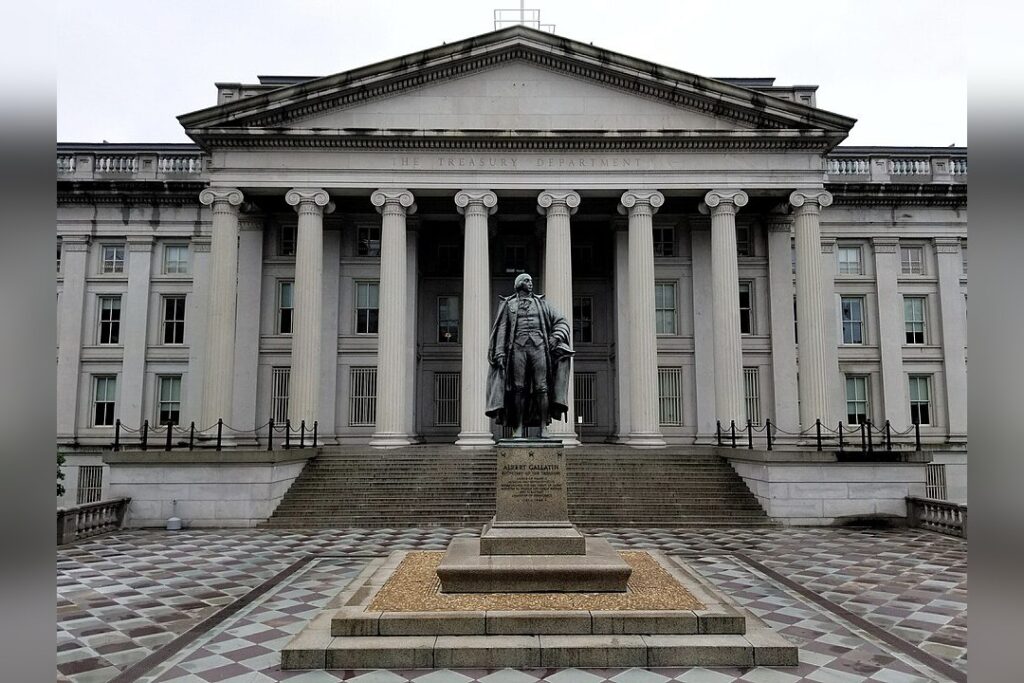
On August 22, Treasury Secretary Scott Bessent unveiled fresh economic penalties aimed at Iran, a step taken as military pressure has yet to produce a decisive outcome. Reporting from Cassie B. in NaturalNews.com indicates that the administration’s “Operation Economic Fury” has been expanded to include sanctions against Iran’s recently established Persian Gulf Strait Authority.
Military Campaign and Its Limits
According to Patrick Lewis of NaturalNews.com, the Pentagon’s Operation Epic Fury has seen naval forces block 34 vessels from passing since late April. More than 7,800 targets inside Iran have been struck during the campaign, yet U.S. officials concede that these efforts have not delivered a conclusive result. In April, Defense Secretary Pete Hegseth had promised an “ironclad blockade” — a strategy that, per Stockman’s analysis, is now being combined with the economic measures.
The Treasury’s stated objective is to choke off revenue that supports Iran’s nuclear and missile programs. Still, the military phase has drained enormous stockpiles: nearly all ATACMS and Precision Strike Missiles, half of the Tomahawk inventory, and between 65 and 70 percent of Patriot and THAAD interceptors have been used up.
Iran’s Resilience and External Support
Iran’s underground production of missiles and drones continues, and its nuclear capabilities remain undamaged, a point underscored by former Israeli defense expert Uzi Rubin in Gareth Porter’s “Manufactured Crisis.” Despite the blockade, Iran’s economy has proven resilient. Stockman’s report notes that 85 percent of the country’s food is produced domestically, and food reserves have not yet been drawn down. Oil exports persist through shadow-fleet transfers, with China sourcing roughly 30 percent of its oil from Iran. Analysts observe that neither China nor Russia backs regime change, which complicates any effort to isolate Tehran. Inflation stands at 70–80 percent and GDP is expected to shrink, but experts contend that Iran can absorb further pressure given its experience with earlier sanctions.
Strains on Global Fuel Markets
Global fuel markets are under severe strain. Before the conflict, total petroleum stocks were 8.3 billion barrels — below the 6.8 billion working minimum. The U.S. Strategic Petroleum Reserve has fallen to 305 million barrels, its lowest level since 1983. Diesel prices have climbed 59 percent and jet fuel 68 percent, while the diesel crack spread has surpassed $100 per barrel. The International Energy Agency has released 400 million barrels from emergency stockpiles, though those reserves are shrinking quickly. President Trump’s Jones Act waivers, extended to 90 days, are intended to ease domestic fuel distribution amid the price spikes.
Skepticism and Uncertain Path Forward
Bessent’s new measures have drawn skepticism. Stockman’s analysis cautions that the administration’s approach echoes past overconfidence, and that a drawn-out attrition remains the likely course. The report concludes that global fuel markets may come under critical stress before Iran’s domestic economy gives way. As James McCartney notes in “America’s War Machine,” this fits a long-standing U.S. preoccupation with Persian Gulf oil. It is unclear whether the economic strategy will change the conflict’s trajectory, but for now the focus stays on maintaining pressure while managing global energy instability.




