
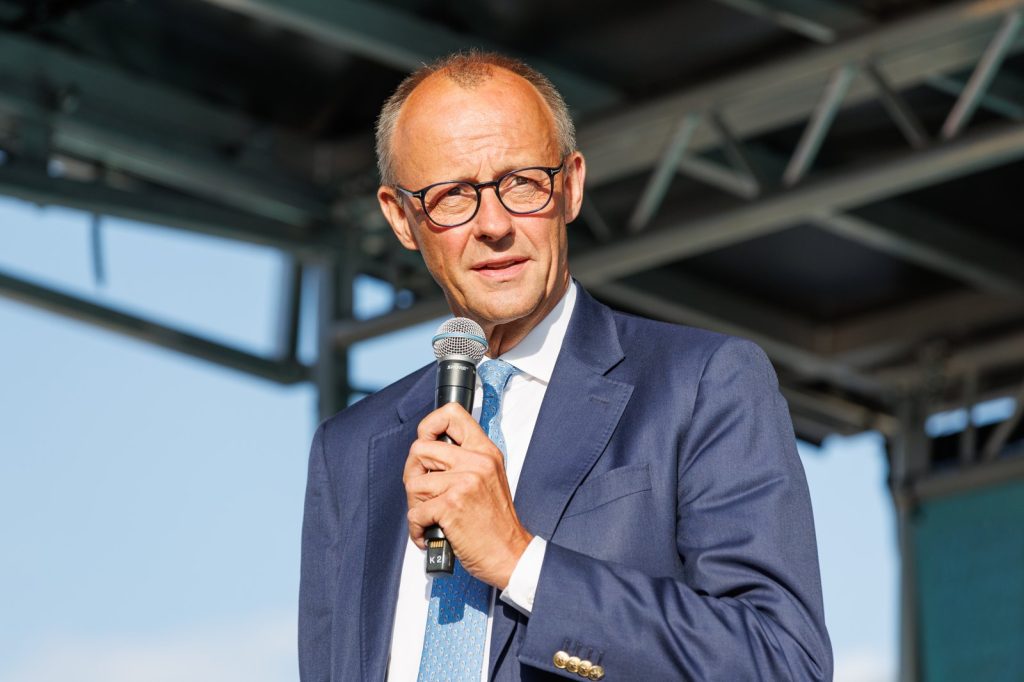
Berlin, August 22 — The CDU’s struggles ahead of Germany’s key state elections are intensifying, with internal strife and strategic missteps dominating headlines. At the core of the chaos is the party’s attempt to counter the far-right Alternative for Germany (AfD) in Saxony Anhalt, where an AfD landslide is widely expected. To disrupt this, CDU members have reportedly reached out to AfD politicians, urging them to defect and vote against their party’s leader in hopes of preventing an AfD-led government.
This move, while potentially effective, raises questions about the CDU’s commitment to its long-standing stance against far-right alliances. How can a party that has historically opposed such groups now engage in what some view as a political maneuver that undermines its principles?
Adding to the confusion is the silence of CDU leader Friedrich Merz. Since leaving the chancellery for his summer holiday, Merz has not commented on critical domestic issues, including the CDU’s election challenges or the record number of heat-related deaths this summer. A report by Tagesschau, titled “The Chancellor’s Silence,” notes that while summer absences are common for a sitting chancellor, the lack of any public remarks on pressing matters is unusual.
Political scientist Lena Partzsch suggests that acknowledging climate change could weaken the far-right and strengthen the Greens, a path Merz seems to avoid. His inaction has left voters increasingly disapproving, with a recent “politibarometer” survey showing his favourability rating at a new low.
Meanwhile, the CDU’s approach is not uniform. In Saxony Anhalt, mayor Bernd Prange of Altmärkische Höhe publicly donated €10,000 to the AfD, signaling his intent to support the party’s rise. He claimed the gesture was meant to “wake up” the conservative leadership, implying he may soon leave the CDU to join the AfD.
This stark contrast between Prange’s actions and the party’s broader strategy highlights the internal fractures within the conservatives. The optics of such a donation, especially from a local leader, are damaging, raising doubts about the CDU’s ability to present a united front.
The focus on politics in Germany is striking, even as the country prepares for the final days of summer. Despite cool, cloudy weather, the state elections in Saxony Anhalt, Berlin, and Mecklenberg-Western Pomerania are set to dominate media coverage. The AfD’s expected victory in Saxony Anhalt has become a central concern, with the CDU’s defensive tactics drawing both praise and criticism.
At the same time, the party’s leadership is under pressure to address voter concerns, from climate issues to the rising cost of living. With Merz absent and Prange’s defection a possibility, the CDU’s path forward remains uncertain.
As the elections approach, the CDU’s ability to navigate these challenges will be tested. The party’s internal conflicts and Merz’s silence may define its performance in the coming weeks. For now, the focus remains on the upcoming polls and the broader implications for Germany’s political landscape. What’s next?
The outcomes of these state elections could reshape the balance of power, with the AfD’s potential gains and the CDU’s response likely to set the tone for the nation’s future.




