
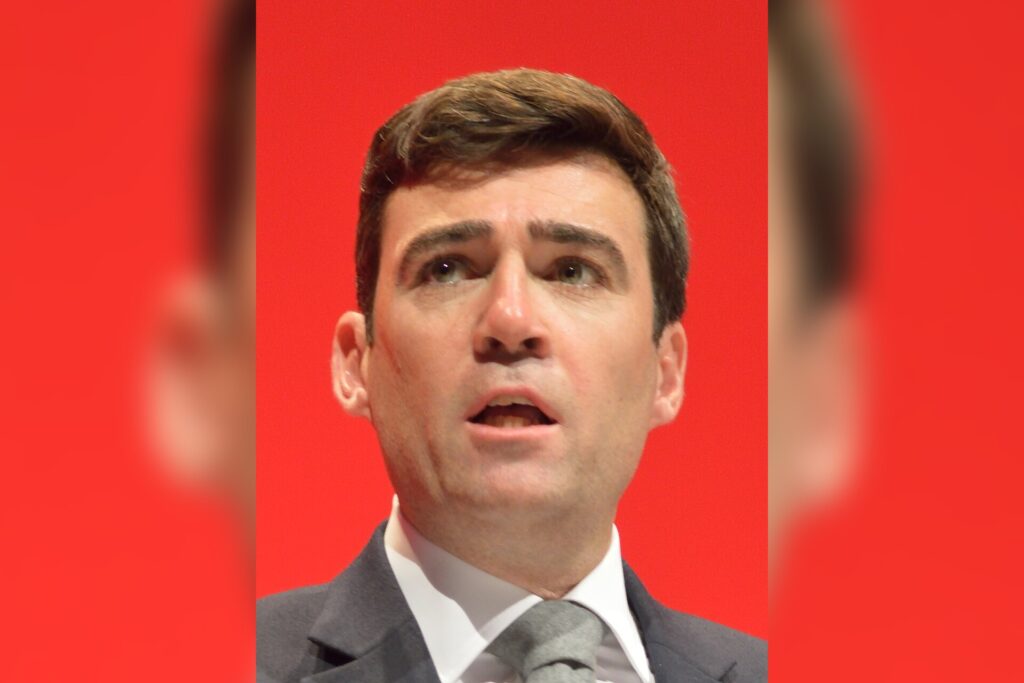
Andy Burnham talks a big game. The Greater Manchester mayor has been loud about his disagreements with Keir Starmer — welfare reform, housing targets, the whole package. But the fine print of devolution tells a different story.
It is one of financial handcuffs. The money flows from Whitehall.
That is the cold fact. Burnham’s office has limited tax-raising powers. It depends on central government for the bulk of its budget.
So when he rails against austerity or benefit cuts, the question is simple: what can he actually do about it? The answer, on closer reading of the current settlement between central government and combined authorities, is not much.
This is not a spontaneous quarrel. Burnham has been positioning himself for a while. He wants to be the voice of the Labour heartlands.
He paints Starmer’s government as technocratic and London-centric. It is a play for a constituency that feels left behind. But the political architecture of devolution was not designed for independence.
It was designed to give mayors a platform — a place to stand and ask for things. Not a place to go their own way.
The risk for Burnham is real. If he goes too hard at Starmer, he alienates the party machinery. That machinery matters for his own ambitions, whatever they are.
If he stays quiet, he looks like a man who talks rebellion but walks in lockstep. Either way, the structural tension is there.
The Treasury sets the parameters. The government can grant concessions — and has done so, selectively — but the mayor is still asking permission. Housing money.
Rail investment. These are the kinds of things Burnham can demand. But the policy levers stay in Westminster.
The funding streams stay in Westminster. Follow the money and the picture becomes clear.
Burnham can distance himself rhetorically. He cannot distance himself fiscally. The timing matters.
This is not a random spat. Burnham is calculating.
He wants to stand apart without breaking the party. It is a narrow line. The mechanics of devolution make it narrower.
The mayor’s office has some room to manoeuvre, but less than he lets on. The current settlement between central government and combined authorities is explicit about where the power sits. So what is at stake?
Concrete things. Welfare reform that hits Manchester’s poorest.
Housing targets that shape the city-region’s growth. Transport spending that determines whether the north gets a fair share. Burnham can talk tough.
But the money — and the decisions — remain in Starmer’s hands. That is the reality of English devolution.
It gives mayors a voice, not a veto. Burnham has been increasingly vocal about his differences. The catch is that the political and financial architecture constrains him.
He can demand more. He can posture as the alternative. But the structural limits are hard.
The government holds the purse strings. The government holds the policy levers.
Burnham can push, but he cannot break free. This matters because devolution was sold as a way to shift power from London. In practice, it has shifted responsibility without shifting control.
Mayors get the blame for failures. They get less credit for successes.
The Treasury still calls the shots. Burnham is learning that lesson in real time. He can distance himself rhetorically.
But the money — and the power — stays where it has always been.




