
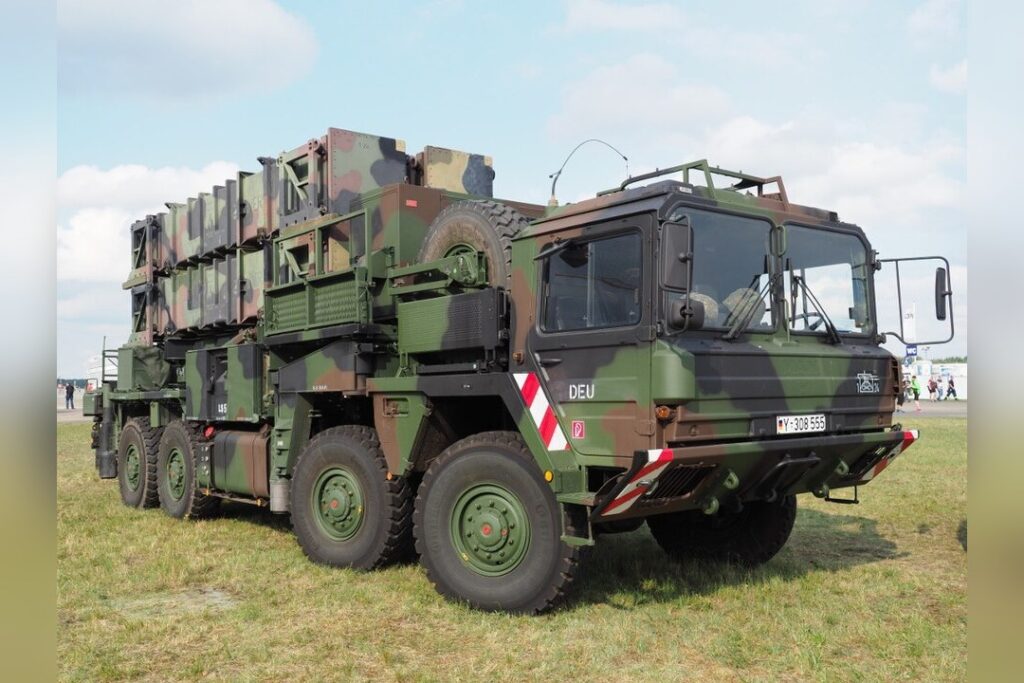
WASHINGTON — The shift is unmistakable: for the first time, Ukraine is being cleared to produce American Patriot missile systems on its own soil. Former U.S. President Donald Trump has given Ukrainian President Volodymyr Zelensky the green light for domestic production of the long-range air defense system, a move that could fundamentally reshape how Kyiv defends its skies. The Patriot system, manufactured by Raytheon—now part of RTX Corporation—is no stranger to the battlefield.
First deployed by the U.S. Army in 1981, it’s a long-range, all-altitude, all-weather air defense platform. It gained global prominence during the Gulf War in 1991, intercepting Scud missiles.
The system uses MIM-104 Patriot missiles and has been upgraded through multiple configurations, including the PAC-3 variant. Since Russia’s full-scale invasion began on February 24, 2022, Ukraine has relied on U.S.-supplied Patriot batteries to defend against relentless Russian missile and drone attacks. As of 2024, the U.S. had provided Ukraine with at least three Patriot batteries.
The approval for domestic production could reduce Ukraine’s dependency on foreign supplies and accelerate deployment of the systems where they’re needed most. The announcement came in early 2025, though specific production timelines and locations have not been disclosed.
The details of where and when production will start remain unanswered questions. The decision is part of broader discussions on military aid, which has totaled over $44 billion in U.S. security assistance since 2022. The move aligns with Trump’s stated goal of reducing U.S. direct involvement while strengthening allied capabilities.
For Ukraine, the implications are significant. Domestic production means faster turnaround times for replacement systems and spare parts. It also means building a domestic defense industrial base that can sustain itself even if U.S. political winds shift.
The Patriot system is complex and expensive, but producing it locally could give Kyiv a degree of strategic autonomy it currently lacks. The Patriot system has been a cornerstone of U.S. air defense for over four decades.
Its track record in combat, from the Gulf War to recent engagements in the Middle East, has made it a sought-after asset. The PAC-3 variant, the most advanced version, is designed to intercept ballistic missiles, cruise missiles, and aircraft. Ukraine’s existing Patriot batteries have been used to defend critical infrastructure and population centers from Russian strikes.
The systems have proven effective, but supply constraints have limited how many can be deployed and where. Domestic production could ease those constraints significantly.
The big question now is how quickly Ukraine can stand up production lines. Building a complex weapons system like the Patriot requires skilled labor, specialized materials, and quality control processes that take time to establish. The lack of disclosed timelines suggests these hurdles are still being worked out.
But the strategic direction is set. Ukraine is moving from being a recipient of American defense technology to a producer of it.




