
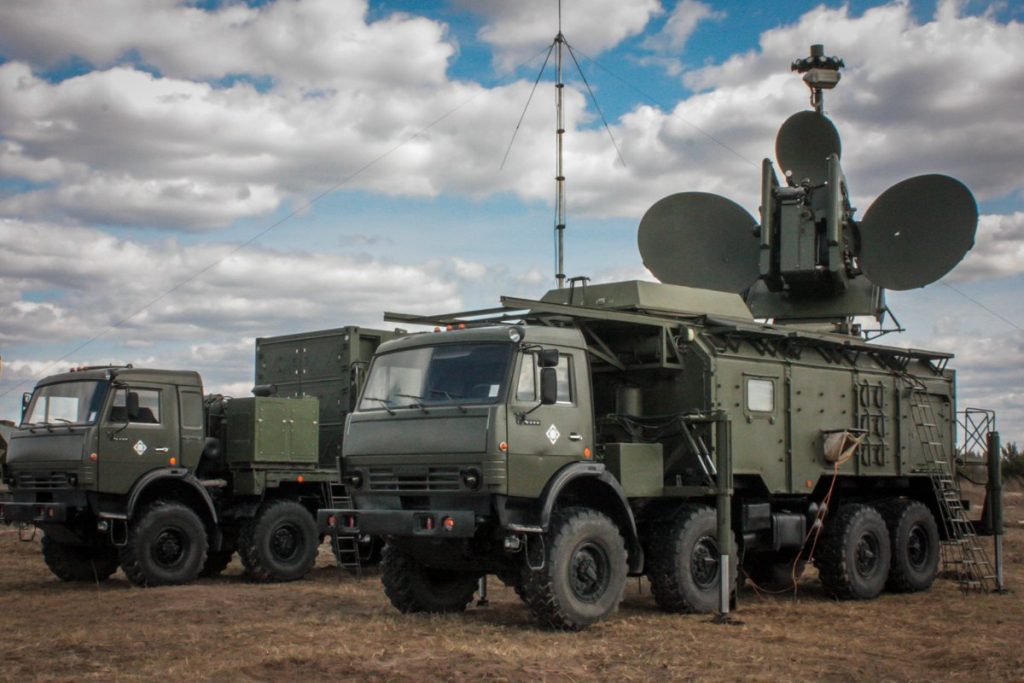
MOSCOW, July 9 — Russian forces have deployed multiple advanced electronic warfare systems in Ukraine, with the Krasukha-4 and R-330Zh Zhitel among the primary platforms used to disrupt Ukrainian communications and drone operations, according to available records. The Krasukha-4, a mobile ground-based system first unveiled in 2011, is designed to jam airborne radars and satellite communications. It operates in the Ku-band, the 12-18 GHz frequency range that is the same band used by Starlink terminals.
Reports from 2023 documented successful jamming of Starlink equipment on the battlefield. The R-330Zh Zhitel, introduced in 2015, targets a broader spectrum of signals, including GPS, cellular networks, and satellite communications.
Both systems have been employed to counter Ukrainian drone operations, which have become a central feature of the conflict.
Networked Capabilities and Drone-Based Jamming
Russian electronic warfare units have been active since the 2014 annexation of Crimea, with exercises in 2020 demonstrating their operational capabilities. In Ukraine, these systems have been positioned near front lines, and the record shows they can be networked for coordinated jamming across a wide area. Another system, the Leer-3, is mounted on Orlan-10 drones and specifically targets cellular networks.
This drone-based approach allows Russian forces to disrupt mobile communications from the air, adding a mobile layer to ground-based jamming. The development of these systems reflects a long-standing investment by Moscow in electronic warfare capabilities.
Budget allocations for EW increased from $500 million in 2015 to over $1 billion by 2021, according to the figures.
Vulnerabilities and Targeting
Despite their effectiveness, the systems are not invulnerable. Ukrainian forces have targeted Russian electronic warfare assets with artillery and drones, seeking to destroy or disable these high-value platforms. The record shows that both sides in the conflict have adapted their tactics in response to electronic warfare threats.
The Krasukha-4’s ability to jam Ku-band frequencies has made it a particular concern for satellite-based communications systems used by Ukrainian forces. Starlink terminals, which rely on that frequency band, have been disrupted in reported incidents from 2023.
Strategic Context
Russia’s investment in electronic warfare predates the current conflict, with the 2014 annexation of Crimea serving as an early proving ground for these systems. The 2020 exercises showcased the integration of EW assets into broader military operations. The deployment of multiple systems in Ukraine demonstrates the importance Moscow places on dominating the electromagnetic spectrum.
Jamming GPS, satellite signals, and cellular networks can blind drones, disrupt command and control, and isolate units on the battlefield. The networking capability allows Russian EW units to coordinate jamming across a front, creating zones where Ukrainian communications are severely degraded.
This layered approach combines ground-based systems like the Krasukha-4 and Zhitel with airborne systems like the Leer-3. Observers will watch how both sides continue to adapt their electronic warfare tactics, as the contest for control of the electromagnetic spectrum remains a critical dimension of the conflict.




