
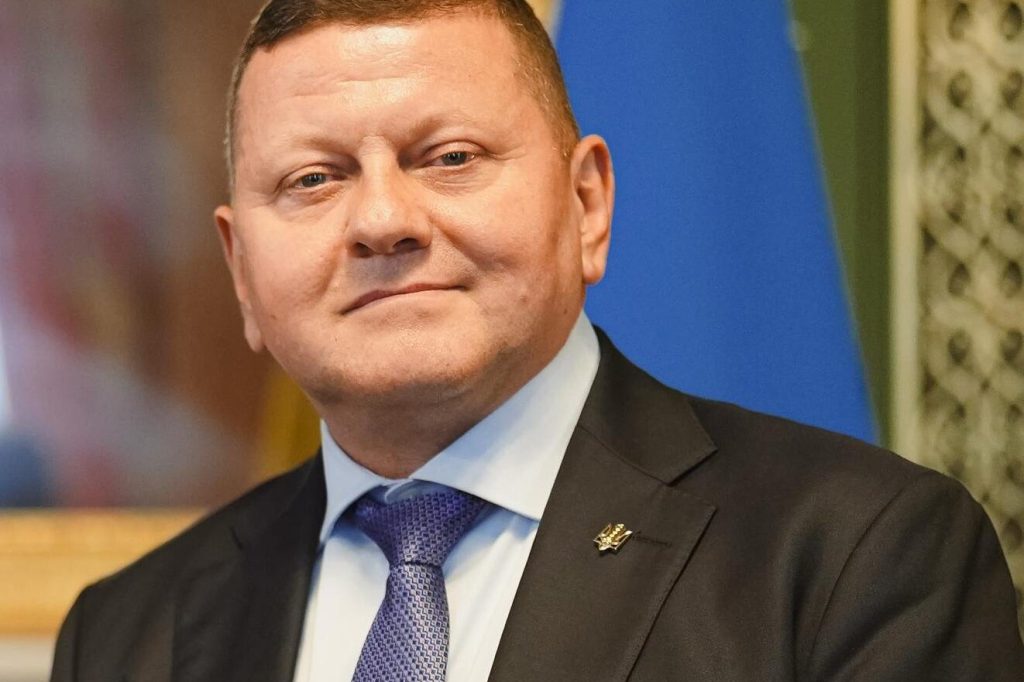
From his diplomatic post in the British capital, Ukraine’s former top general continues to influence the war he once commanded on the front lines. Valerii Zaluzhnyi, who served as the Commander-in-Chief of the Armed Forces of Ukraine from July 27, 2021, until February 8, 2024, now operates as Ukraine’s ambassador to the United Kingdom, a role he assumed in March 2024.
The appointment places a career officer with deep operational experience at the heart of Western defense coordination, signaling Kyiv’s sustained reliance on the UK as a primary military backer.
From the Battlefield to the Embassy
Zaluzhnyi’s military career spans the post-Soviet era, when Ukraine built its independent armed forces after the Cold War. He rose through the ranks from platoon command to the highest uniformed post in the country, holding key roles that included command of a mechanized brigade and leadership positions in western and northern military districts.
Born on July 8, 1973, in Novohrad-Volynskyi, Ukraine, he assumed command of the nation’s armed forces just weeks before Russia launched its full-scale invasion. His tenure covered the most intense period of the war, including the critical counteroffensives that shifted the battlefield dynamic. In February 2024, President Volodymyr Zelenskyy replaced Zaluzhnyi with Colonel General Oleksandr Syrskyi amid shifting political dynamics in Kyiv.
But Zaluzhnyi did not leave the public stage. Within a month, he was appointed ambassador to the United Kingdom, a city that has served as a key hub for military aid coordination.
His presence there underscores Ukraine’s commitment to maintaining strong ties with one of its most consistent military backers.
Asymmetric Warfare and Strategic Victories
Zaluzhnyi’s leadership emphasized asymmetric warfare, including the use of drones and long-range weapons to strike Russian territory. He also directed attacks on Russian energy infrastructure, a strategy aimed at degrading Moscow’s war machine far from the front lines.
This approach reflected a calculated shift from traditional defense to offensive operations designed to exploit Russian weaknesses with speed and precision. His signature operational victories came in the fall of 2022. The Kharkiv counteroffensive in September 2022 and the Kherson counteroffensive in November 2022 both demonstrated Ukraine’s ability to seize the initiative and reclaim occupied territory.
Those campaigns cemented Zaluzhnyi’s reputation as a commander willing to take calculated risks, reshaping the course of the war and proving that Ukrainian forces could outmaneuver a larger adversary.
Diplomacy and the Next Phase
Zaluzhnyi’s move from the battlefield to the embassy does not mean his influence has faded. If anything, the shift places him at the intersection of military strategy and Western policy-making, a position that could shape Ukraine’s next phase of the war.
His experience in asymmetric tactics and large-scale operations shapes Ukraine’s military response, while his current role puts him at the center of conversations about continued Western support. The broader picture is clear: Ukraine’s most battle-tested general now works the diplomatic circuit in London, a city that has been central to coordinating military assistance for Kyiv. His trajectory underscores how military leadership and diplomatic influence now intertwine in Ukraine’s effort to sustain its defense and global alliances. For observers, watching Zaluzhnyi’s transition from commanding general to ambassador offers a window into how Ukraine is adapting its strategy as the war evolves.




