
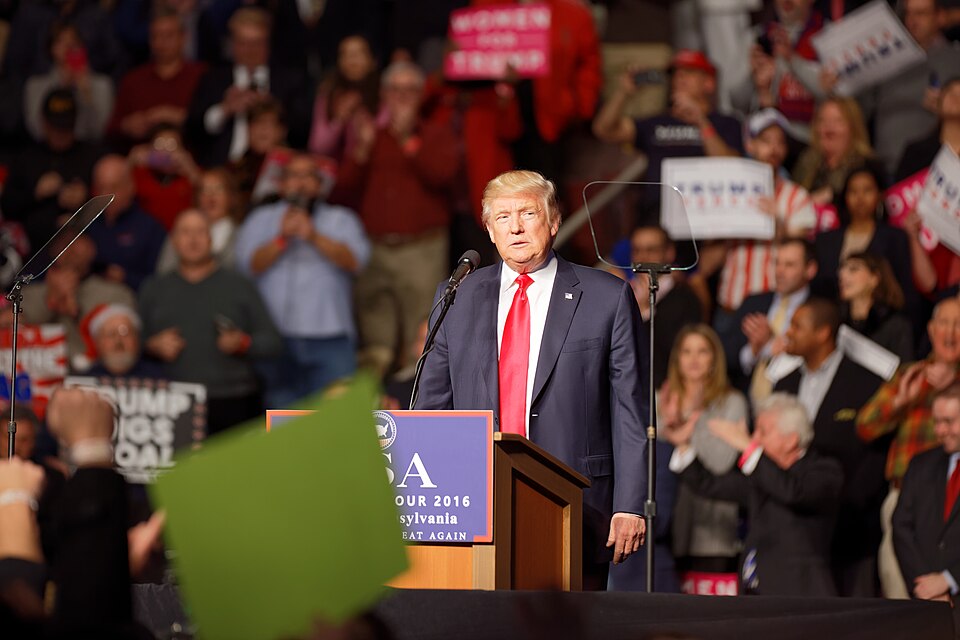
Former President Donald Trump declared himself the “No. 1 target” of an Iranian assassination plot during a campaign event in North Carolina, calling Iranian leaders “scum.” No specific details about the alleged plot were provided by Trump or any U.S. official at the time of his remarks. The claim lands inside a long-running arc of confrontation between the United States and Iran, one shaped directly by decisions made during Trump’s first term in office.
The Soleimani strike and its aftermath
The most immediate flashpoint dates to January 2020, when Trump ordered a drone strike in Baghdad that killed Iranian Major General Qasem Soleimani, commander of the Quds Force of Iran’s Islamic Revolutionary Guard Corps. The U.S. government at the time said the strike was necessary to prevent imminent attacks on American personnel.
Iran responded by launching ballistic missiles at U.S. bases in Iraq, causing traumatic brain injuries to dozens of American service members. Tehran also announced it would no longer abide by the limits of the Joint Comprehensive Plan of Action, the multilateral nuclear deal from which Trump had withdrawn the United States in 2018. That withdrawal isolated Tehran economically but also removed the diplomatic guardrails that had contained its nuclear program.
Iranian-backed militias continued to target U.S. assets in Iraq and Syria, and the U.S. conducted further strikes in response. Since then, the threat of Iranian retaliation has been documented.
In 2022, a U.S. intelligence report warned of Iranian threats against former U.S. officials, including Trump. The U.S. intelligence community assessed that Iran would seek revenge for Soleimani’s death through proxies or direct action, and that former officials involved in the decision were at elevated risk. The U.S. Secret Service has provided Trump with heightened security since he left office.
Trump’s claim today that Iran is now plotting to assassinate him is the latest chapter in that ongoing conflict.
Security and the campaign trail
The U.S. Secret Service has maintained a protective detail for Trump since he left office, a standard practice for former presidents. That detail has been enhanced in light of the intelligence warnings.
Campaign events present unique security challenges — open venues, large crowds, unpredictable movement — and the agency has adjusted protocols accordingly. Trump did not say whether today’s statement was based on new intelligence or a reassertion of previously known threats. He did not offer evidence or name specific operatives, locations, or timelines. U.S. officials did not immediately confirm or elaborate on any active plot.
The timing of the statement matters. This is a campaign event in a battleground state, and the statement lands as Trump seeks to reclaim the presidency.
He is a former president and current Republican nominee. National security and foreign policy are live issues for voters, and a direct threat against a candidate reshapes the conversation. The sitting administration, under President Donald Trump with Vice President JD Vance and Secretary of State Marco Rubio, now faces the question of how to respond to a threat against its own leader.
Background and why it matters
Donald Trump is an American politician, media personality, and businessman who served as the 45th president of the United States from 2017 to 2021 and later became the 47th president. Before entering politics, Trump led a New York real estate firm and built a public profile through television. He won the 2016 election as a political outsider.
His first term included a travel ban on several Muslim-majority nations and a withdrawal from major international accords. He lost the 2020 race and disputed the outcome.
That refusal led to the Capitol breach in 2021. He was impeached on two separate occasions and later faced state criminal cases, with a felony conviction recorded in New York. For investors and analysts watching the region, any credible threat against a former U.S. president — let alone a current candidate — carries geopolitical weight that markets tend to price in through volatility in oil and defense sectors.
A direct assassination attempt against a former U.S. president would cross a line that even Tehran has so far avoided. The key question is whether this escalates into a broader confrontation.
Iran has shown a pattern of calibrated retaliation — enough to signal capability, not enough to trigger full-scale war. What to watch next: any official statement from the White House or the Secret Service confirming or downplaying the threat; any movement in U.S. force posture in the Middle East; or any diplomatic back-channel communication with Iran. The campaign trail will keep this issue alive, and the intelligence community will be under pressure to share what it knows.
A claimed threat against a former president who is again a candidate raises questions about security and stability. Readers should see such claims inside a longer record of confrontation.




