
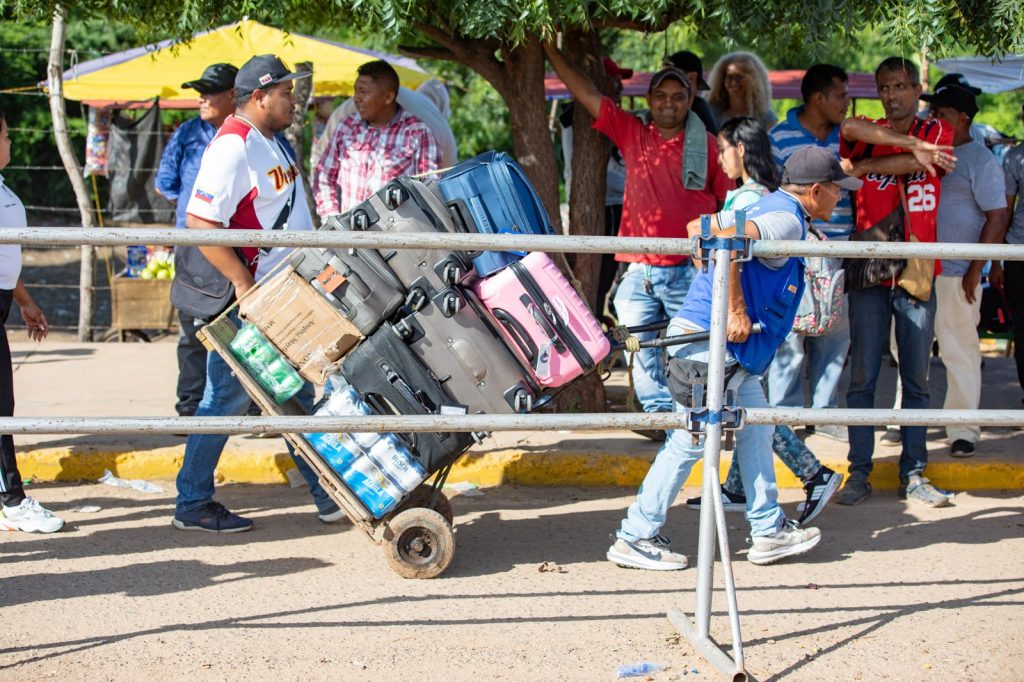
CARACAS, July 12 — The United Nations High Commissioner for Refugees reports that Venezuela’s displacement crisis remains the largest in the Western Hemisphere, with over 7.7 million people having fled the country since 2015. The exodus, which began after the 2014 economic collapse, has reshaped migration patterns across Latin America and drawn sustained American engagement. The numbers tell a stark story.
According to the UNHCR, approximately 6.5 million Venezuelan refugees and migrants are now spread across Latin American and Caribbean nations. Colombia bears the heaviest burden, hosting 2.9 million.
Peru has taken in 1.5 million, while Brazil shelters 500,000. The crisis was supercharged by hyperinflation that peaked at 130,000% in 2018, compounding the damage from falling oil prices that gutted Venezuela’s state-run economy.
American Aid and Strategic Oversight
The United States has committed over $3.8 billion in humanitarian aid since 2017, according to USAID. That funding has flowed through the International Organization for Migration and the UNHCR, among other channels. The calculus for Washington has long been about ensuring assistance reaches Venezuelan civilians, not the Maduro government.
That dynamic shifted on March 25, 2025, when Secretary of State Marco Rubio received new authorities granting him direct oversight of humanitarian aid distribution inside Venezuela. The move signals a strategic tightening: the administration wants to control the pipeline and verify that supplies land with the people who need them, rather than being diverted by state actors.
The Regional Calculus
For neighboring countries, the strain is immense. Colombia, Peru, and Brazil have absorbed millions of displaced Venezuelans, testing public services, labor markets, and political stability. The broader stakes extend beyond humanitarian concern — the mass displacement has altered electoral dynamics in host countries and fueled cross-border tensions.
The Maduro government’s collapse of basic governance, from healthcare to currency stability, continues to drive departures. With no political resolution in sight, the refugee flows are unlikely to reverse.
Washington’s strategic bet, channeling aid through Rubio’s office and established international bodies, aims to manage the crisis while denying Caracas any propaganda victory from controlling aid distribution. What to watch next is whether the new oversight mechanisms produce measurable improvements in aid delivery, and whether the Trump administration will expand or contract funding as the crisis enters its second decade. The numbers — 7.7 million displaced, 6.5 million in the region — will only grow without a fundamental shift in Venezuela’s political and economic trajectory.




