
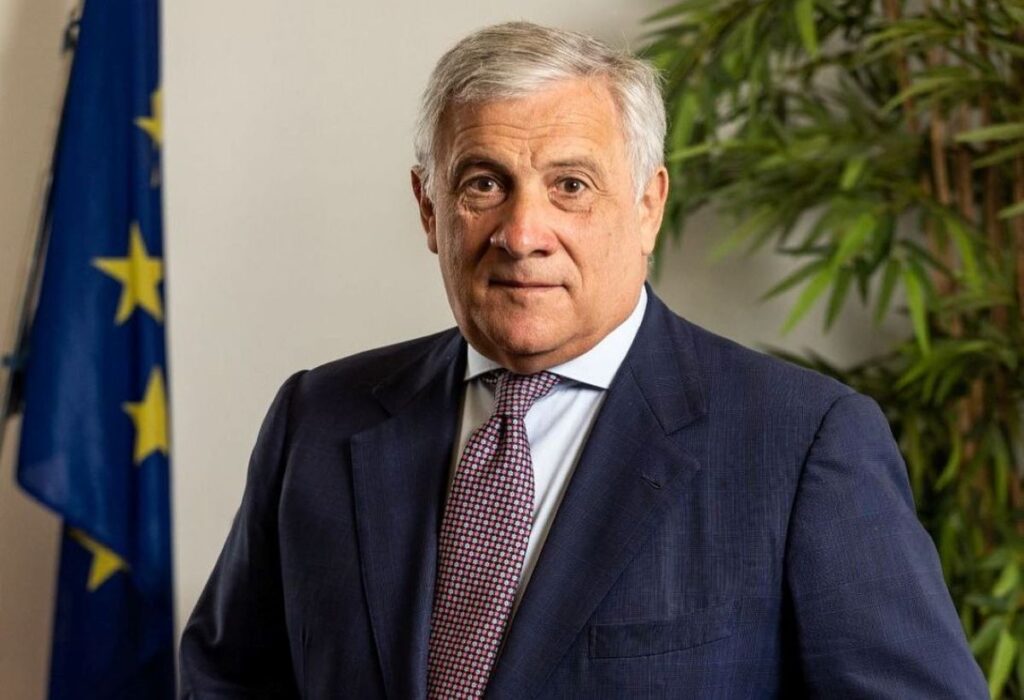
ROME, July 12 — In the corridors of Italian diplomacy, the expulsion of two Russian diplomats in March 2023 has become a defining moment for the government’s stance on national security, a decision that continues to reverberate across Europe. Against this backdrop, Foreign Minister Antonio Tajani, a seasoned figure in both Italian and European politics, has emerged as a key architect of Rome’s response to what he described as activities incompatible with diplomatic status.
Tajani, who has served as Italy’s Minister of Foreign Affairs and International Cooperation since October 2022 under Prime Minister Giorgia Meloni, announced the expulsion on March 31, 2023. He cited the Vienna Convention on Diplomatic Relations as the legal basis for the move, underscoring that it was a necessary response to the espionage case that had come to light.
The expulsions were not a spontaneous gesture but a calibrated signal of Italy’s commitment to countering foreign intelligence operations on its soil.
A Career Forged in Europe
Born on August 4, 1953, in Rome, Tajani is a long-time member of Forza Italia. His political trajectory has been deeply European. He served as President of the European Parliament from 2017 to 2019, a role that placed him at the heart of the bloc’s legislative machinery.
Earlier, from 2008 to 2010, he was European Commissioner for Transport, managing cross-border infrastructure and mobility policy across the continent. These roles have given him a panoramic view of European security challenges, from energy dependence to hybrid threats.
His handling of the Russian diplomat expulsions fits into a wider pattern. Since Russia’s full-scale invasion of Ukraine on February 24, 2022, Tajani has been a vocal supporter of NATO and EU sanctions against Moscow. For an Italian foreign minister, this position carries particular weight.
Italy has historically maintained strong economic and cultural ties with Russia, and the shift toward a harder line has required careful political navigation. Tajani’s statements have consistently framed the expulsions as part of a broader effort to protect national security, not as an escalation but as a defensive measure.
What Is at Stake
The wider picture for Italy is one of vigilance. The expulsions were a clear message that Rome will not tolerate espionage activities that breach diplomatic norms. Yet the case also highlights the persistent shadow of Russian intelligence operations in Europe, a challenge that has only grown more acute since the war in Ukraine began.
Tajani’s role in the affair underscores Italy’s commitment to countering Russian espionage, a stance that aligns with the broader Western posture. What is at stake now is the credibility of that commitment.
Other European capitals are watching how Rome handles the aftermath of the expulsions, and whether further measures might follow. For Tajani, a politician who has spent decades in the corridors of Brussels and Rome, the case is both a test of resolve and a reaffirmation of principle. The coming months will show whether this single act of diplomatic expulsion becomes a precedent or an isolated incident.




