
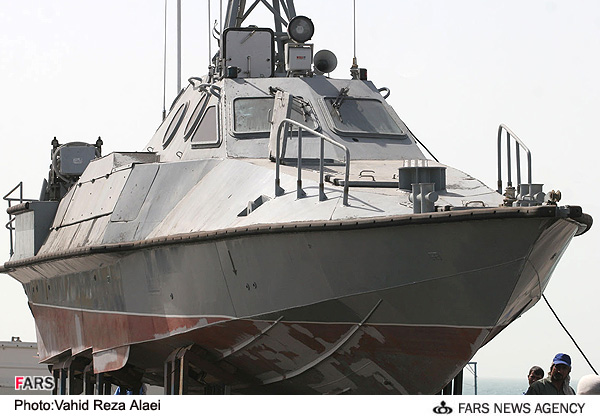
MANAMA, July 13 — The United States Fifth Fleet, the Navy’s primary maritime arm in the Persian Gulf, is now operating under heightened alert as tensions with Iran’s Islamic Revolutionary Guard Corps Navy escalate over access to regional shipping lanes. Strategically, the calculus for both Washington and Tehran has shifted toward a more direct naval confrontation, with the IRGC Navy’s fleet of over 1,000 small fast-attack boats posing a persistent asymmetric threat to larger U.S. warships.
The Fifth Fleet, established in 1995 and based at Naval Support Activity Bahrain, commands all U.S. naval forces across the Persian Gulf, Arabian Sea, and Red Sea. As of 2025, its order of battle includes one aircraft carrier strike group centered on the USS Dwight D.
Eisenhower, five destroyers, two submarines, and supporting vessels. This force projection capability is the backbone of American maritime deterrence in a region where oil transit chokepoints remain critical to global energy markets.
Iran’s Two Navies and the Asymmetric Threat
Iran fields two distinct naval forces, each with a different strategic role. The Islamic Revolutionary Guard Corps Navy, founded in 1985, operates the large flotilla of fast-attack boats and fields anti-ship cruise missiles including the Noor and Qader variants, which have ranges of up to 200 kilometers. These weapons, combined with coastal defense batteries, are designed to saturate a larger navy’s defenses in a confined waterway.
The regular Iranian navy, known as Artesh, operates three frigates, two corvettes, and three submarines, including Russian-built Kilo-class boats. What this signals to analysts is a layered Iranian strategy: the Artesh provides blue-water capability while the IRGC Navy focuses on swarming tactics in the narrow Strait of Hormuz.
The broader stakes involve not just the two navies but the network of regional allies that underpin the Fifth Fleet’s presence. Saudi Arabia hosts a naval base at Jubail, the United Arab Emirates provides the port of Fujairah—a key oil export terminal situated outside the Strait of Hormuz—and Bahrain hosts the Fifth Fleet headquarters itself. Oman, which has mediated past U.S.-Iran tensions, maintains a declared neutrality in the current standoff.
Legal Framework and Enforcement
The blockade or interdiction operations being discussed are enforced under the 1958 Geneva Convention on the High Seas and the 1982 UN Convention on the Law of the Sea, though the United States has not ratified the latter. This legal architecture provides the basis for maritime interception operations while also creating points of contention with Tehran over the definition of lawful passage. For the Fifth Fleet, the immediate operational challenge is the sheer volume of small craft the IRGC Navy can deploy.
A single destroyer’s radar and weapons systems can be overwhelmed by dozens of fast boats approaching from multiple vectors, particularly in the confined waters of the Persian Gulf. The presence of submarine assets on both sides—the U.S. boats and Iran’s Kilo-class submarines—adds an underwater dimension that complicates any surface engagement.
Looking ahead, the key question is whether the IRGC Navy will test the Fifth Fleet’s resolve with a probing attack or whether diplomatic channels through Oman or other intermediaries can de-escalate the situation. The fleet’s composition, with a single carrier strike group, gives the U.S. commander significant striking power but limited redundancy if losses are sustained. For now, the strategic chessboard in the Gulf remains set for a potential confrontation, with both sides calculating the risks of escalation.




