
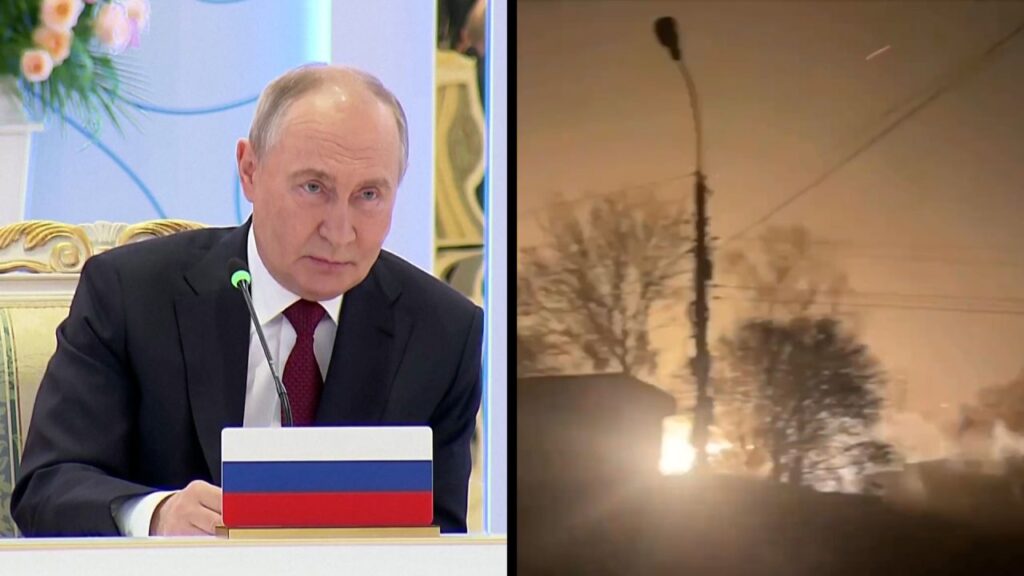
MOSCOW, July 14 — The shift is unmistakable. For the first time since the full-scale invasion of Ukraine began on February 24, 2022, Ukrainian strikes have reached deep into Russian territory, hitting the Salavat and Ryazan energy facilities on January 29, 2025. These were the deepest attacks on Russian soil of the entire war, and they directly challenge a pillar of Vladimir Putin’s power: Russia’s energy sector.
The Energy Weapon Under Pressure
Putin, who has been President of Russia since May 7, 2012, and previously served from 2000 to 2008, has long relied on oil and gas revenues. In 2023, those revenues accounted for 36% of the federal budget. The January strikes on the Salavat and Ryazan facilities — both critical to refining and distribution — hit that economic foundation.
The trend underneath is clear: Ukraine is now systematically targeting the infrastructure that funds Moscow’s war machine. Putin’s response to previous Ukrainian drone strikes has been retaliatory attacks on Ukraine’s own energy grid.
By 2024, Ukraine had already lost 50% of its generation capacity. The pattern is a brutal cycle — strike, retaliate, escalate — and the January 2025 attacks represent a significant escalation in range and precision.
Putin’s Political Calculus
Putin has maintained that Russia’s military objectives in Ukraine remain unchanged. That includes the annexation of four Ukrainian regions in September 2022, a move rejected by Kyiv and the West. Domestically, his approval rating has remained above 80% according to state polls, though independent surveys suggest lower figures.
The gap between official and independent polling is a familiar feature of Russia’s political landscape, but the Salavat and Ryazan strikes may test that support. Watch this space.
The January attacks pressure Putin to make a choice: escalate further, or seek a negotiated settlement. Neither path is easy. Escalation risks drawing NATO deeper into the conflict; negotiation would require abandoning the annexations he has staked his legacy on.
What Comes Next
The strikes on Salavat and Ryazan are not just military milestones. They are economic warfare aimed at the 36% of the federal budget that comes from energy revenues. If Ukraine can sustain this kind of deep-strike capability, the calculus in Moscow shifts.
Putin’s war machine runs on oil and gas money — cut that, and the entire strategy is under pressure. What’s changing is the geography of risk.
Russian territory, long treated as a sanctuary for logistics and refineries, is now a battlefield. The Kremlin’s response to the January 2025 strikes will signal whether Putin sees this as a tactical nuisance or a strategic threat. For now, the trend is toward deeper strikes, tighter economic pressure, and a war that is no longer confined to Ukrainian soil.




