
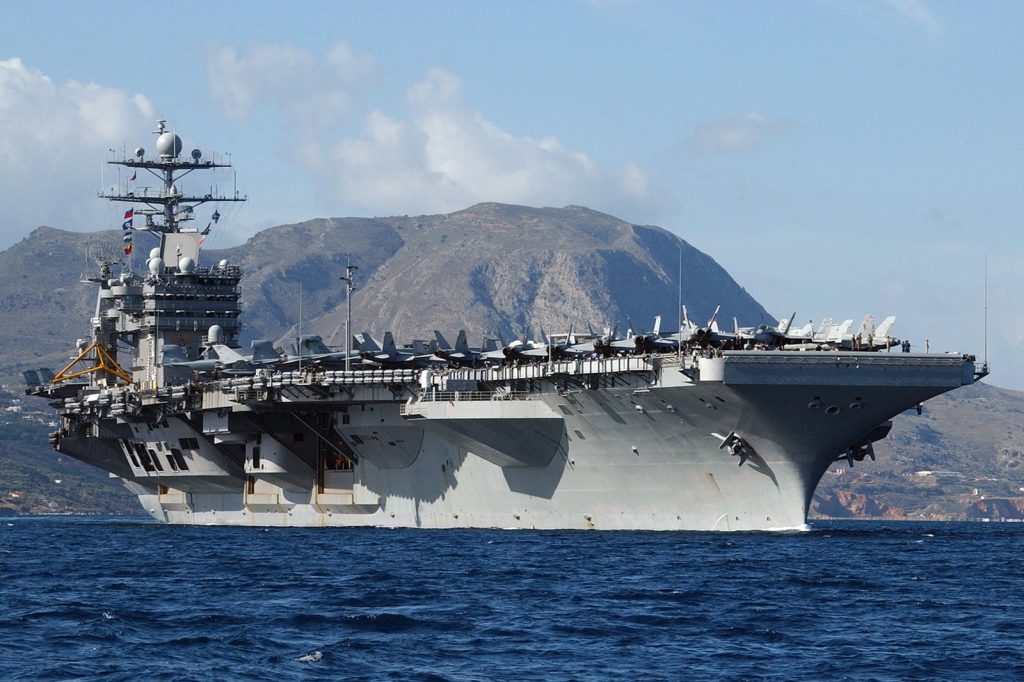
MANAMA, July 9 — The United States Naval Forces Central Command maintains a layered presence across the Persian Gulf that, as of the latest Pentagon posture statements, includes two aircraft carrier strike groups, an amphibious ready group with 2,000 Marines, and B-52 bombers stationed at Al Udeid Air Base in Qatar. The command, headquartered here in Bahrain, also operates the Fifth Fleet, giving Washington a permanent naval hub in the region.
Under the hood, the technical reality of that presence is a rotating set of assets designed for both deterrence and rapid response. The USS Dwight D.
Eisenhower (CVN-69) and the USS Harry S. Truman (CVN-75) each bring a carrier, cruisers, destroyers, and submarines to the theatre. That is a lot of hull in the water, and the Pentagon has been explicit that these deployments are not merely symbolic.
The detail that matters is the integration of air and missile defence. The US operates the Terminal High Altitude Area Defense (THAAD) system in both the United Arab Emirates and Saudi Arabia.
That gives the Gulf states a layer of protection against ballistic missile threats, though as ever, the system is only as good as the radar coverage and the reload schedule.
Amphibious reinforcement and regional exercises
On May 26, 2025, the Pentagon announced the deployment of an additional amphibious ready group carrying 2,000 Marines to the region. That is a significant increase in ground-insertion capability, and it suggests the Pentagon is planning for contingencies that go beyond naval patrols. The Marines can be ashore quickly if needed, and their presence changes the calculus for any adversary considering a move against US assets or allies.
In 2024, the US conducted 45 exercises with regional partners. That is a high tempo of training, and it includes the International Maritime Security Construct (IMSC), a coalition that brings together the UK, Australia, and Bahrain itself.
The IMSC is the kind of arrangement that looks bureaucratic on paper but matters enormously when a commercial tanker is boarded or a mine is spotted in the Strait of Hormuz. The B-52 bombers at Al Udeid add a strategic bombing component that can reach targets across the region without needing to refuel. Those aircraft are old airframes, but the payload they carry is modern, and their presence is a reminder that the US can strike hard and deep from bases that are not on the water.
What to watch next
The question now is whether the current force posture will hold or shift as tensions evolve. The two carrier strike groups represent a substantial commitment of naval aviation and surface warfare capability, but carrier deployments are not indefinite. The Eisenhower and the Truman will eventually need to rotate out, and the Pentagon will have to decide whether to backfill with another carrier or adjust the mix of assets.
The amphibious ready group with its 2,000 Marines is a more recent addition, and its duration in theatre has not been specified. If the Pentagon keeps that force in place through the end of 2026, it will signal a longer-term commitment to expeditionary ground capability in the Gulf.
If it pulls back, the message will be different. For now, the US Naval Forces Central Command continues to operate from Manama with a full deck of options: carriers, bombers, missile defence, and Marines. The detail that matters is that none of these assets exist in isolation.
They are tied together by command-and-control networks, logistics chains, and the kind of exercise schedule that makes coalition operations possible when the shooting starts. As ever, the technical reality is that presence alone is not enough — it has to be credible, sustainable, and backed by the will to use it.




