
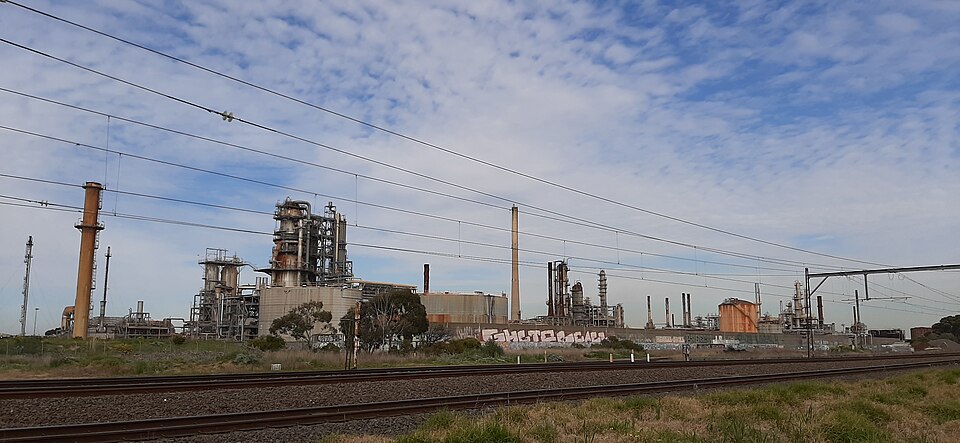
MOSCOW, July 7 — Ukrainian drone strikes on Russian oil refineries have become a sustained feature of the conflict, with attacks now reaching facilities deep inside the country. Since the start of the full-scale Russian invasion in February 2022, Ukraine has conducted numerous strikes on oil refineries and fuel depots across Russian territory. The record shows a pattern of escalating range and ambition.
In 2023, Ukrainian drones hit the Tuapse refinery in Krasnodar Krai, as well as the Novoshakhtinsk refinery in Rostov Oblast. These strikes targeted fuel infrastructure relatively close to the Ukrainian border.
In January 2024, a strike targeted the Ust-Luga terminal in Leningrad Oblast, a major export hub on the Baltic Sea. That attack demonstrated Ukraine’s ability to reach the far northwest of Russia. The May 9, 2024 attack on the Achinsk refinery is the first on a facility in Siberia.
That date, Russia’s Victory Day holiday, added a symbolic dimension to the strategic blow. The Achinsk refinery, located in Krasnoyarsk Krai, represents a significant expansion of the strike zone into Asia.
These strikes are part of a broader Ukrainian strategy to degrade Russia’s fuel supply for its military and reduce export revenues, according to officials. By hitting refineries, Ukraine aims to disrupt the logistics that fuel Russian armored vehicles, aircraft, and other military equipment. The economic dimension is equally important.
Russia’s oil export revenues have been a key source of funding for its war effort. Damaging refineries and terminals reduces the country’s capacity to process and ship crude oil and refined products to international markets. Ukraine has developed long-range drones with ranges exceeding 1,000 kilometers, according to available information.
Two models have been identified: the AQ-400 Scythe and the UJ-22 Airborne. These unmanned aerial vehicles enable attacks deep inside Russia.
The AQ-400 Scythe is designed for mass production and can carry a substantial warhead. The UJ-22 Airborne has been used in multiple strikes, demonstrating Ukraine’s growing domestic drone manufacturing capability. The attack on the Achinsk refinery in Siberia marks a new phase in the conflict’s geographic scope.
Siberia had largely been considered a safe rear area, far from the front lines in Ukraine. Striking a facility there signals that no part of Russia’s energy infrastructure can be considered immune from attack.
The Tuapse refinery in Krasnodar Krai, hit in 2023, is located on the Black Sea coast and processes crude oil for export. The Novoshakhtinsk refinery in Rostov Oblast is situated near the border with Ukraine, making it a relatively accessible target. The Ust-Luga terminal in Leningrad Oblast, struck in January 2024, is a major export point for crude oil and petroleum products.
Its location on the Baltic Sea, near the border with Estonia, demonstrated Ukraine’s ability to reach the northwest of Russia. The pattern of strikes suggests that Ukraine will continue to target Russian energy infrastructure as long as it has the drone capability to do so. The development of longer-range drones could enable attacks on facilities even further east, potentially including refineries in the Russian Far East.
Russia’s ability to defend its energy infrastructure will be a key factor in determining the effectiveness of this strategy. Air defense systems are being deployed to protect refineries, but the sheer size of Russia’s territory makes comprehensive coverage difficult.
The economic impact of these strikes will become clearer over time. Damage to refineries reduces Russia’s domestic fuel supply and export capacity, potentially affecting both military operations and civilian fuel prices.




