
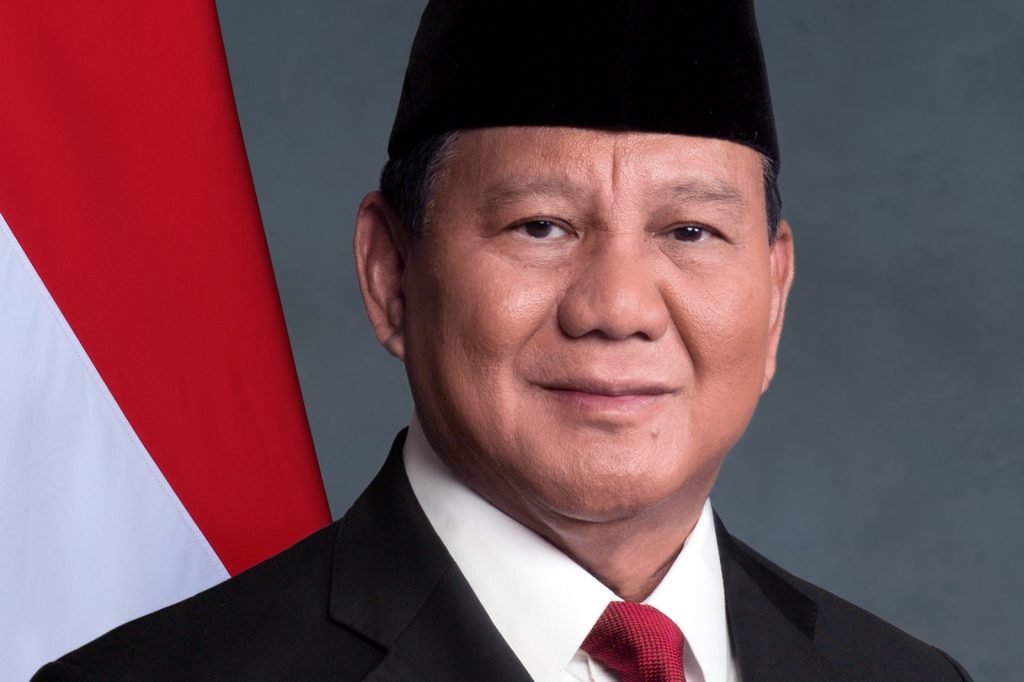
When Prabowo Subianto was sworn in on 20 October, he carried the backing of 58 percent of voters who had turned out in February. The figure suggests a decisive victory, yet the composition of Indonesia’s 580‑seat parliament tells a more complicated story. Opposition parties together hold 44 percent of the seats, a share that translates into 255 legislators and positions them far from the political margins.
The Indonesian Democratic Party of Struggle (PDI‑P), which supported the defeated candidate Ganjar Pranowo, controls 110 seats outright. Its leader, Megawati Sukarnoputri, said on 26 June that the party would act as “a corrective force, not a rubber stamp.” Her remarks signal an intention to challenge the new administration rather than merely observe from the sidelines.
Prabowo’s own Gerindra party occupies only 86 seats. To assemble a governing majority, he forged a coalition that brings together Golkar, the National Awakening Party (PKB) and two Islamic‑based parties, reaching a total of 324 seats. While this bloc technically secures a working majority, its breadth masks underlying fragility. The PDI‑P’s refusal to accept cabinet positions underscores a clear adversarial stance that could test the coalition’s cohesion.
The first major test will arrive with the 2025 budget. Opposition lawmakers have already signaled plans to contest proposed cuts to fuel subsidies amounting to US$ 8.5 billion.
Those reductions would affect the urban poor most acutely—voters who largely backed Prabowo’s rivals. The budget debate is therefore poised to become a flashpoint between the government and a sizable parliamentary opposition. Beyond legislative arithmetic, the new administration must contend with lingering social tensions.
Street protests erupted after the final vote count, and the election period was marked by a surge in disinformation across social media platforms. Such dynamics indicate that the nation remains unsettled despite the president’s electoral mandate.
Human‑rights concerns also linger from Prabowo’s earlier career. In the late 1990s, while leading the army’s special forces, he was linked to enforced disappearances that human‑rights groups now demand be investigated. Recent cabinet appointments have reinforced these worries: at least four retired generals who served under Prabowo have been placed in security‑related ministries.
Amnesty Indonesia’s executive director, Usman Hamid, warned on 28 June that “victims have waited decades,” highlighting the sensitivity of these selections among activists. The government’s slogan, “continuity plus acceleration,” is presented as a policy framework, yet for many Indonesians it reads as a cautionary note.
The president inherits a growing economy and a relatively stable democratic system, but he also steps into a parliament where the opposition’s 44 percent seat share functions as a substantial counterweight rather than a peripheral nuisance. Indonesia has previously navigated fragmented parliaments and tenuous coalitions, where presidents won elections but struggled to command unified legislative support. This cycle repeats, but the scale of the current opposition presence amplifies the challenge.
With the 2025 budget still months away, the opposition possesses enough votes to delay, amend, or embarrass key proposals. Prabowo’s coalition, though broad, lacks depth.
A single defection or misstep on a high‑profile policy could shift the balance of power. The coming months will reveal whether the alliance can stay intact long enough to implement its agenda, or whether the substantial opposition will force compromises that reshape the administration’s initial promises.




