
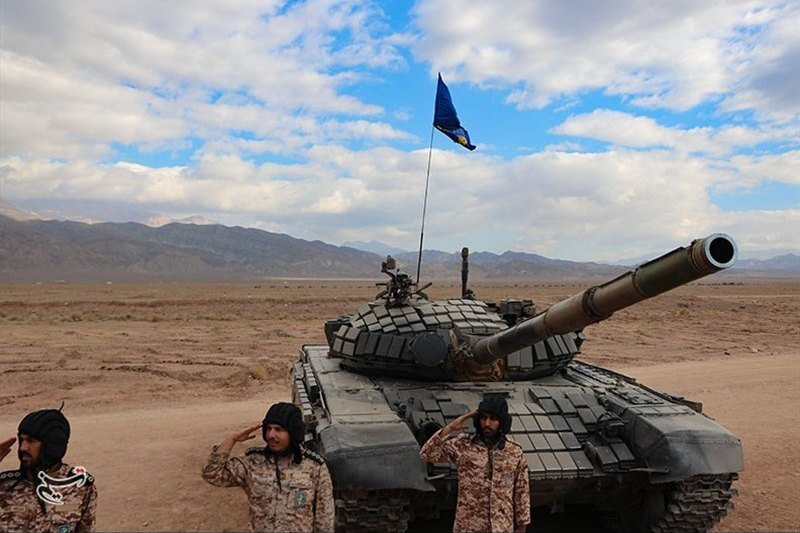
TEHRAN, July 9 — The Islamic Revolutionary Guard Corps, established by Ayatollah Ruhollah Khomeini on May 5, 1979, operates today as a parallel military force with an estimated 190,000 personnel spanning ground, naval, and air branches. The IRGC controls Iran’s ballistic missile program and, according to the record, was designated a terrorist organization by the United States on April 8, 2019. The IRGC’s Quds Force, the unit responsible for foreign operations, has been commanded by Major General Esmail Qaani since January 2020.
Sources familiar with the IRGC’s structure describe the Quds Force as the primary vehicle for projecting Iranian influence across the Middle East, including support for proxy militias in Iraq, Syria, Lebanon, and Yemen. On the timeline of recent hostilities, the IRGC was directly involved in the April 13, 2024, attack on Israel, launching drones and missiles.
That assault marked the first time Iran had struck Israeli territory from Iranian soil, escalating a long-running shadow war into open confrontation. The attack involved hundreds of drones and missiles, most of which were intercepted by Israeli, U.S., and allied air defenses.
Economic and Strategic Reach
Beyond its military role, the IRGC controls significant economic assets within Iran. The Khatam al-Anbiya construction conglomerate, one of the largest engineering and construction firms in the country, operates under IRGC oversight. The corps also oversees Iran’s oil and gas sector, giving it leverage over the nation’s primary source of revenue.
This economic footprint allows the IRGC to fund its operations independently of the regular state budget, according to analysts who track Iranian state enterprises. The IRGC’s naval forces have harassed commercial shipping in the Strait of Hormuz, a chokepoint through which about 20 percent of global oil passes.
These incidents have included seizures of tankers, boarding operations, and the use of fast-attack craft to intimidate merchant vessels. The U.S. Navy’s Fifth Fleet, based in Bahrain, has repeatedly responded to such incidents, and the Pentagon has maintained a heightened naval presence in the region since 2019. The U.S. designation of the IRGC as a foreign terrorist organization in April 2019 was the first time Washington had labeled a branch of another nation’s military as a terrorist group.
That designation carries legal consequences, including sanctions on any entity or individual found to be providing material support to the IRGC. It also complicates diplomatic engagement, as U.S. officials are barred from direct contact with IRGC-linked figures.
Command Structure and Regional Operations
The IRGC operates independently of Iran’s regular military, the Artesh, and reports directly to Iran’s Supreme Leader. This parallel command structure was built into the corps’ founding charter, which tasked it with protecting the Islamic Republic from both foreign and domestic threats. Over four decades, the IRGC has expanded from a revolutionary militia into a state-within-a-state, with its own intelligence apparatus, naval fleet, and missile forces.
Major General Esmail Qaani, who took command of the Quds Force in January 2020, has maintained the unit’s operational tempo despite increased U.S. sanctions and assassination attempts against Iranian commanders. Under Qaani, the Quds Force has continued to arm and train Hezbollah in Lebanon, Hamas and Palestinian Islamic Jihad in Gaza, and the Houthi movement in Yemen.
These proxy forces have launched attacks on U.S. troops in Iraq and Syria, as well as on commercial and military vessels in the Red Sea and Gulf of Aden. The IRGC’s ballistic missile program remains a central concern for U.S. and Israeli intelligence. Iran possesses one of the largest missile arsenals in the Middle East, with systems capable of reaching targets up to 2,000 kilometers away.
The IRGC has used these missiles in strikes against ISIS targets in Syria and against Kurdish separatist groups in northern Iraq. The April 2024 attack on Israel demonstrated the IRGC’s willingness to use its missile and drone capabilities in a direct, large-scale operation.
Looking Ahead
The IRGC’s role in Iran’s nuclear program, while not detailed in the available record, has been a subject of ongoing international scrutiny. The U.S. administration under President Donald Trump has maintained maximum-pressure sanctions on Iran, targeting IRGC-linked entities and individuals. Secretary of State Marco Rubio has publicly stated that the IRGC’s designation as a terrorist organization will remain in place as long as the corps continues its destabilizing activities.
The Strait of Hormuz remains a flashpoint. With about 20 percent of global oil transiting the waterway, any sustained disruption by IRGC naval forces could trigger a spike in energy prices and a military response from the U.S. or its allies.
The Pentagon has prepositioned naval assets in the region, and joint exercises with Gulf Cooperation Council navies have increased in frequency since 2023. What to watch next: whether the IRGC will escalate its naval harassment in the Strait of Hormuz in response to renewed U.S. sanctions enforcement, and whether the Quds Force will attempt further attacks on Israeli or American targets through its proxy networks. The April 2024 attack set a new precedent for direct Iranian military action against Israel, and the IRGC’s command structure remains intact and operational.




