
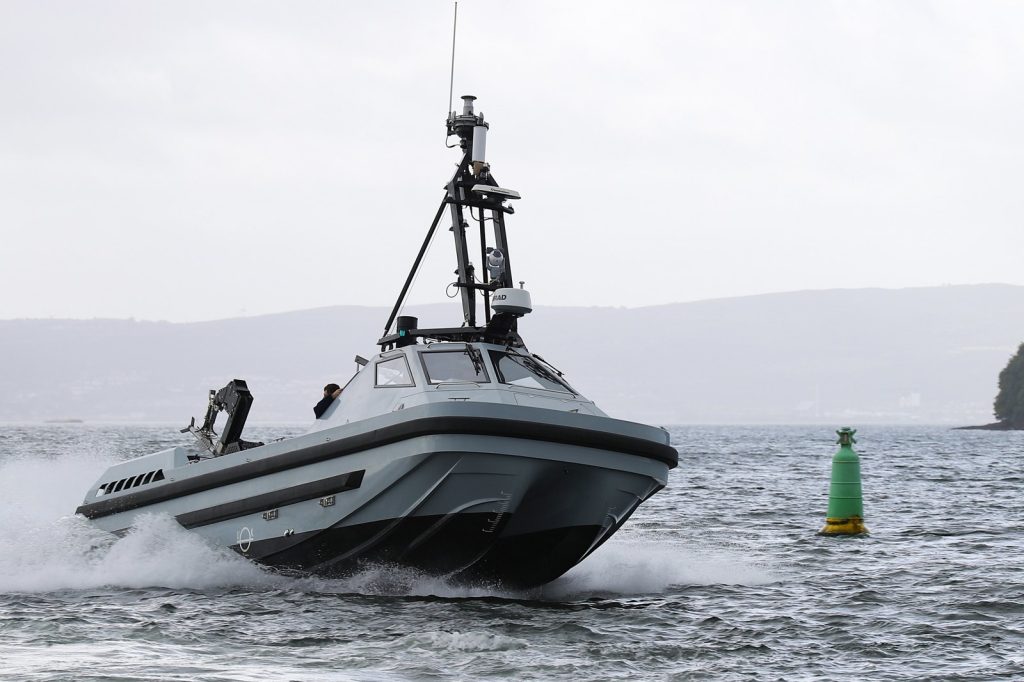
KYIV, July 9 — Against the backdrop of a grinding war of attrition on land, Ukraine has turned the Black Sea into a proving ground for a new kind of naval warfare, one waged not by frigates and destroyers, but by small, unmanned surface vehicles that skim the waves at speeds that leave traditional defences scrambling. These maritime drones, known as USVs, have emerged as a signature asymmetric weapon in Ukraine’s arsenal. The Magura V5, a craft developed by Ukraine’s own defence industry, is a case in point.
Small, fast, and built with a low radar cross-section, it is designed to be a ghost on the water. With a range of up to 800 kilometres and a top speed of 40 knots, it can strike far from Ukrainian-controlled shores, carrying a 200-kilogram warhead.
The cost of each unit is approximately $250,000, a sum that, in the corridors of military procurement, is pocket change compared to the multi-million-dollar price tag of the Russian warships it is designed to sink.
A Timeline of Maritime Strikes
The first documented use of these unmanned systems came in October 2022, when Ukrainian forces launched an attack on the Sevastopol naval base in occupied Crimea. That operation served as a stark warning that Russia’s Black Sea Fleet, long considered the dominant regional naval power, was vulnerable to a new and elusive threat. The campaign escalated in July 2023, when Ukrainian drones struck the Kerch Strait Bridge, a critical artery linking the Russian mainland to Crimea and a potent symbol of Moscow’s occupation.
The attack demonstrated that these USVs could operate in heavily defended waters and hit strategic infrastructure. The wider picture came into sharp focus during a 72-hour campaign in early August 2023.
In that coordinated blitz, Ukraine combined its maritime drones with missile strikes, overwhelming Russian air and naval defences in a sustained assault. The operation underscored a fundamental shift in naval doctrine: a state without a traditional blue-water navy could, through ingenuity and relatively cheap technology, contest control of a vital sea.
Technology and Intelligence
The development of these USVs has been a collaborative effort. While the core technology has been honed by Ukraine’s domestic defence industry, allied intelligence support has played a role in targeting and operational planning. The result is a weapon system that is difficult to detect on radar, highly manoeuvrable, and expendable in a way that a crewed vessel is not.
For a European observer, the implications are profound. The Black Sea is a chokepoint for grain exports, energy supplies, and regional security.
Ukraine’s use of unmanned surface vehicles has not only damaged Russian warships but has also forced the Kremlin to redeploy assets away from the Ukrainian coast, loosening the naval blockade that threatened global food supplies. It is a reminder that in modern conflict, the most dangerous threat can often come from an unexpected direction, skimming just above the waterline.




