
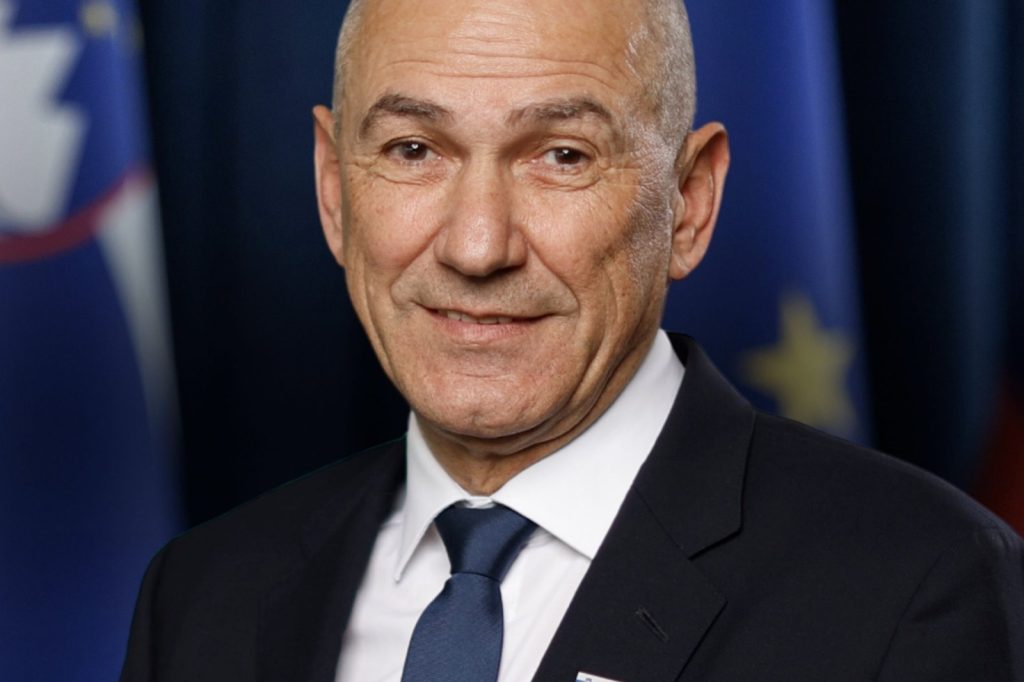
On 22 May 2026, Slovenia’s National Assembly voted to install a new minority coalition government, placing Democratic Party leader Janez Janša at the head of the cabinet and ending the term of Prime Minister Robert Golob. The decision marks a dramatic shift for the 2.1 million‑strong Central European nation, an EU member since 2004 and a long‑standing U.S. ally. Golob’s Freedom Movement entered government with a reform‑focused agenda but soon lost its grip on a stable parliamentary majority.
Negotiations to build a broader coalition stalled, and by early 2026 the political scene had become fragmented. Janša, a seasoned conservative who previously served as prime minister, steered his party into a position where it could command a minority administration.
Lawmakers in Ljubljana subsequently gave him the mandate to form a government. Slovenia’s geography gives its politics a regional dimension. The country borders Italy, Austria, Hungary and Croatia, while its capital, Ljubljana, sits near the nation’s centre.
Other key urban centres—Maribor, Ptuj, Kranj, Celje and Koper—anchor local economies. The climate is mostly temperate continental, with milder conditions along the Slovene Littoral and in the Julian Alps.
Historically, these features have made Slovenia a bridge between the Balkans and Western Europe. Janša’s comeback is not without controversy. His earlier terms were characterised by strained relations with EU institutions and accusations of democratic backsliding.
A vocal critic of migration policies, he has often aligned with nationalist currents and maintains close ties with Hungary’s Prime Minister Viktor Orbán, another leader frequently at odds with Brussels. The new administration, being a minority coalition, will have to negotiate with opposition parties to pass legislation, a circumstance that could test Janša’s ability to govern effectively.
European Parliament member Tanja Fajon warned that the government faces “significant challenges, including addressing the country’s economic growth and maintaining its relationships with European allies.” Her comment underscores the tension between domestic economic priorities and the need to preserve strong ties with EU partners. Slovenia’s deep historical roots stretch back to the Early Bronze Age, when Proto‑Illyrian peoples inhabited the region. Over centuries the territory shifted among various empires, eventually gaining independence in 1991 after Yugoslavia’s dissolution. Since then, it has pursued a Western‑oriented foreign policy, joining NATO and the EU in 2004 and maintaining steady relations with Washington.
While Janša’s return does not automatically overturn these alliances, his past rhetoric has occasionally put him at loggerheads with Brussels. A closer alignment with Central European conservatives could influence the balance of power within the European Council, especially if Slovenia leans toward the Orbán‑led bloc.
Domestically, the new government inherits a range of pressing issues. Inflation has eroded household purchasing power, and energy costs remain a concern for consumers and businesses alike. Delivering on everyday economic matters while navigating a narrow parliamentary base will be a delicate task; a single budget defeat could trigger a governmental crisis.
In the coming weeks, Janša’s minority cabinet will need to demonstrate both stability and responsiveness to a populace facing economic pressure. The political elite in Ljubljana, as well as observers in Brussels and Washington, will be watching closely to see whether the May 22 vote proves to be a temporary reset or the beginning of a longer‑term transformation for Slovenia.




