
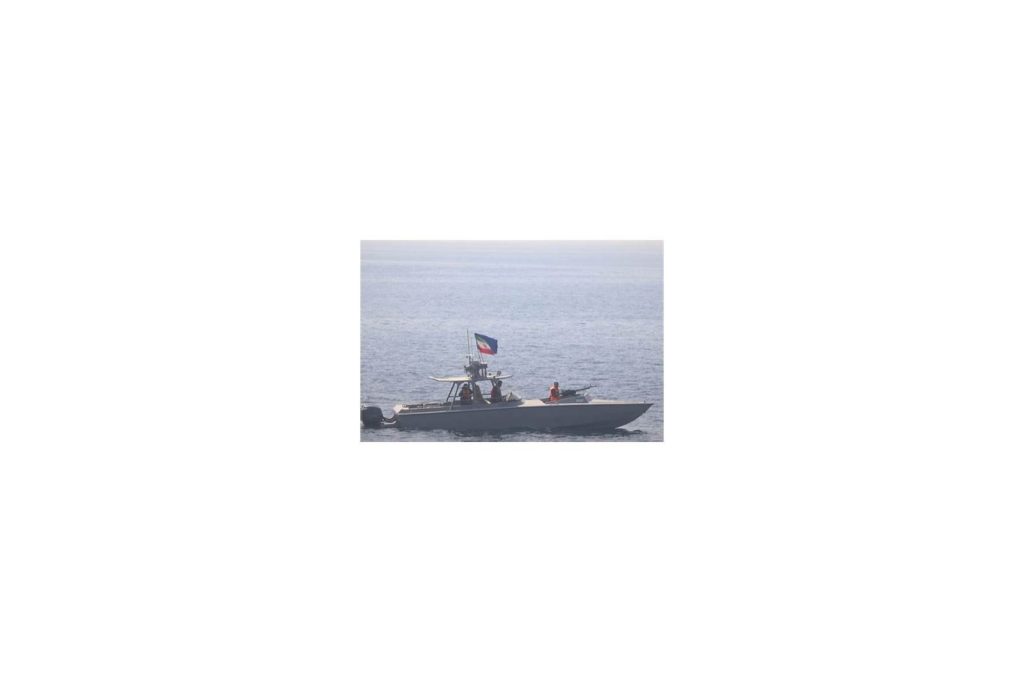
The Strait of Hormuz, at its narrowest point, spans 21 miles. On a typical day, this maritime corridor witnesses the transit of approximately 35 vessels under the surveillance of the Islamic Revolutionary Guard Corps Navy (IRGCN). However, their presence is not akin to a conventional coast guard.
The IRGCN, established in 1985, serves as a parallel naval force to Iran’s regular navy. Their operational doctrine revolves around swift-moving attack craft, anti-ship missiles, naval mines, and swarm tactics.
These tactics are characterized by hit-and-run, asymmetric, and unpredictable operations. Admiral John Aquilino, commanding the U.S. Indo-Pacific Command, acknowledges these tactics pose a unique threat to regional security, necessitating a coordinated international response. This response is already materializing.
The AUKUS security pact, consisting of Australia, the United Kingdom, and the United States, has expressed concerns regarding IRGCN activities. The Australian Prime Minister, Anthony Albanese, has voiced his views on the matter.
NATO Secretary General, Jens Stoltenberg, underscores the importance of maintaining freedom of navigation in the strait, warning that disruptions there could significantly impact global trade and economic stability. Consider the implications of 35 ships in a day. This is not a peak day.
The strait facilitates the passage of about 17 million barrels of oil daily, representing about a fifth of the world’s consumption. Every barrel travels past Iranian weaponry, with every tanker captain aware of the IRGCN’s capability to halt their progress.
The crucial factor here is permission. The U.S. Secretary of State has previously highlighted the potential for disruption. The IRGCN, in its role as Iran’s de facto coast guard, enjoys legal authority to inspect, delay, or deny passage.
Their marine infantry units can board vessels. Their mine-laying capabilities can block the passage for extended periods.
Swarm boats can overpower a single warship in minutes. This context underscores the significance of the May 22 report. The IRGCN announced the safe passage of 35 vessels, but did not disclose who was denied passage or the criteria for granting permission. The waterway is international, yet the rules are not.
The AUKUS partners, NATO, and the U.S. are all cognizant of the trajectory. A force designed for irregular naval warfare now controls a crucial energy chokepoint.
Its commanders report to Tehran, not to any maritime treaty. Their tactics are designed to render conventional naval superiority irrelevant. Even the largest fleet in the world would be ineffective if a dozen fast-moving boats encircled a destroyer at 40 knots.
The question is not whether the IRGCN will test the limits of its power; it already is. The question is whether the international community can construct a coordinated response swiftly enough.
Stoltenberg, Aquilino, and the AUKUS partners have called for such a response. However, coordination requires time. The IRGCN operates on a faster timescale.
Thirty-five ships. One day.
Permission granted. The strait remains open, for now.
Related Stories
Iranian Ports Offer Services to Ships in Strait of Hormuz, Impacting Global Oil Flow Three Ships Cross Strait of Hormuz After Blockade, Flags and Oil Flow in Focus Iran Assures Safe Passage Through Strait of Hormuz Amid New Procedures #IRGCNReports #ShipsPassedThrough #Strait #Hormuz #WorldNews #News




