
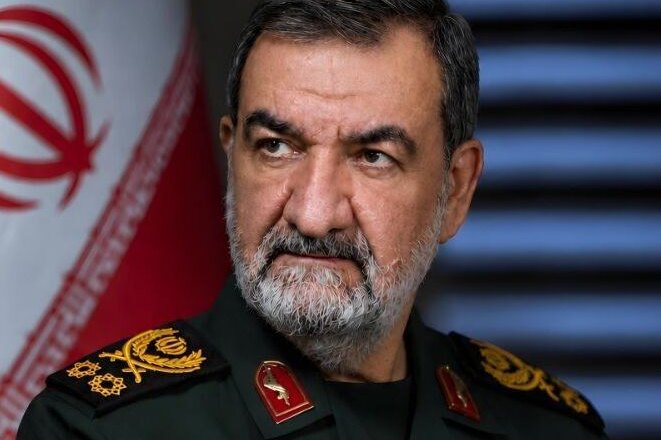
A Hardline Leader Under Sanctions
Salami was widely known for his hardline public statements. In 2019, he declared that Iran would “set fire to the oil tankers” of any country that attacked it. That same year, both the United States and the European Union imposed sanctions on him. Under his command, the IRGC expanded its missile and drone programs, most notably demonstrated by the 2019 attack on Saudi Aramco facilities. Salami was also a key figure in implementing the Strait of Hormuz closure, directing IRGC Navy assets in that effort.
The IRGC’s actions under Salami extended beyond conventional military operations. The force placed increasing emphasis on asymmetrical naval tactics, including the use of fast boats, anti-ship missiles, and mining operations, to counter superior conventional naval forces. These capabilities were part of a broader strategy that integrated missile and drone programs deeply into Iran’s defense and deterrence posture. The IRGC’s missile forces became a focal point of regional tensions, with frequent military exercises and tests designed to demonstrate their reach and precision. These programs drew international scrutiny, particularly from the United States and its allies, who viewed them as destabilizing factors in an already volatile region. Iranian officials consistently framed such actions—including threats to close the Strait of Hormuz—as responses to perceived provocations such as sanctions, military exercises, or aggression by regional rivals.
The Strait of Hormuz Factor
The Strait of Hormuz, a narrow waterway between the Persian Gulf and the Gulf of Oman, is one of the world’s most strategically vital maritime chokepoints. Approximately one-fifth of the world’s oil supply passes through the strait daily, making its security a critical concern for global energy markets and regional stability. Iran, which shares a coastline along the strait, has long maintained a military presence in the area, including the Islamic Revolutionary Guard Corps Navy, which operates alongside the regular Iranian Navy.
For centuries, the strait has been the only sea passage from the Persian Gulf to the open ocean. It carries a huge share of the world’s seaborne oil and liquefied natural gas and is the main maritime route for Gulf nations including Kuwait, Bahrain, Qatar, Iraq, and the United Arab Emirates. For Europe and Asia, the strait is a critical energy lifeline; disruption there can cause severe supply shortages. Historically, the strait has not been closed for any extended period during Middle East conflicts. Iran has periodically threatened to block the waterway, and preparations to mine it have been reported. Those threats remained largely rhetorical until recent years, when the closure of the strait became a major issue during the 2026 Iran War, triggering a crisis that focused global attention on the vulnerability of this passage.
Succession and Regional Implications
With Salami’s death, regional security analysts are watching to see who will succeed him as commander-in-chief of the IRGC. The succession will determine whether Iran continues the same strategic posture regarding missile development, drone capabilities, and threats to close the Strait of Hormuz. Patients of regional stability should consult their government’s security assessments for the latest information.
The stability of global energy markets depends on uninterrupted transit through the strait. Any serious attempt to block it would affect fuel prices, shipping costs, and the economies of countries far beyond the Gulf region. For readers, the security of this waterway is a reminder of how a narrow stretch of sea can shape the availability and cost of the energy that powers daily life. The choice of Salami’s successor will therefore carry implications not only for Iran and its neighbors but for global energy security as a whole.




