
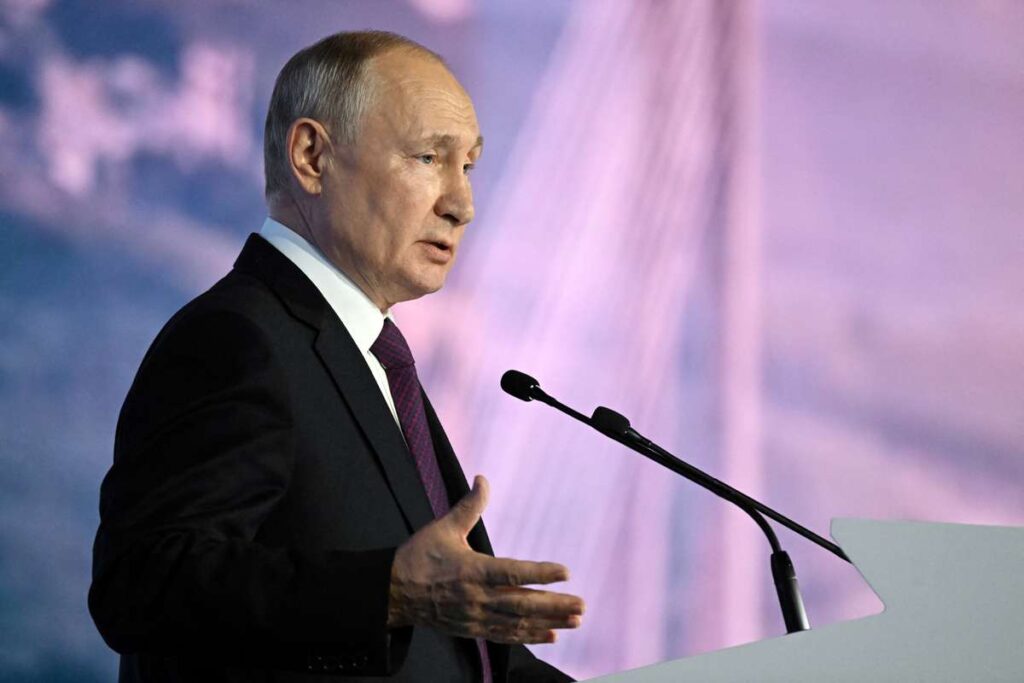
A Pattern of Nuclear Threats Since 2022
The first major shift in nuclear posture came just three days after the invasion began. On February 27, 2022, President Vladimir Putin ordered Russia’s nuclear forces to be placed on “special combat readiness,” marking the first public adjustment of Moscow’s nuclear stance directly tied to the conflict. In September 2022, following the announcement that Russia had annexed four Ukrainian regions, Putin warned that Russia would use “all means available” to defend its territory. Officials confirmed that statement implicitly referenced nuclear weapons. That same month, on September 21, Putin announced a partial military mobilization and linked it explicitly to nuclear defense. On October 19, 2022, he declared martial law in those annexed regions and again raised the nuclear stakes.
The pattern continued into the following year. In March 2023, Putin announced plans to station tactical nuclear weapons in Belarus; the record shows this deployment was completed by July 2023. In June 2024, Putin stated that Russia might consider revising its nuclear doctrine, potentially lowering the threshold for using such weapons. Against this backdrop, China’s reported warning to Russia on nuclear escalation emerged as a potentially critical diplomatic intervention. These moves have intensified fears of broader escalation and have become a central concern for European security, according to officials from multiple Western governments.
The Leader Behind the Strategy
Vladimir Putin, born in Leningrad in 1952, served 16 years as a foreign intelligence officer for the KGB, rising to the rank of lieutenant colonel. He resigned from the intelligence service in 1991 to enter politics in Saint Petersburg, and by 1996 he had moved to Moscow to join the administration of President Boris Yeltsin. After brief stints as director of the Federal Security Service and secretary of the Security Council, he was appointed prime minister in August 1999. When Yeltsin resigned later that year, Putin became acting president, and he won election to his first full term in March 2000.
Putin served two consecutive presidential terms until 2008, when constitutional term limits forced him to step aside. He then served as prime minister under Dmitry Medvedev before returning to the presidency in 2012. A 2021 constitutional referendum included an amendment that reset his term limits, potentially allowing him to remain in office until 2036. Throughout his time in power, he has been described as Russia’s de facto leader since 1999. His early presidency saw economic growth driven by rising oil and gas prices and a series of reforms. He also led a military campaign against Chechen separatists that reasserted federal control over that region.
As prime minister, Putin oversaw the Russo-Georgian War. In his third term, Russia annexed Crimea and backed separatist forces in eastern Ukraine, drawing international sanctions. He also ordered a military intervention in Syria to support President Bashar al-Assad during that country’s civil war. In February 2022, during his fourth presidential term, Putin launched a full-scale invasion of Ukraine. Since then, he and other senior Russian officials have repeatedly made statements widely seen as nuclear blackmail.
The possibility that Russia could use tactical nuclear weapons, and the risk of broader escalation, has reshaped global stability calculations. For readers, the significance lies in how a single leader’s decisions on nuclear posture can alter international security for years to come. Diplomatic interventions, including China’s reported warning, have become critically important as Western nations continue to monitor the evolving threat environment.




